



At a glance
- Oyster reefs reduce wave energy and stabilise shorelines, offering a natural, adaptive form of coastal protection against sea-level rise and storm surges.
- They improve ecosystem health by filtering water, storing carbon, and creating habitats that support biodiversity and climate resilience.
- Shellfish aquaculture is vulnerable to incremental water quality changes from climate impacts, as well as direct and indirect effects of extreme events
- Shellfish aquaculture can offer sustainable livelihoods, providing low-impact protein while contributing to environmental and economic adaptation in coastal communities.
- Significant efforts are underway to support restoration of oysters reefs as well as climate adaptation of an important coastal industry.
Shellfish are vulnerable to climate change but also vital to adaptation
Shellfish, particularly oysters, are both important for climate adaptation, while also being vulnerable to climate change impacts.
Oysters' place in history
Shellfish reefs once extended along Australia’s coastlines and estuaries, providing a source of food and culture for Indigenous people, supporting marine life and providing an array of environmental benefits, such as shoreline protection, carbon storage, water filtration and nutrient absorption. These ecosystem services enhance the resilience of bays and estuaries to climate change.
Shellfish were sustainably harvested by Indigenous Australians for thousands of years: there is extensive archaeological evidence such as long stretches of shell middens, some as along as 400m long and as high as 4m. While some middens have been carbon-dated to up to 9,000 years old, it is likely that older middens were submerged by rising seas and that oyster use by Indigenous people dates back much further.
These communities were thought to have practiced early forms of aquaculture by returning the shells to the water to promote larval settlement, a technique that predated European aquaculture by millennia.
With the establishment of the colonies from 1788, the extensive shellfish reefs were rapidly depleted. The oysters were harvested as a valuable source of food for the early settlers, especially when their European crops failed in the unfamiliar conditions. Just as important was their use in constructions, with the shells burnt to produce lime as an ingredient for building materials.
This lead to their near-total collapse. Within a century of colonisation, most of the NSW shellfish reefs were depleted, South Australia had lost over 1,500 km of reefs, and other major colonies had experienced similar declines. Today, less than 10% of Australia’s shellfish reefs remain, making them a critically endangered ecosystem.
Their natural recovery of these has been hindered by loss of breeding populations, settlement substrate, and the introduction of pests like mud worms, combined with coastal development and pollution, have hindered natural regeneration.
There are now many coastal organisations involved in oyster reef restoration around the coast.
a CoastAdapt case study about some shellfish restoration efforts in various states that involve diverse partnerships between state and local government, local Indigenous groups and conservation not-for-profits.
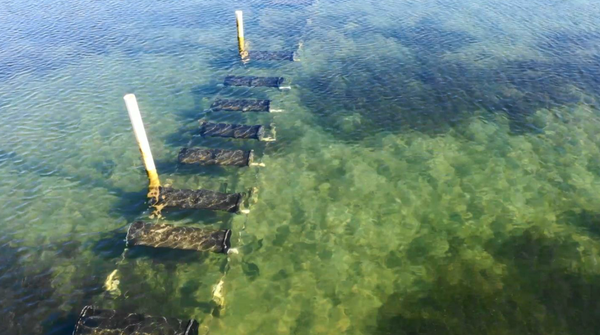
Oysters in amongst mangrove pneumatophores.
- © NCCARFoyster lease
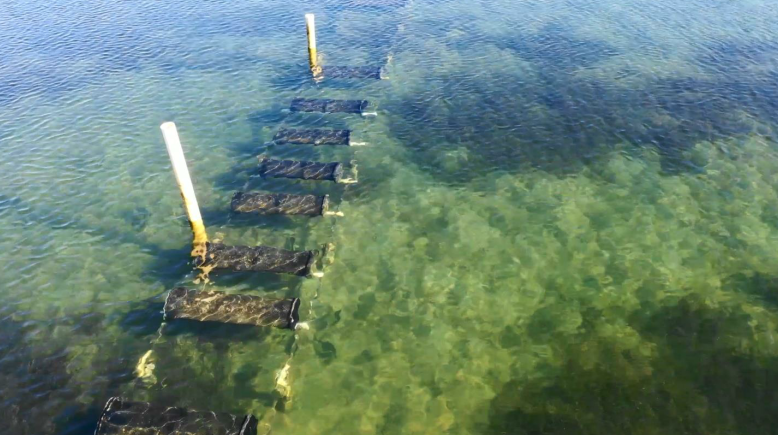
Oysters in amongst mangrove pneumatophores.
© NCCARF
Shellfish are important for adaptation
Oysters as engineers for coastal protection
As climate change intensifies, coastal regions face mounting direct threats including sea-level rise, stronger storms, and habitat degradation. Increasingly governments and communities are turning to nature-based strategies that can integrate coastal defense with ecological and social-economic benefits.
Traditional hard infrastructure, such as seawalls, bulkheads, and groins can be used for coastal protection, but these hard structures are expensive and can lead to other problems such as localised beach erosion. Shellfish restoration presents a compelling nature-based solution that integrates coastal defense with ecological and social-economic benefits.
Oysters reefs however are not suitable for everywhere. To effectively design and implement oyster-based living shorelines we need to deepen our understanding of the specific reef characteristics and seascape settings that contribute to successful coastal defense.
about nature-based strategies
Oysters as ecosystem builders
Oyster reefs can enhance biodiversity by creating complex habitats that support a wide variety of marine species. As the oysters grow, they bind together creating small spaces for other organism to settle in.
This biodiversity strengthens ecosystem resilience, making it more adaptable to stressors such as warming waters and ocean acidification.
Oysters as filters for improving water quality
Oysters feed by filtering water. A single adult oyster can filter up to 150 litres of water a day, removing excess nutrients like nitrogen and phosphorus, which helps prevent harmful algal blooms and improves overall water quality. This filtration enhances the resilience of estuarine ecosystems by maintaining oxygen levels and supporting aquatic life.
Oysters as a sequester of carbon
Oyster reefs can contribute to carbon sequestration. Through the process of calcification, oysters build their shells from calcium carbonate, effectively locking away carbon in a stable form.
The presence of oysters also promotes the growth of seagrass and other habitats that further enhance carbon capture, indirectly amplifying their role in mitigating climate change.
Oysters as a sustainable coastal industry
Oysters are source of protein that require no input of feed and can, if grown with thoughtful practices, be sustainably farmed and also improve the environment they grow in.
a CoastAdapt case study about oysters and their carbon footprint
Oyster farms are vulnerable to incremental change and extreme events
Shellfish can be vulnerable to climate change impacts through different stages of their lifecycle. For example, oyster larvae of current commercial species (Sydney rock oysters Saccostrea glomerata and Pacific Oysters Crassostrea gigas) have been found to be vulnerable to increasing acidification, temperature and salinity.
With this in mind, researchers have been looking for some lines of oysters that may be more tolerant to incremental changes in water conditions. Some genetically distinct families of Sydney rock oysters have been shown to maintain their physiological balance in waters increasing in temperature and acidity. This offer potential for selective breeding to improve oyster resilience in a changing climate.
While oyster farms may be able to adapt to incremental change, they are vulnerable to direct and indirect impacts of extreme weather events.
how:
the NSW oyster industry is preparing for extreme events
research in NSW is improving understanding of the impacts of flooding on oysters
how one NSW oyster enterprise is adapting to climate change