


At a glance
Driving on beaches adds pressure to already vulnerable coastal environments impacted by climate change.
The popularity of 4WD beach driving is growing, enabling access to more remote areas.
Vehicles on beaches cause environmental harm, including:
- damage to dunes: vehicle traffic breaks down dunes and compacts sand, weakening the beach's natural defense against storms and sea-level rise
- disturbance of wildlife: shorebirds, turtle hatchlings, invertebrates are highly vulnerable to being disturbed, crushed or trapped/slowed in tyre ruts
- loss of vegetation: off-road driving spreads invasive weeds and damages native dune plants essential for sand stability
- impacts on social and cultural values: 4WD use contributes to noise, litter, and disrespect in culturally significant and remote coastal areas.
Restricting or educating drivers is challenging. There remains low compliance with protocols and there are limited education campaigns or resources: Few drivers follow wildlife-safe practices, and current educational efforts have not been effective in preventing damage.
Driving on beaches is a popular recreational activity
Recreational beach driving with off-road vehicles (ORVs) or four-wheel drives (4WDs) is popular among enthusiasts, but it remains controversial due to its well-documented environmental and social impacts.
A 2018 study identified key motivations for this activity as “escapism,” “exploration,” “experience,” and “opportunity.” For many, beach driving is tied to a broader outdoor lifestyle and sense of national identity in Australia—promoted through media and advertising that associate 4WDs with nature, freedom, and adventure.
The people who engage in this activity and their reasons for doing so have been defined through research as:
- off-road driving enthusiasts who visit the beach primarily to drive
- fishers who drive on beaches to access fishing spots
- water-based recreation users who engage in activities like swimming or surfing and use 4WDs for convenience.
- general recreation users who drive to enjoy beach-based leisure activities.
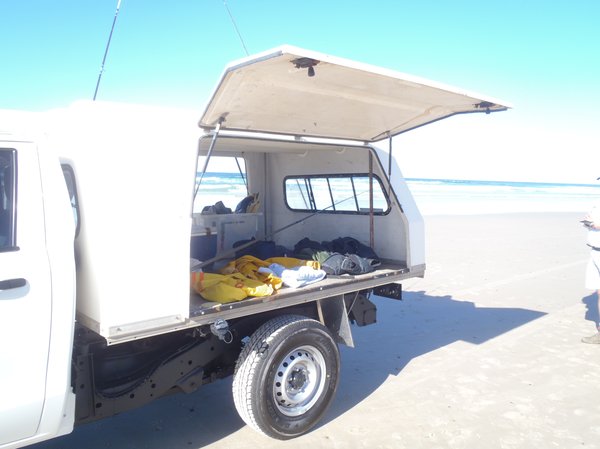
People drive on the beach mainly to explore, experience, fish, swim or surf.
- © NCCARFDrivers on dunes
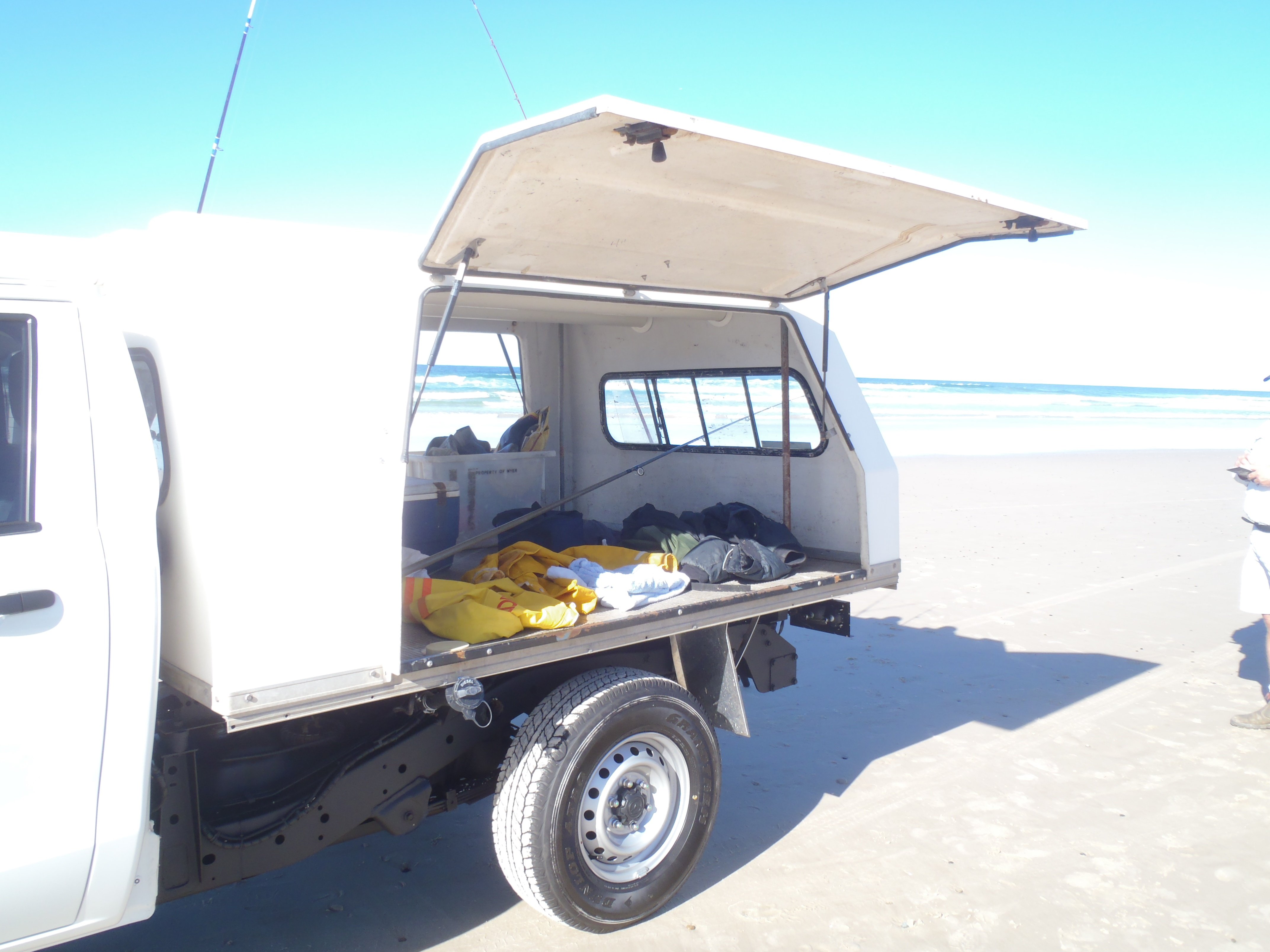
People drive on the beach mainly to explore, experience, fish, swim or surf.
© NCCARF
Impacts of driving on beaches
Social and cultural disruption
4WD activity and associated free camping can degrade cultural and social values of coastal areas, especially in Indigenous and remote communities, through noise, overcrowding, littering, and disrespect for cultural sites.
Damage to the beach and dunes
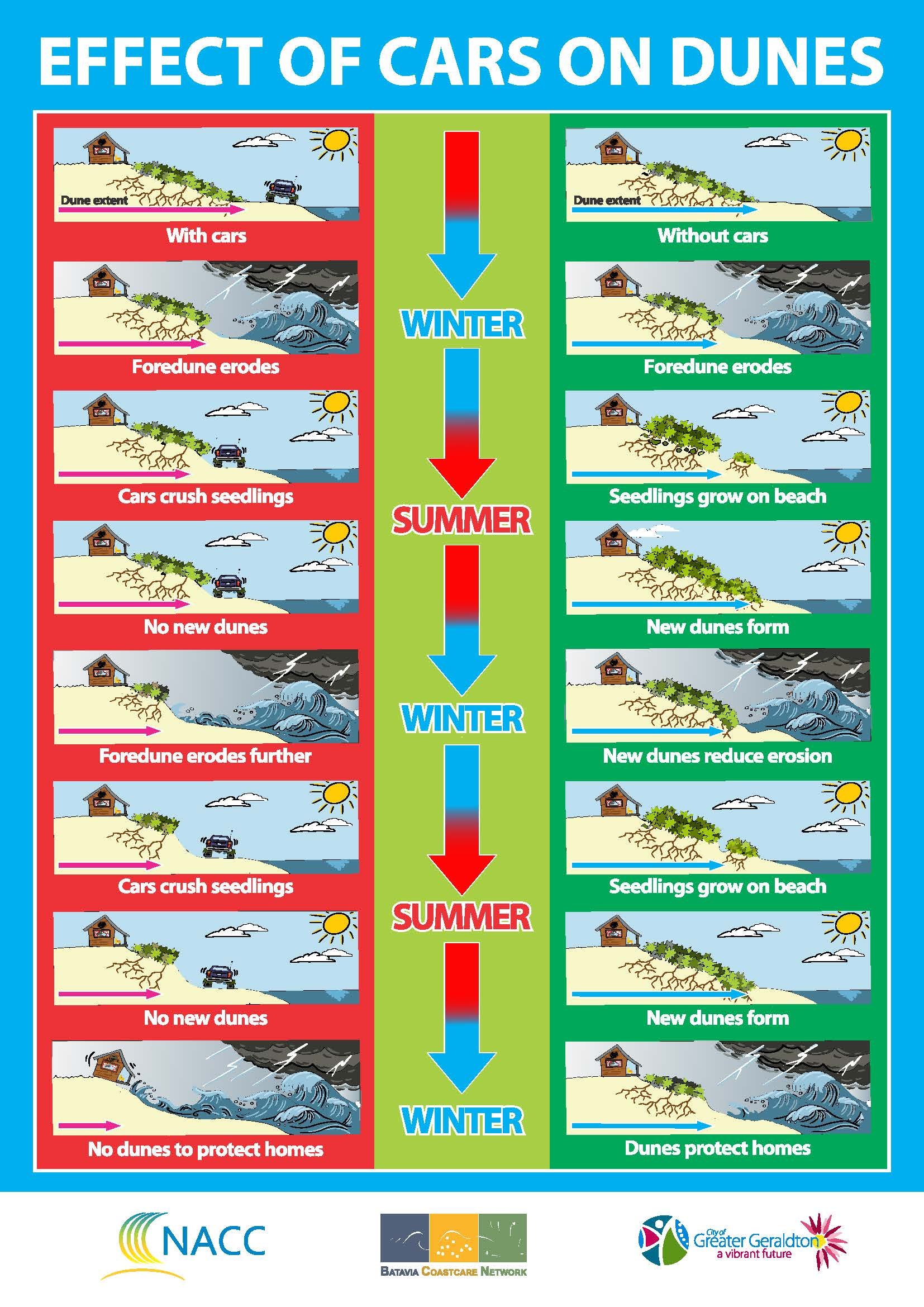
Healthy dunes play a crucial role in protecting coastal areas by buffering against rising sea levels and storm surges. They separate land from sea and stabilise the shoreline. However, driving on beaches can severely damage these dunes, contributing to erosion and sand blowouts.
Vehicle tracks disrupt natural sand movement and block the accretion of sand that helps build and maintain dunes.
Vehicles driving on beaches also compact the sand and disrupt its natural layers. This can lead to deeper compaction rather than ruts in moist environments, which can crush or displace animals within the sediment. These changes reduce habitat quality and make it more difficult for animals to move, feed, or burrow.
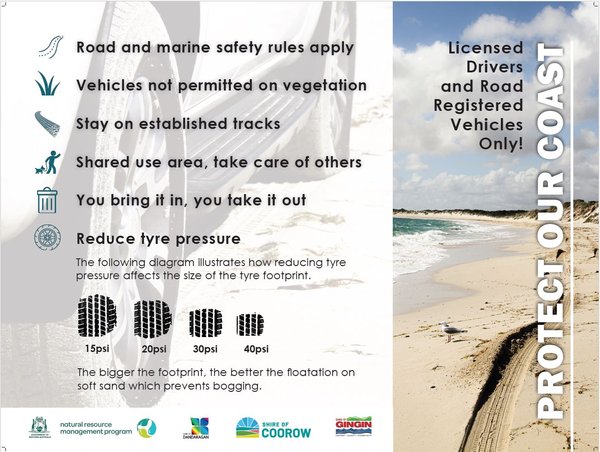
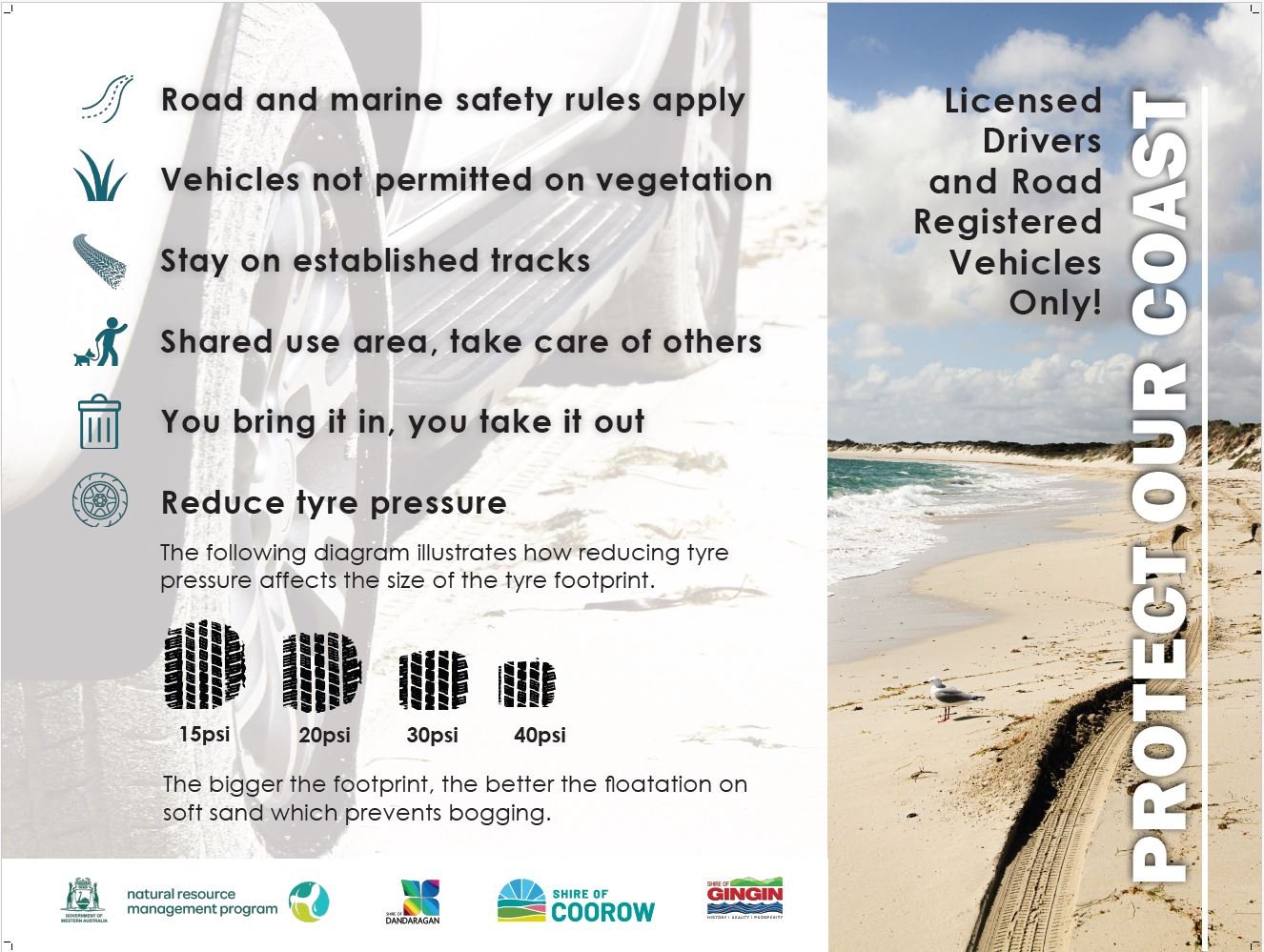
A beach information sign developed through The Coastal Recreational Tracks Project by a consortium of shires north of Perth.
- © Coastal Recreational Tracks Projectbeach sign
A beach information sign developed through The Coastal Recreational Tracks Project by a consortium of shires north of Perth.
© Coastal Recreational Tracks Project
Loss and disruption of native vegetation
Tyres from vehicles can carry seeds of invasive coastal weeds, which then take root in the dunes. These invasive species often outcompete native plants that are vital for trapping sand grains and stabilising the dune system.
Additionally, off-road driving and unregulated camping can lead to vegetation removal, particularly when plants are trampled by vehicles and collected for firewood.
Distrubance of native wildlife
Shorebirds, including vulnerable species such as the fairy tern, hooded plover, red-capped plover, and pied oystercatcher, are especially at risk. These birds lay their eggs directly on the sand, usually just above the high-tide line, making both adults and nests difficult to see and highly vulnerable to being crushed by vehicles.
Vehicle tracks can also trap small animals like turtle hatchlings, preventing or significantly slowing their journey to the sea and exposing them to dehydration, predation and energy expenditure. Even ruts as shallow as 5 cm can cause them problems.
Intertidal invertebrates experience substantial population declines due to traffic:: those buried in sand can be damaged even by little vehicle traffic. Animals may respond by leaving their habitat or burrowing deeper into the sand: if the disturbance is more widespread it can lead to mortality or population decline.
One study showed vehicle disturbance could result in a 66% reduction in ghost crab burrow density, with altered burrow architecture and simplified habitats.
Opening up access
The use of 4WD vehicles increases access to more remote areas of the coastline, often resulting in unregulated camping. This can exacerbate environmental degradation through actions like cutting across dunes, which increases erosion, and improper waste disposal, including toileting and grey water release, which pollutes both beach and marine environments.
Rules about driving on beaches
Driving on beaches in Australia varies by jurisdiction. In NSW, Victoria, and Queensland there are limits to driving on beaches, however these limits vary by location and may require a permit, include speed limits, access points, and restrictions on where to drive.
However, it seems that voluntary efforts by drivers to avoid disturbing wildlife are largely ineffective: drivers rarely follow the protocols to slow or steer away from wildlife. A 2014 study found that only 34% of private drivers attempted evasive action around birds, with no significant reduction in disturbance levels when they did.
Currently restrictions are often designed for protection of human beach users, rather than wildlife. Despite this, beach driving has resulted in many crashes and even fatalities, particularly on K'gari (Fraser Island). This is attributed to several factors including poor signage, ill-defined driver responsibilities and inadequate safety interventions.
- about Mackay Regional Council: located within the Great Barrier Reef catchment area, in late 2024 restricted driving on some beaches (important for turtle nesting rather than shorebirds) following damage to dunes and a previous successful closure campaign.
- a case study in Ballina Shire, New South Wales where the local council is reduced driving on beaches in 2024 and is phasing it out completely by 2028.
Education about driving on beaches
There is increasing evidence that there is no 'low impact' way to drive on beaches.
WATCH: Welcome by Aunty Beryl Cowan to the Worimi Conservation Lands that explains how to look after Country while driving in one of the largest coastal dune driving areas in NSW. All vehicles must be registered and display a valid WCL beach vehicle permit.
However, some councils have education resources to try and raise awareness of how to reduce the impact of 4WDs on coastal ecosystems, given that they are already coping with the impacts of climate change.
Here are some examples.
Western Australia
The Coastal Recreational Track project has been developed through a joint initiative of the Shires of Coorow, Dandaragan and Gingin north of Perth.
They have developed a master plan to support more sustainable use of the coast for recreational drivers. The Plan considers issues identified in other plans created to identify and manage coastal planning issues on the Central Coast in Western Australia. These include coast management plans, CHRMAP, inundation studies, economic strategies, regional strategies and other relevant coastal plans.
READ: the Protect our Coast brochure produced by the project
snippet from Coastal Tracks brochure
Snippet from the Coastal Recreational Tracks brochure
© Coastal Recreational Tracks Project
Snippet from the Coastal Recreational Tracks brochure
- © Coastal Recreational Tracks Projectsnippet from Coastal Tracks brochure
Snippet from the Coastal Recreational Tracks brochure
© Coastal Recreational Tracks Project
None
None
The Effects of Cars on Dunes poster was developed in a partnership between the NACC NRM, Batavia Coastcare Network and the City of Greater Geraldton.
Cars on beaches graphic
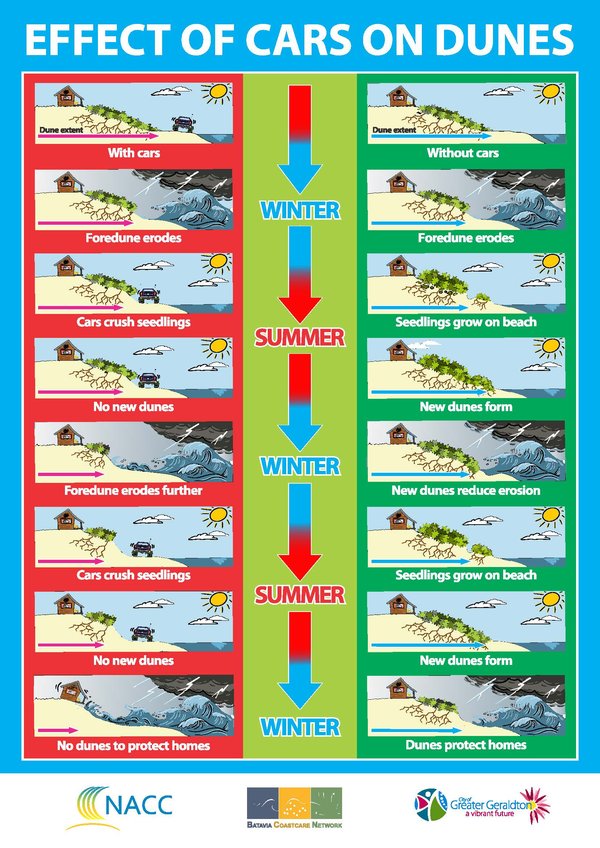
Cars on beaches graphic
New South Wales
In NSW, MidCoast Council does attempt to educate beach drivers about environmental issues (impacts on dunes and shorebirds) through a flyer, colouring-in activity and a short video (see box below).
WATCH: MidCoast Councils's video on Safe and Environmentally Friendly Beach Driving and check out their Share the Shore resources: a flyer and a colouring-in activity.
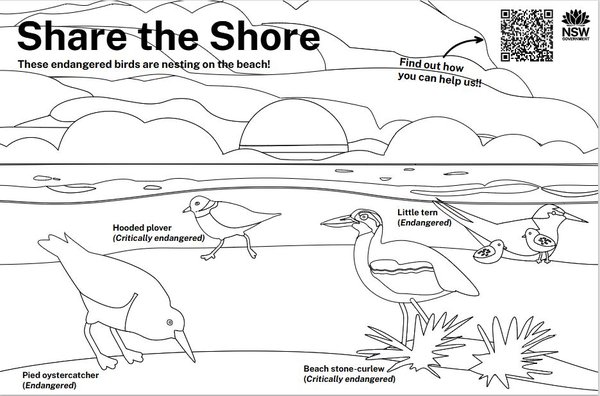
MidCoast Council has prepared a colouring activity to raise awareness of 'sharing the shore' with wildlife.
- © MidCoast Councilshare the shore colouring-in activity
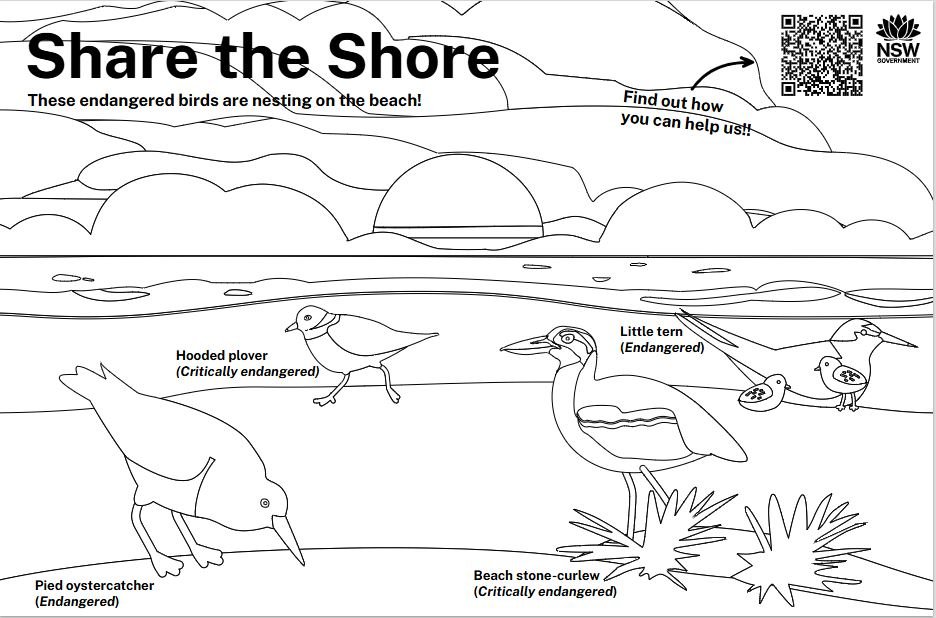
MidCoast Council has prepared a colouring activity to raise awareness of 'sharing the shore' with wildlife.
© MidCoast Council