


At a glance
- Climate change will significantly alter coastal sediment dynamics, affecting sources, sinks, and overall sediment budgets. These changes may reverse current patterns and influence coastal morphology.
- Projected impacts include shifts in sediment supply from rivers due to changing rainfall and runoff, and changes in carbonate production in regions with minimal river input. These processes will affect habitat size, location, and connectivity.
- Biogeochemical interactions between sediments and water will also change. Higher temperatures and salinity may prolong stratification, leading to anoxic sediment pore water and the release of toxins. Effective management requires site-specific sediment studies due to strong regional variability.
more about the basics in Explaining beach and estuary sediments in CoastAdapt.

Considering impacts on coastal sediments in decision making
Here we provide a selective overview rather than an exhaustive treatment of the impacts of climate change on sediments. We demonstrate that climate change and sea-level rise over the coming century will exert both direct and indirect influences on coastal sediments. This means that climate decision making needs to consider sediment-related processes.
Climate influences sediment availability over geological time scales through several processes. These include:
- atmospheric conditions, such as temperature and humidity, affect chemical weathering of continental rocks, producing sediment
- ocean chemistry and temperature, which control biological carbonate production and dissolution, and influence precipitation of non-biological carbonate
- rainfall and runoff, which determine how sediment is delivered by rivers to the coast.
These processes operate over different time frames. For planning horizons of the next century, the most significant impacts will come from changes in ocean chemistry and rainfall/runoff, as they occur on shorter time scales. In contrast, chemical weathering of rocks acts so slowly that its effects will not be noticeable within current adaptation timeframes.
Coastal sediment budget
Climate change affects sediment delivery to the coast, and this can be assessed using the sediment budget concept. A sediment budget can be determined for a nested coastal system such as a coastal embayment for example, which might include one or more beaches, estuaries or river deltas (Figure 1). Similarly a budget can be determined for any of the components within the system.
A sediment budgeting exercise involves identifying and quantifying (relatively) all the sediment sources, transport pathways and sinks.
- Sediment sources for the coastal zone include rivers, cliff erosion, in situ biogenic production, and input from the shelf and adjacent embayment.
- Sediment sinks generally include dunes, tidal inlets and estuaries, the shelf and adjacent embayment.
Changes in the rate of sediment supply can result in changes in the size, shape and presence of morphological features through sediment erosion and accretion.
- Erosion occurs locally in the system where the rate of sediment delivery is less than removal.
- Accretion occurs locally where the rate of delivery is greater than removal.
Understanding these balances is essential for predicting how climate-driven changes in rainfall, runoff, and sea-level rise will reshape coastal morphology.
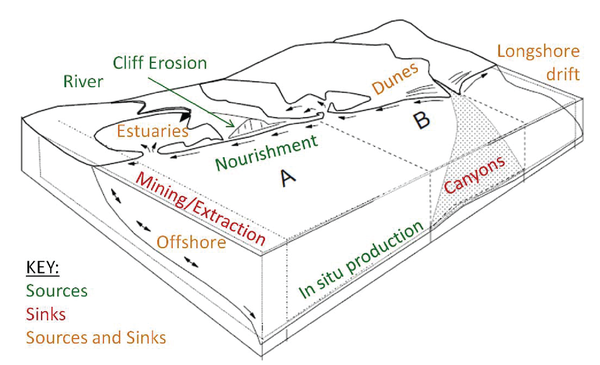
Figure 1: Conceptualised coastal sediment budget that shows sediment sources, transport pathways and sediment sinks. Climate change can potentially influence the rate of sediment supply from sources and to sinks. This potentially leads to landform adjustments due to changing patterns of erosion and deposition.
- © Woodroffe et al. 2012.Impacts on sediments f4
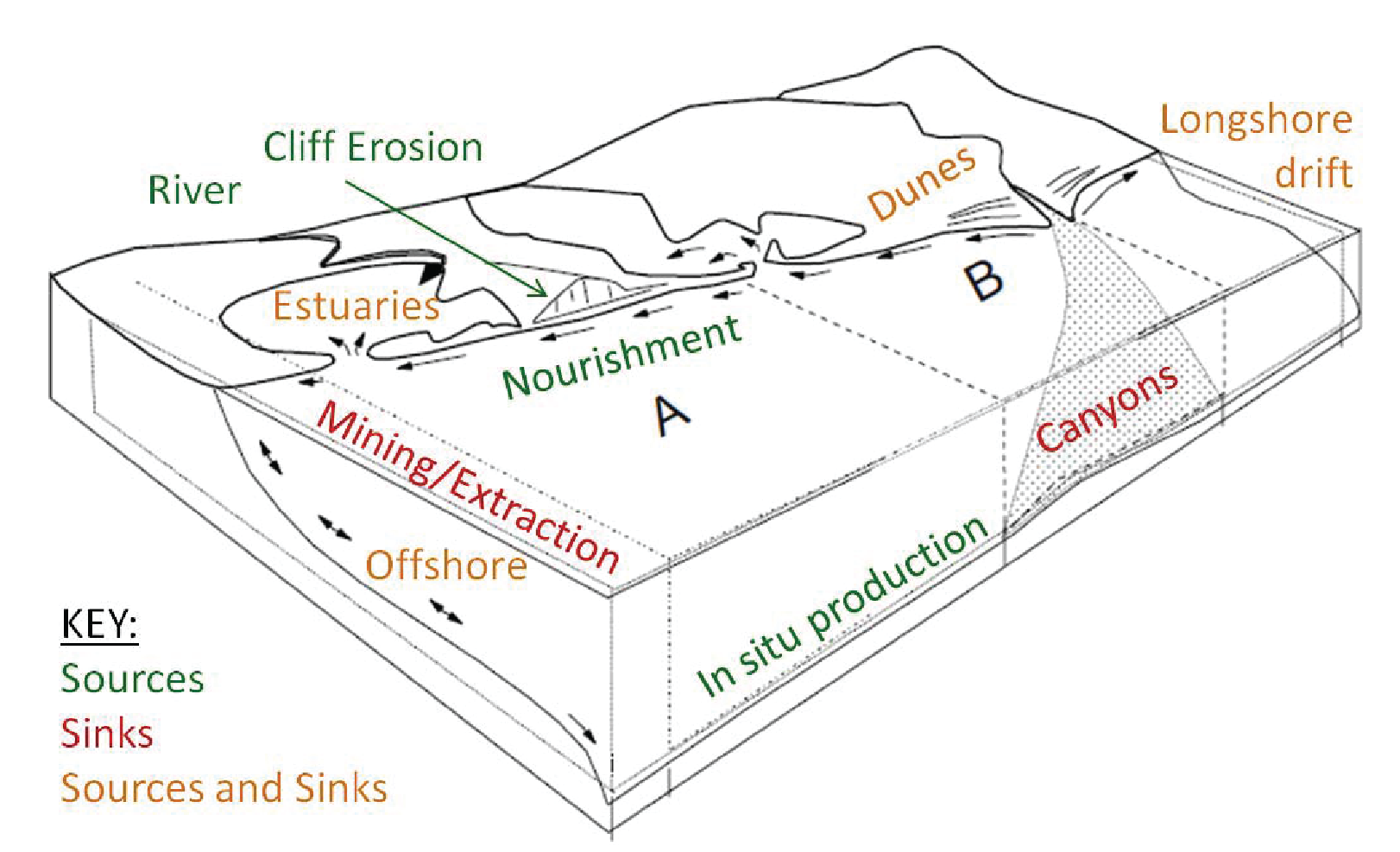
Figure 1: Conceptualised coastal sediment budget that shows sediment sources, transport pathways and sediment sinks. Climate change can potentially influence the rate of sediment supply from sources and to sinks. This potentially leads to landform adjustments due to changing patterns of erosion and deposition.
© Woodroffe et al. 2012.
Climate impacts on beach sediments
Rising sea levels, which are driven by recent and projected climate change, are altering how the shoreface seaward of the surf zone interacts with beach sediment. Depending on conditions, the shoreface may act as either a sink or a source of sand. Past historical rise suggests that the response will depend on the slope of the shoreface.
- Steeply sloping shorefaces: Storm-driven transport tends to move sediment offshore, making the lower shoreface a sediment sink (Figure 2a).
- Gently sloping shorefaces: As sea level rises, waves may push sediment landward, turning the shoreface into a source of beach sand (Figure 2b).
These patterns do not eliminate shoreline recession; they simply influence its rate and style.
Large-scale coastal behaviour under sea-level rise remains an active research area, with ongoing debate about when the shoreface acts as a source or sink.
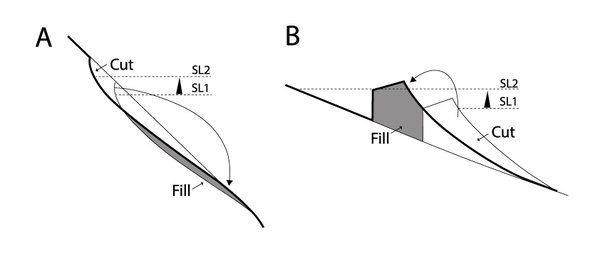
Figure 2: Potential styles of beach response to sea level rise, with decreasing substrate slope from left to right. Sea level rise is indicated by sea level SL1 increasing to SL2.
(A) Steeply sloping substrate with offshore transport under sea level rise and the lower shoreface becoming a sediment sink.
(B) Gently sloping shoreface with onshore transport under sea level rise and the shoreface becoming a sediment source.
- © Cowell et al. 1995.beach sediments
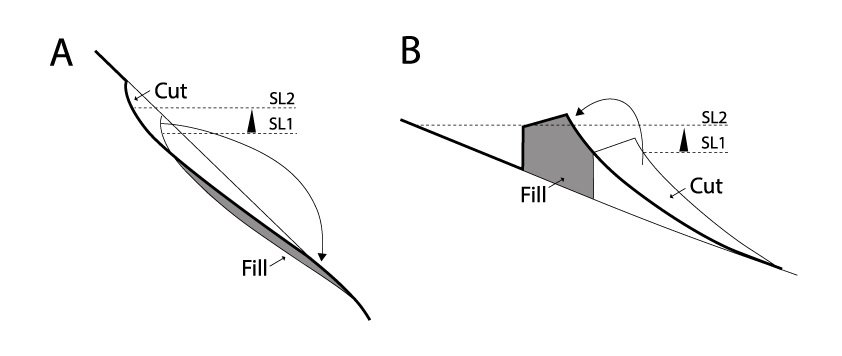
Figure 2: Potential styles of beach response to sea level rise, with decreasing substrate slope from left to right. Sea level rise is indicated by sea level SL1 increasing to SL2.
(A) Steeply sloping substrate with offshore transport under sea level rise and the lower shoreface becoming a sediment sink.
(B) Gently sloping shoreface with onshore transport under sea level rise and the shoreface becoming a sediment source.
© Cowell et al. 1995.
River sediment supply
In places where current rivers deliver sediment directly to beaches (the open coast), any change in regional rainfall patterns could significantly alter the coastal sediment budget. Where there is more rainfall and runoff, there will be more sediment reaching the coast: less rainfall and runoff mean less sediment.
These impacts will be moderated by vegetation changes in catchments, which may amplify or moderate the sediment load carried by rivers.
Implications for beaches
Reduced supply of river sediment can trigger beach erosion. Initially, this is adjacent to the river mouth, then progressively move downdrift as the rate of sediment coming from the river is less than the amount removed by the waves. Alternatively, increased supply of river sediment can further nourish beaches, initially adjacent to the river mouth and then progressively downdrift. See Box 1, which describes this for the Burdekin River.
Impacts on sediments f6
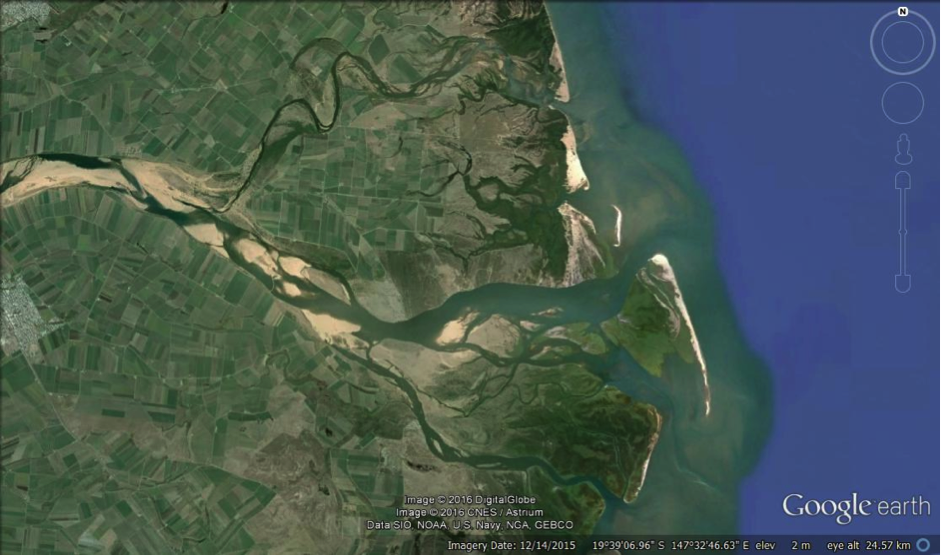
Box 1: Example: dynamics of the Burdekin River (North Queensland) under climate change.
© Google Earth
Box 1: Example: dynamics of the Burdekin River (North Queensland) under climate change.
- © Google EarthImpacts on sediments f6
Box 1: Example: dynamics of the Burdekin River (North Queensland) under climate change.
© Google Earth
The Burdekin River currently delivers sediment directly to the open coast, forming a wave-dominated delta. Sands from the river are deposited in shoals just seaward of the mouth, where waves and currents redistribute them along the shoreline.
At present, sediment delivery from the river exceeds removal by wave action, causing accretion near the river mouth and naturally nourishing adjacent beaches downdrift.
Rainfall projections for the Burdekin region under the medium emissions scenario (CSIRO and Bureau of Meteorology, 2015) indicate changes of –15% to +10% relative to 1990 values by the end of the century. This variability could lead to either a substantial reduction or a modest increase in runoff and sediment supply, compounding potential sediment losses associated with sea-level rise.
Regardless of erosion or accretion, intertidal habitats (presumably with its infauna) will persist but migrate landward. As shorelines recede due to reduced sediment supply, habitats associated with coastal dune systems will gradually diminish.
Ultimately, the impact of climate-driven changes to a beach’s sediment budget depends on the combined effect of all sources and sinks. Sea-level rise can amplify losses or offset gains from river sediment supply if rising water levels cause sand to move offshore or into dunes. Persistent shifts in wave direction may alter the rate of alongshore sediment supply from one embayment to the next: or even reverse it.
This illustrates how complex the outcomes can be when there are multiple interactions components of a sediment budget!
Climate change impacts on estuary sediments
If regional rainfall and runoff increase, more sediment will be delivered to the landward end of estuaries; if they decrease, sediment delivery will decline.
Sea-level rise will also alter sediment exchange delivery from the open coast into an estuary. In some cases, rising seas may deepen an estuary entrance, improving water flow through the estuary entrance –its hydraulic efficiency. While in others, shoaling may keep pace with sea-level rise, resulting in little change. Greater hydraulic efficiency can intensify tidal currents, accelerate sediment transport, and drive significant reshaping of an estuary.
An estuary’s role as a sediment sink or source for the open coast depends on whether tidal currents at its entrance are flood-dominant or ebb-dominant, which depends – primarily but not simply—on the internal morphology of an estuary.
Typically, a barrier-type estuary without an extensive intertidal flat is flood-dominant, while an estuary with a large intertidal flat is ebb-dominant. Sea-level rise has the potential to shift this balance in tidal regime, altering sediment exchange and the overall estuary and (open coast) sediment budget.
In many estuaries, there are strong gradients in sediment grain size that are associated with changes in habitat types. For example, sediment can change from sand in the flood tide delta near the ocean entrance, mud in the central basin of the estuary, and sand again in river delta upstream (Figure).
Impacts on sediments_Figure 7a
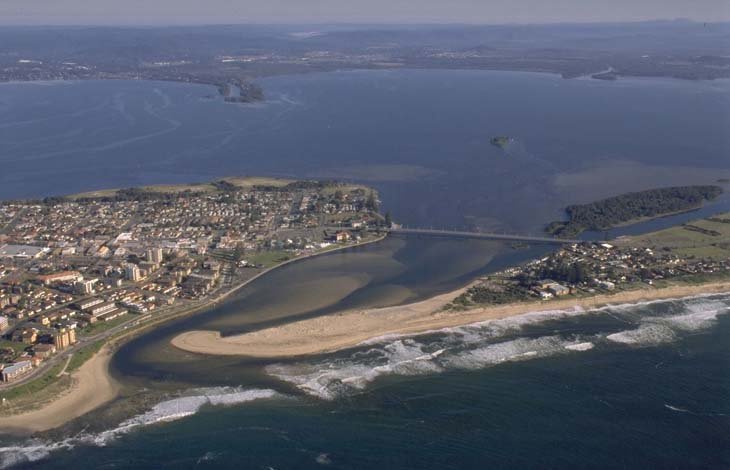
Box 2: Tuggerah Lake estuary is presently being infilled from the landward end by sediment delivered from rivers building sandy fluvial (bayhead) deltas and also from the seaward end by waves and tides building a sandy flood tide delta. Silts and clays coming down the rivers also reach the intertidal mud flats and central basin of the estuary and settle there.
© State of New South Wales and Office of Environment and Heritage 2016.
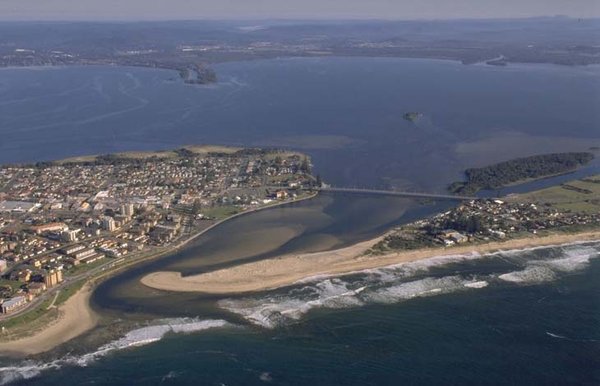
Box 2: Tuggerah Lake estuary is presently being infilled from the landward end by sediment delivered from rivers building sandy fluvial (bayhead) deltas and also from the seaward end by waves and tides building a sandy flood tide delta. Silts and clays coming down the rivers also reach the intertidal mud flats and central basin of the estuary and settle there.
- © State of New South Wales and Office of Environment and Heritage 2016.Impacts on sediments_Figure 7a
Box 2: Tuggerah Lake estuary is presently being infilled from the landward end by sediment delivered from rivers building sandy fluvial (bayhead) deltas and also from the seaward end by waves and tides building a sandy flood tide delta. Silts and clays coming down the rivers also reach the intertidal mud flats and central basin of the estuary and settle there.
© State of New South Wales and Office of Environment and Heritage 2016.
Impacts on sedimens7b
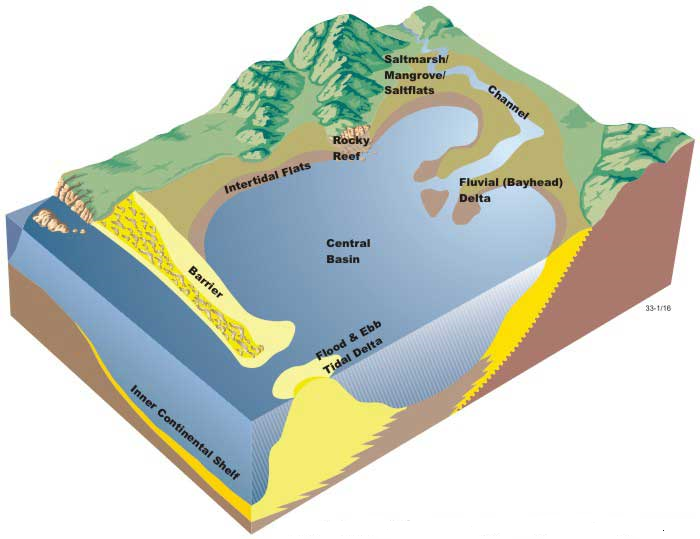
Figure 3: There are a wide range of other morphological units and associated sediment types in estuary systems. Jointly these morpho-sedimentological units define the physical attributes of habitats.
Coastal rainfall projections for this region are increased summer and autumn rainfall and reduced winter and spring rainfall. It is not clear, but there may be a change in sediment delivery rate to the fluvial deltas and central mud basin over the coming decades due to these changes in rainfall and runoff (CSIRO and Bureau of Meteorology 2015).
Sea level rise along this section of the coastline is projected to be larger than the global average. If sediment supply along the open coast does not keep up, this will deepen the estuary entrance and increase tidal exchange between the estuary and ocean. This will compound the adjustments in estuary morphology and associated sediment zonation resulting from climate change impacts on river sediment supply.
© OzCoasts (Geoscience Australia) 2016.
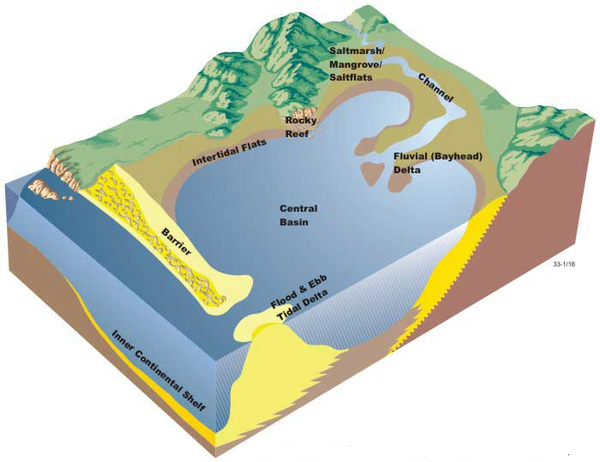
Figure 3: There are a wide range of other morphological units and associated sediment types in estuary systems. Jointly these morpho-sedimentological units define the physical attributes of habitats.
Coastal rainfall projections for this region are increased summer and autumn rainfall and reduced winter and spring rainfall. It is not clear, but there may be a change in sediment delivery rate to the fluvial deltas and central mud basin over the coming decades due to these changes in rainfall and runoff (CSIRO and Bureau of Meteorology 2015).
Sea level rise along this section of the coastline is projected to be larger than the global average. If sediment supply along the open coast does not keep up, this will deepen the estuary entrance and increase tidal exchange between the estuary and ocean. This will compound the adjustments in estuary morphology and associated sediment zonation resulting from climate change impacts on river sediment supply.
- © OzCoasts (Geoscience Australia) 2016.Impacts on sedimens7b
Figure 3: There are a wide range of other morphological units and associated sediment types in estuary systems. Jointly these morpho-sedimentological units define the physical attributes of habitats.
Coastal rainfall projections for this region are increased summer and autumn rainfall and reduced winter and spring rainfall. It is not clear, but there may be a change in sediment delivery rate to the fluvial deltas and central mud basin over the coming decades due to these changes in rainfall and runoff (CSIRO and Bureau of Meteorology 2015).
Sea level rise along this section of the coastline is projected to be larger than the global average. If sediment supply along the open coast does not keep up, this will deepen the estuary entrance and increase tidal exchange between the estuary and ocean. This will compound the adjustments in estuary morphology and associated sediment zonation resulting from climate change impacts on river sediment supply.
© OzCoasts (Geoscience Australia) 2016.
As climate change impacts the rate of sediment supply to the estuary, and sea level rise changes the entrance conditions, this sediment zonation will adjust with changes in the morphology of the estuary. This can have a knock-on effect, changing the relative size, location and connectivity of habitats within the estuary.
Climate change is also likely to impact biogeochemical cycles – the chemical and biological processes that recycle nutrients - that occur within the bed sediment. These sediments are active zones where organic matter decomposes, nutrients are transformed, and gases like methane or nitrogen compounds are exchanged with the water column.
Climate change-driven increases in water temperature can prolong stratification, which occurs when water forms into layers based on temperature differences. In these conditions, warmer, less dense surface water remains above cooler, denser bottom water, reducing vertical mixing. Extended stratification prevents bottom waters from re-oxygenating through contact with the atmosphere.
This can accelerate processes like denitrification, methanogenesis, and phosphorus release, altering nutrient availability and greenhouse gas emissions. Longer stratification periods also affect sediment-water interactions, potentially leading to harmful algal blooms and shifts in ecosystem productivity.