



At a glance
- A blue carbon ecosystem restoration project in Pitt Water–Orielton Lagoon has restored temperate saltmarsh community by reintroducing tidal flows and is monitoring changes within and around the wetland.
- The site was cut off from tidal flow in the 1960s, causing saltmarsh decline; restoration work since 2020 includes monitoring, revegetation, weed control, and levee removal in 2024.
- The project identifies environmental benefits of saltmarsh restoration and informs future blue carbon and carbon storage initiatives in Tasmania.
Habitat restoration required
Understanding the broader impacts of saltmarsh restoration is a core aim of the Pitt Water-Orielton Lagoon blue carbon project in Tasmania.
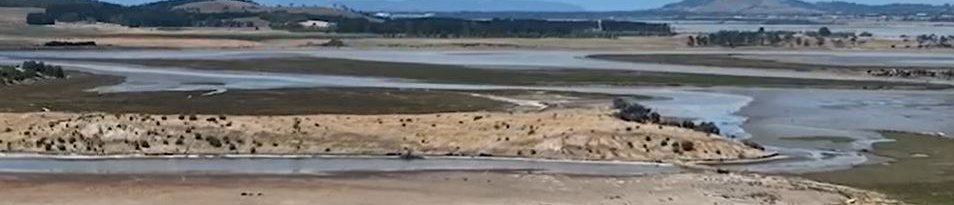
The project site is located near Richmond, north-east of Hobart, and had restricted tidal flows to Pitt Water–Orielton Lagoon in the 1960s through the construction of a levee. This allowed parts of the wetland to become dehydrated for sheep grazing, but led to the decline and disconnection of a large area of saltmarsh wetland isolated from natural water movement.
NRM South began an Australian Government‑funded restoration project in 2020 to restore a 65 ha section of the wetland and monitor the environmental outcomes. Additional funding was secured in 2022 through the Blue Carbon Ecosystem Restoration Grant program, recognising the site as one of five national demonstration projects.
The project - from 2022 to 2025 - became the largest wetland restoration effort undertaken in Tasmania. Its aim was to explore the wide‑ranging benefits of restoring a stranded temperate saltmarsh system, including impacts on nearby habitats, surrounding vegetation and ecological communities.
Following the reintroduction of tidal flows, early monitoring results indicate rapid ecological recovery. This includes the return of fish of different size classes, increased birdlife and changes in foraging behaviour, increased invertebrate activity within and surrounding the restored area, and strong regeneration of saltmarsh vegetation. This highlights the resilience of the ecosystem when natural processes are restored.
Restoration activities
Restoration work at the site included baseline monitoring of flora, fauna and water quality prior to intervention, along with weed control, revegetation of adjacent areas using native woody plants and grasses, and fencing to exclude livestock.
A major milestone was reached in April 2024, when the levee was completely removed allowing tidal water flow to resume across the site.
To evaluate the impacts of this change, NRM South is continuing to work with the University of Tasmania and Blue Conservation Services to carry out ongoing environmental monitoring across the site and its surrounding habitats. A key objective is to understand the full range of benefits associated with saltmarsh restoration, including flow-on effects for nearby terrestrial and marine ecosystems.
The findings from Pitt Water–Orielton Lagoon are helping to demonstrate the ecological, climate and economic value of blue carbon restoration, and are expected to inform future projects across Tasmania.
This work also aligns with broader policy directions. The Tasmanian Government’s draft Emissions Reduction and Resilience Plan – Agriculture, highlights future opportunities to enhance carbon storage through initiatives like blue carbon, including developing strategies to better understand the risks, barriers and co‑benefits of such approaches.
Future work
Building on this project, the Rivers to Ramsar program (which runs to 2028) is extending restoration efforts across waterways feeding into Pitt Water-Orielton Lagoon, focusing on improving water quality, restoring habitat corridors, and strengthening habitat connections.
To cite:
This case study was prepared by NCCARF.
Please cite as: NCCARF, 2025: Blue carbon and broader benefits of saltmarsh regeneration in Tasmania. Case study for CoastAdapt, National Climate Change Adaptation Research Facility, Griffith University, Gold Coast.