


At a glance
- Since 2013, the Coastal Resilience Short Course has helped professionals across government, industry, and academia translate coastal adaptation research into practice.
- Originating from research undertaken in Queensland in the early 2010s, it has developed into an international blended learning programme that combines science, field experience, and collaborative problem-solving.
- Today, it remains a trusted pathway for building the knowledge, confidence, and partnerships that enable practitioners in Australia and beyond to plan and implement effective responses to coastal change.
More than a decade of capacity building and learning
The Southeast Queensland Climate Adaptation Research Initiative, a CSIRO-led research program (2009-2012) prompted the production of valuable frameworks such as the Compendium of Coastal Hazard Adaptation Options and the Guidelines for Coastal Hazard Adaptation in Queensland. However, many practitioners, particularly in local and state government, needed guidance on how to implement these findings in practice.
To meet this need, the Coastal Resilience Short Course was established in 2013 and initially delivered through Griffith University. Its purpose was to translate research outcomes into practical capability by equipping participants with the technical understanding and strategic skills required to manage growing coastal risks.
The first courses were delivered in Brisbane and attracted strong participation from councils and agencies across Queensland. Interest soon spread nationally and internationally, with dedicated courses delivered in Indonesia (DFAT), Vietnam, Thailand (GIZ), and Chile.
Over time, the programme has evolved into a structured framework that accommodates both introductory and advanced learning pathways. Each iteration reflects ongoing refinement and a growing recognition that successful coastal adaptation relies not only on sound science but also on collaboration, communication, and integration across disciplines and sectors.
EXPLORE: one of the inspirations for the short course, the Coastal Hazard Adaptation Options – A Compendium for Queensland Coastal Councils.
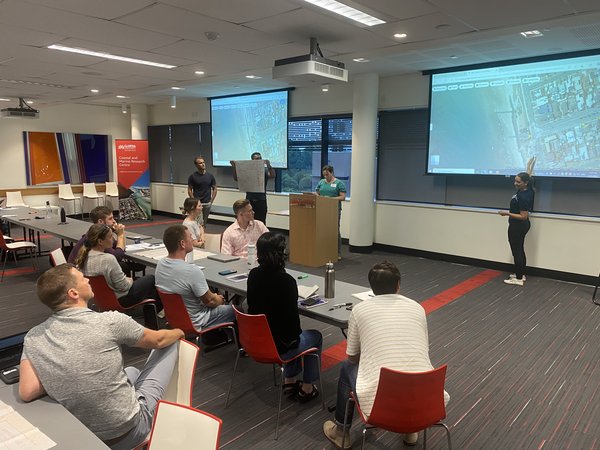
Course participants learn to address the interlinked risks shaping Australia’s coastlines.
- @ Marcello SanoCoast resilience short course_1
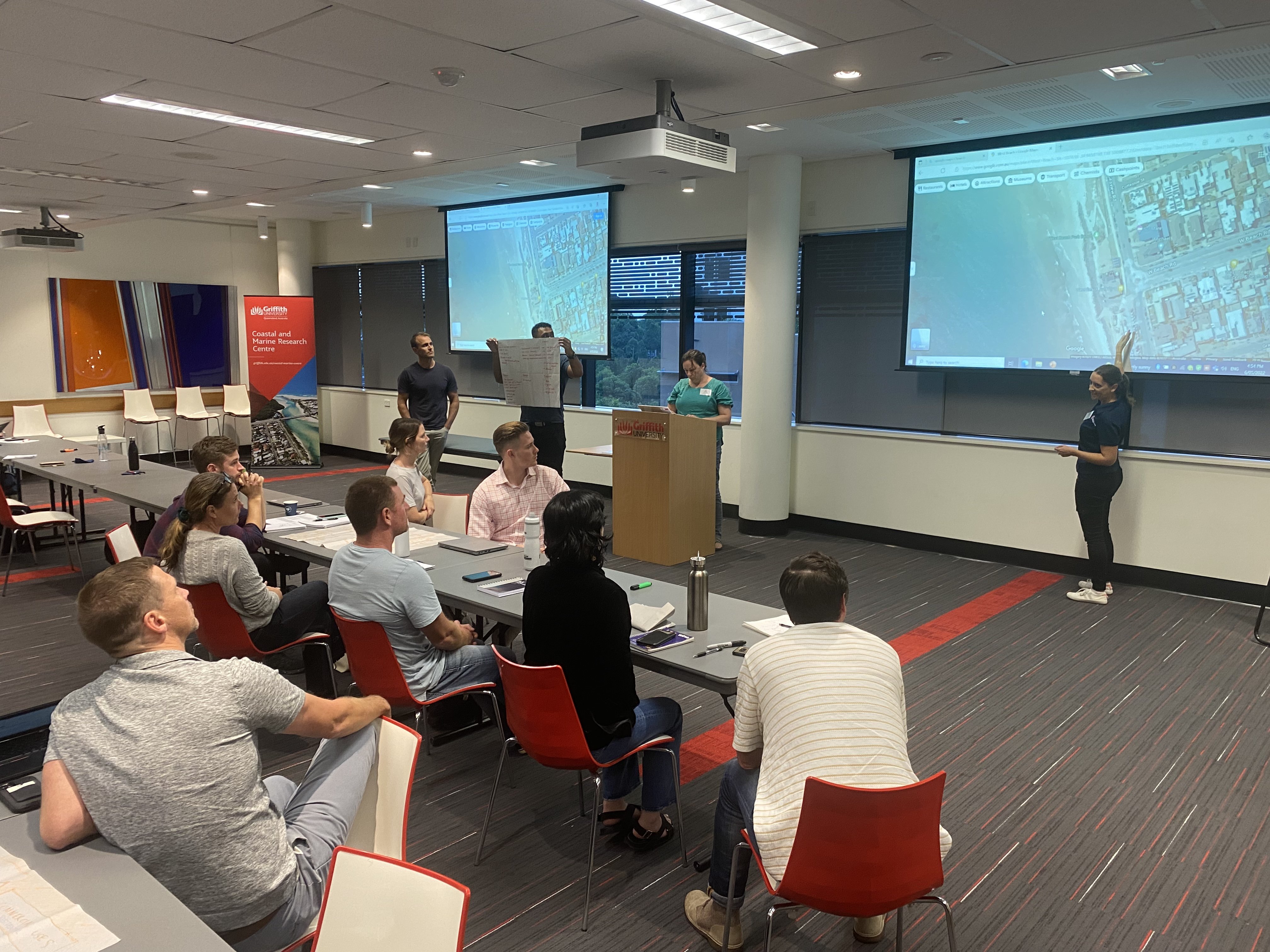
Course participants learn to address the interlinked risks shaping Australia’s coastlines.
@ Marcello Sano
Learning to address complex coastal risks
Through the course, participants learn to address the interlinked risks shaping Australia’s coastlines: erosion, shoreline change, storm surge and tidal flooding, estuary management, and sediment transport. The programme emphasises compound and cascading risks - how coastal and catchment processes interact during extreme events - and the growing influence of climate variability on infrastructure, ecosystems, and communities.
Beyond the physical processes, the course also examines governance, economics, and community expectations. It encourages participants to integrate coastal science into land-use planning, policy frameworks, and investment decisions. Recent modules have expanded to include probabilistic hazard approaches, Indigenous engagement, and the role of emerging technologies such as artificial intelligence.
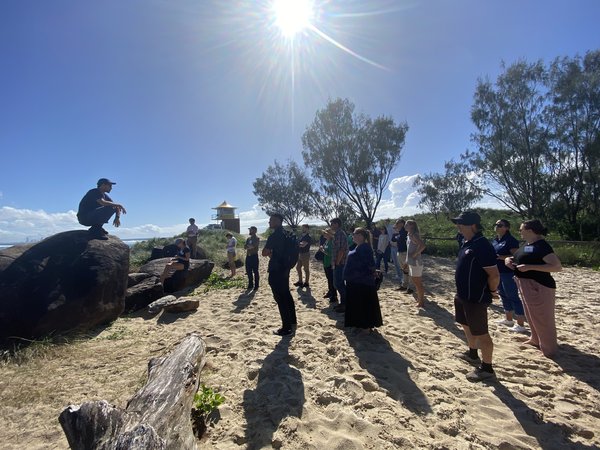
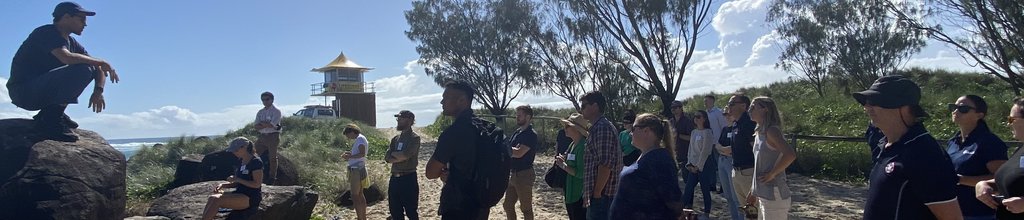
Most of the in-person part of the course is delivered in the Gold Coast and Byron Shire.
- @ Marcello SanoCoastal resilience short course_2
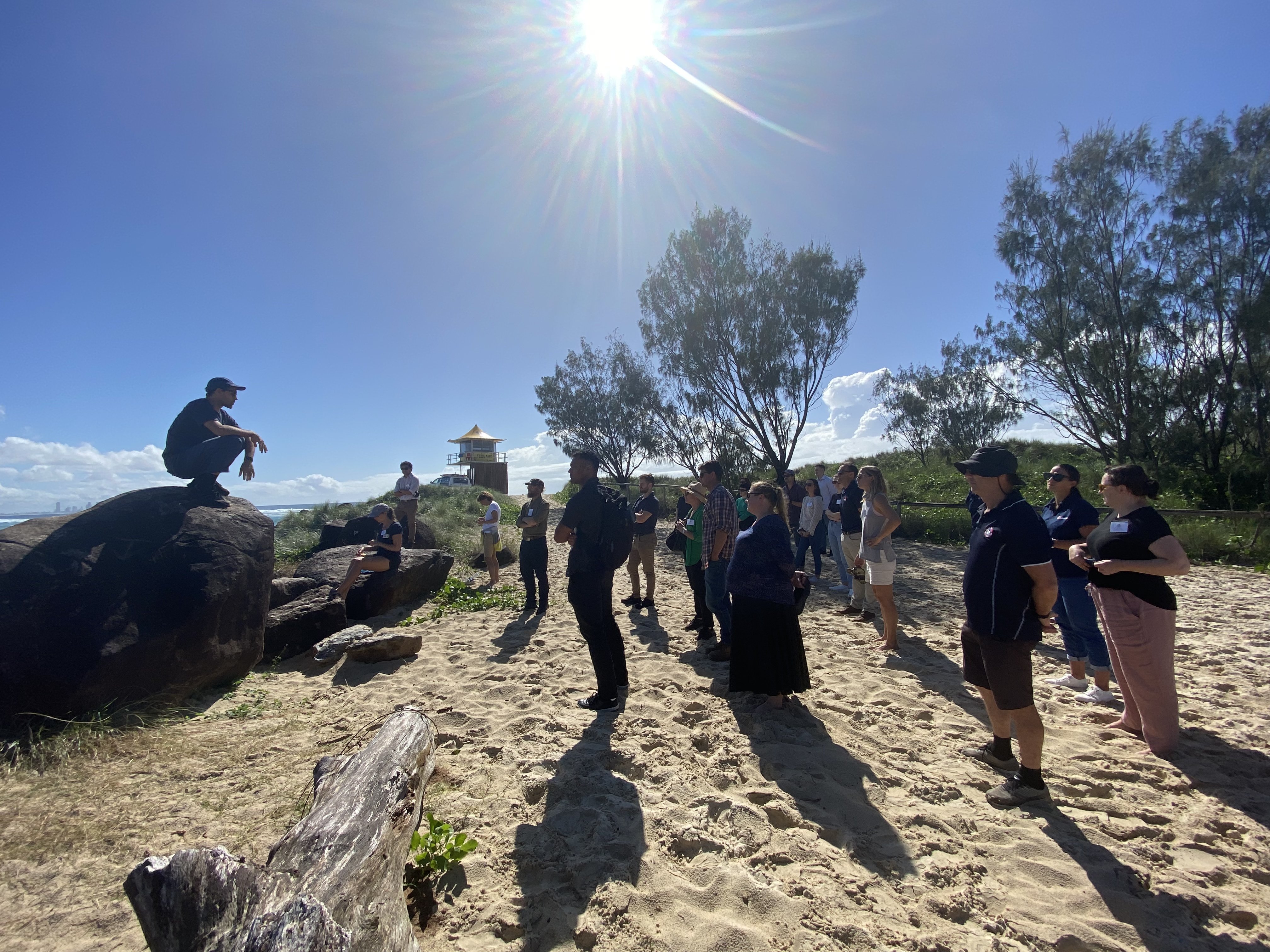
Most of the in-person part of the course is delivered in the Gold Coast and Byron Shire.
@ Marcello Sano
Learning to translate policy into implementable action
The course helps participants translate policy and research into clear, implementable actions. It blends academic teaching with applied examples through:
- lectures featuring university, industry and government specialists
- interactive workshops that use co-design and Lean Canvas tools to frame real-world problems
- field components where participants visit active adaptation sites such as the Tweed River Sand Bypass, artificial reefs, and coastal erosion hotspots.
These activities promote peer learning and cross-disciplinary understanding. Participants practice identifying adaptation options, evaluating trade-offs, and designing feasible pathways that reflect their jurisdiction’s technical and social context.
The course’s blended model (in-person and online) ensures accessibility for remote learners while maintaining the value of hands-on, place-based experience.
Building a coastal adaptation community
Over the past decade, the Coastal Resilience Short Course has equipped more than 600 professionals across Australia and the Asia–Pacific with the knowledge and confidence to interpret coastal studies, brief decision-makers, and lead adaptation initiatives. Many participants have subsequently advanced their careers or secured positions within the coastal management sector. Councils and government agencies have also applied insights gained through the course to inform the development of coastal management plans, strategies, and on-ground implementation programs.
The course has also strengthened professional networks, enabling alumni to share case studies, methodologies, and lessons beyond the training itself. It continues to evolve, with updated content on economic appraisal, nature-based solutions, and digital tools for hazard analysis.
READ: more about the Coastal Resilience Short Course.
Lessons from a decade of building capacity of coastal professionals
The Coastal Resilience Short Course highlights the importance of sustained investment in capacity building. Key lessons emerging from a decade of delivery include:
- Applied learning strengthens capability.
Field-based and problem-oriented approaches ensure that knowledge is translated into practice and directly supports on-ground decision-making. - Interdisciplinary learning improves outcomes.
The course benefits from contributions across academia, consulting, and government, combining cutting-edge research with practical experience. Effective adaptation requires collaboration among planners, engineers, economists, and community engagement officers. - Field visits and co-design build shared understanding.
Experiential learning through site visits, combined with collaborative tools such as Lean Canvas, helps participants analyse real situations, identify priorities, and co-develop feasible adaptation options. - Knowledge exchange sustains progress.
Alumni networks and continued participation help maintain institutional capability and foster ongoing collaboration between agencies and professionals. - Innovation must remain practical.
New tools and analytical methods are most valuable when grounded in existing policy frameworks and operational realities.
The Coastal Resilience Short Course is currently delivered through Apter, a professional training platform that hosts a suite of programs relevant to climate adaptation, environmental resilience, and related fields. These programs follow a similar applied learning model, combining expert knowledge, collaboration, and practical case studies to strengthen professional capability across sectors.
To cite:
This case study was prepared by Marcello Sano, Apter, and Adjunct at Griffith University and Ca’ Foscari Venice.
Please cite as: Sano, M, 2025: The Coastal Resilience Short Course: a decade of building practical capability for adaptation on Australia’s coasts. Case study for CoastAdapt, National Climate Change Adaptation Research Facility, Griffith University, Gold Coast.