

At a glance
- The Carnarvon Fascine is a tidal lagoon situated in the township of Carnarvon, Western Australia. The lagoon is a significant recreational boating asset that provides safe waters for vessels and supports several boating facilities.
- In 2017, a breach of the barrier spit that protected the lagoon entrance channel from the open ocean led to the disintegration of the spit and infilling of the lagoon entrance channel. The lagoon was effectively closed off from the ocean for vessels.
- In 2023, the Western Australian government supported a one-off dredging campaign to reopen the entrance channel to re-establish access. The dredge spoil was then used to reconstruct the dune system on the spit with the aim to reduce the risk of future breaches.

The Carnavon Fascine is crucial for local fishing and tourism
Carnarvon is a small coastal town in northwest, Western Australia (Figure 1). The town has a population of roughly 5,000 people with a rich mixture of heritages and culture. The local economy is diverse: several key industries drive its growth, including horticulture, tourism, fishing, farming and mining.
Carnarvon is vulnerable to the impacts of sea level rise and associated coastal inundation and erosion hazards resulting from a changing climate. Compounding the climate change risk in Carnarvon is cyclone activity that is projected to shift to fewer but more intense cyclones (CSIRO and Bureau of Meteorology, 2024). Also, as Carnarvon lies within a semiarid to arid climate, changes to rainfall patterns could pose significant risk to the local horticulture and farming activities. Such shifts in rainfall and cyclonic patterns may also influence changes to the sediment discharge patterns of the Gascoyne River, which is a substantial sediment source for the local coastal system.
The Carnarvon Fascine, a tidal lagoon on which the town is located, plays a crucial role for the town as it helps to facilitate both fishing and tourism. The Fascine is the former southern arm of the Gascoyne River that was closed off from the river system following the construction of a causeway in 1981 (Figure 1). A barrier spit separates the ocean from the tidal lagoon and protects the Fascine from wave energy. Within the Fascine there are several boating facilities including the Carnarvon Yacht Club, private and public jetties and two boat ramps. The Fascine also provides safe harbour for vessels traveling along the WA coastline.
Following construction of the causeway in 1981, only minor maintenance dredging was required to keep the lagoon open for vessels with drafts of up to 1.8 m. In 2017, there was a breach of the barrier spit that protected the lagoon entrance channel from the open ocean, which led to the disintegration of the spit and infilling of the lagoon entrance channel.
The closure of the Fascine entrance channel in 2017 meant that most vessels, particularly yachts, could not get in or out of the Fascine. This greatly disrupted boating activities, with many yachts stranded in the Fascine. Given the detrimental impact on the community and local economy, the State Government sought a solution to improve ocean access at the Fascine.
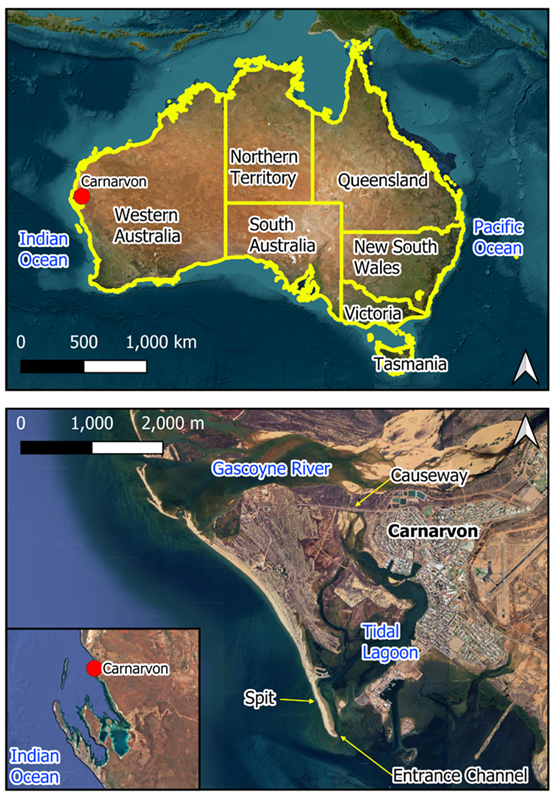
Figure 1. Carnarvon is located nearly the most westerly point of Western Australia
- © WA govFig1_Carnavon
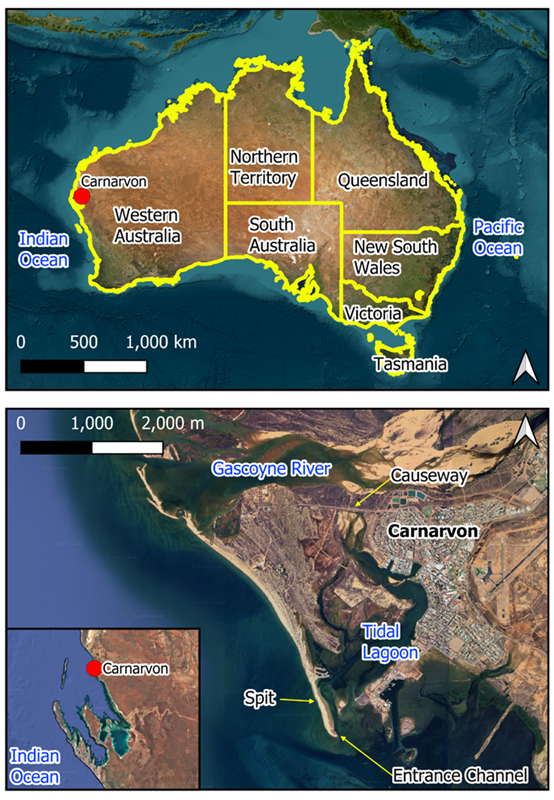
Figure 1. Carnarvon is located nearly the most westerly point of Western Australia
© WA gov
Coastal processes
To investigate how best to address the issue, multiple technical studies were commissioned to better understand the key coastal process drivers for the site.
An overview of the coastal processes impacting the site are summarised below and shown in Figure 2.
- The coastal dynamics and sediment transport are driven by dominant southerly winds that generate local seas, combined with low energy northwest refracted swells from the Southern Ocean that wrap around the offshore islands (Baird, 2023).
- Spit growth is limited by the strong tidal currents of Teggs Channel to the south.
- Sediment supply to the spit is inconsistent, driven by a combination of tropical cyclones, diffracted swell waves and flood dynamics of the Gascoyne River (Seashore, 2020).
- Seasonal sediment movement can be summarised as (Seashore, 2020):
Summer: Persistent southerly winds create local seas, pushing sediment northward along the spit, which generally results in narrowing of the spit.
Winter: Larger swells from the northwest dominate, driving sediment southward along the spit. During this period, lighter easterly winds reduce the impact of local seas on sediment transport, promoting the nourishment and widening of the spit.
Figure 2. Diagram of coastal processes.
- © Adapted from Baird (2023)Fig2_Carnavon
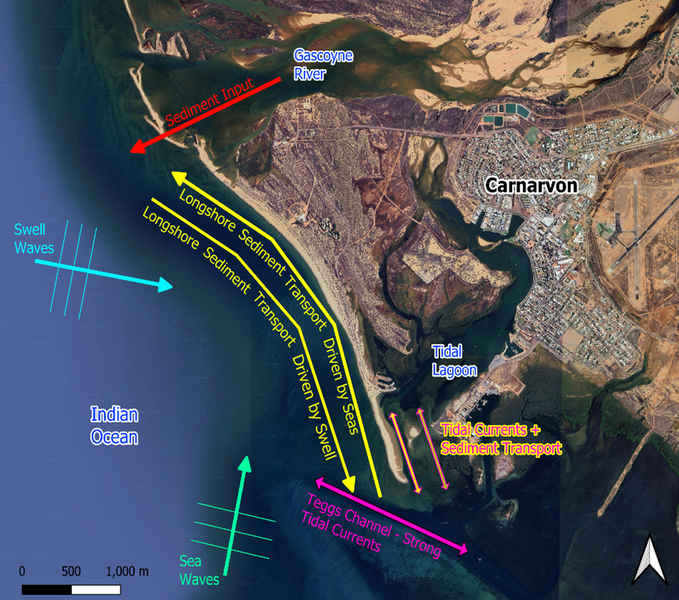
Figure 2. Diagram of coastal processes.
© Adapted from Baird (2023)
The local climate risks and impacts
The key risk identified in efforts to improve ocean access to the Fascine was the dynamic sediment transport regime of the spit and surrounding areas. The 2017 breach of the spit led to a substantial redistribution of sediment within in the spit and the surrounding environment. This caused significant infilling of the Fascine entrance channel, essentially cutting off the Fascine from the ocean for vessels at most tides. Satellite imagery shows the changes in sediment since the breach in 2017 and July 2023, just prior to commencement of works (Figure 3). Since the breach in 2017 the spit had become a very low-lying feature that was highly vulnerable to overtopping and further breaches.
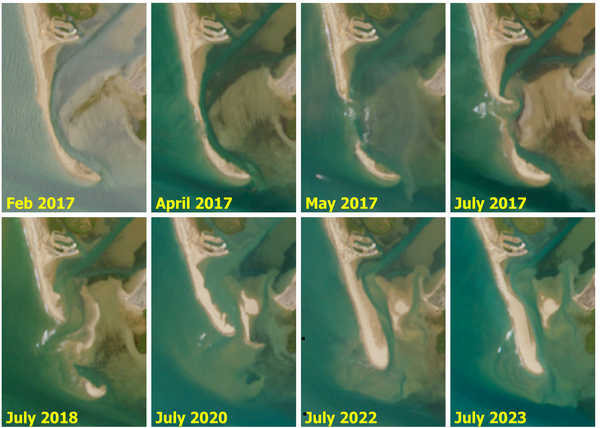
Figure 3. Satellite imagery showing the evolution of the Carnarvon spit prior to works undertaken to reinstate vessel access.
- © WA govFig3
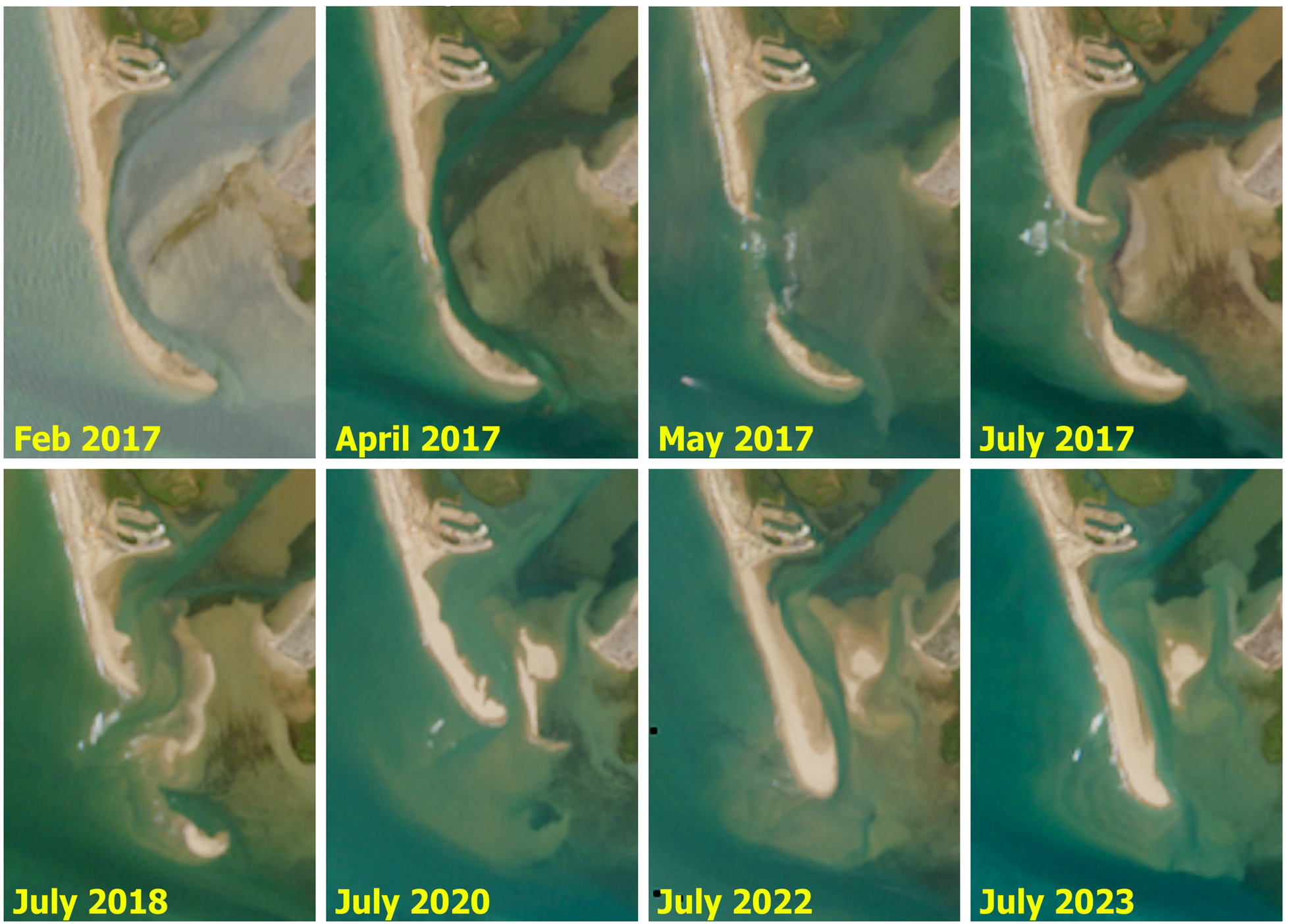
Figure 3. Satellite imagery showing the evolution of the Carnarvon spit prior to works undertaken to reinstate vessel access.
© WA gov
Identifying adaptation actions
During the period of investigations into options to reinstate vessel access to the Fascine, the site drastically changed due to the natural response to the disintegration of the spit. The changing environment posed a challenge to developing a solution. However, the spit started to take a more stable shape and orientation, and by late 2023, its growth began to slow (Figure 4).
The dynamic nature of the spit and the lagoon entrance meant a substantial number of studies were undertaken to determine the best way to provide long-term vessel access. Many options were explored. However, the shortlisted options that were further investigated included construction of a training wall and various channel alignments - including an inland channel though the existing harbour.
Coupled hydrodynamic and wave modelling and sediment transport modelling was undertaken which identified the following issues with the shortlisted options:
- There was significant uncertainty regarding all options being explored.
Inland channel: Tidal currents were too high for the inland channel option, which would result in unsafe navigation.
Training walls: Construction of training walls would cut off sediment supply from the north and create an island to the south and would require substantial maintenance dredging.
Alternative channel: Due to shallow bathymetry along the alternative channel alignment, a significant dredge volume would be required to construct the channel.
Natural channel: Sedimentation would be an issue and maintenance dredging would be required to maintain a navigable depth along the channel. Without additional protection there is a significant likelihood of the channel infilling due to breaching of the sand spit.
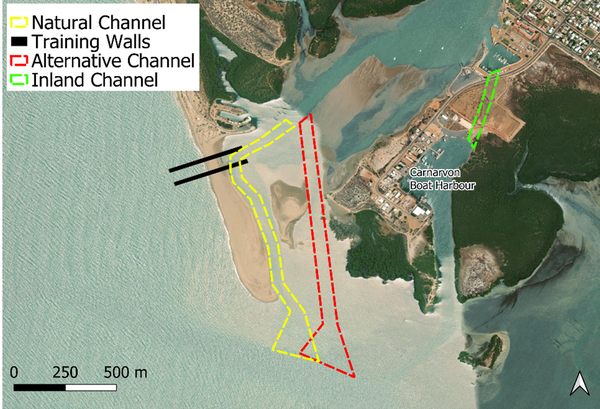
Figure 4. Options progressed to hydrodynamic and sediment transport modeling.
- © WA govFig4
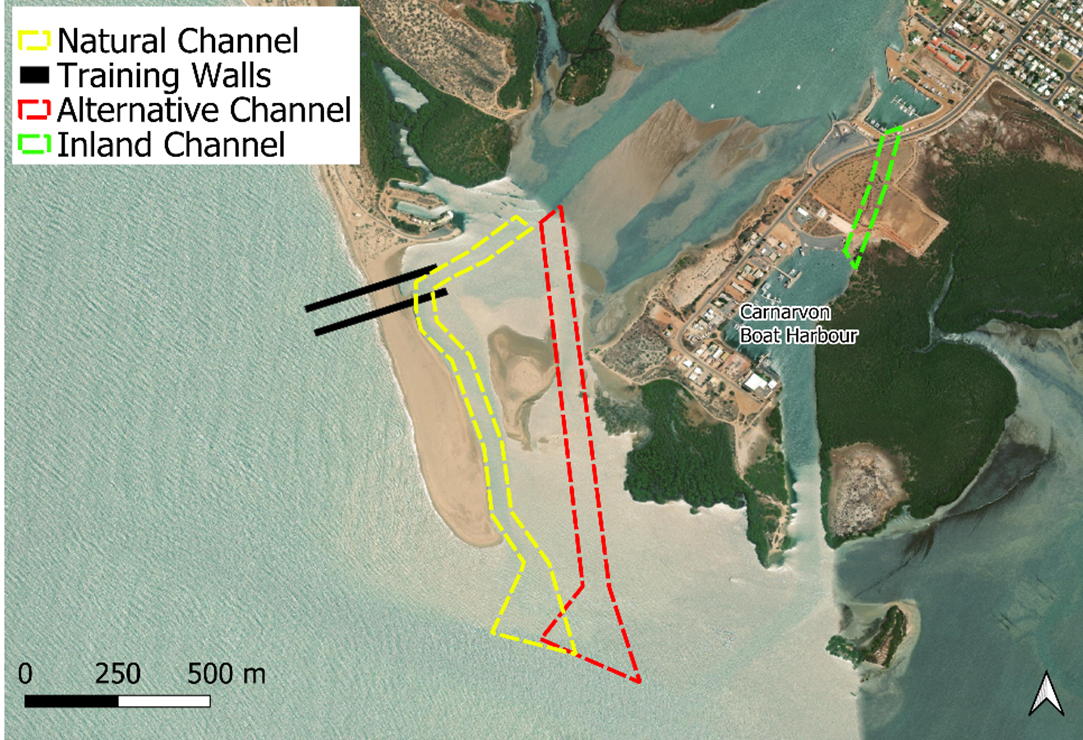
Figure 4. Options progressed to hydrodynamic and sediment transport modeling.
© WA gov
Identification of adaptation actions
A two-year investigation into options that would enable unrestricted ocean access options – which involved extensive research and expert consideration of several major capital reconfigurations - confirmed none of the options would provide a viable long-term solution. As an alternative, the decision was made to dredge the natural entrance channel to a navigable depth and utilise the dredge spoil to reconstruct the dune system on the spit. This would help to stabilise the spit and reduce the risk of future breaches.
This route also delivered cost savings as the State was able to coordinate the planned dredging of the Carnarvon Boat Harbour and Teggs Channel during the same campaign. It was noted that there was still some risk due to the dynamic nature of the waterway and its potential for natural infilling, however the stabilisation measures on the sand spit reduced the risk of breaching and would help reduce the need for future works.
The Steering Committee
Following funding in late 2020, a steering committee was established with members from the Department of Transport, the Shire of Carnarvon, the Gascoyne Development Commission and the Carnarvon Yacht Club. Regular steering committee meetings kept all key stakeholders informed during the project.
The adaptation option
As part of its $5.5 billion COVID-19 WA Recovery Plan, the State Government allocated $7 milliion to improve ocean access at Carnarvon. Led by the Department of Transport (DoT), an initial multifaceted program included short-term measures to assist commercial and recreational skippers while technical studies were undertaken. This included the relocation (with fee relief) of vessels that had tide-restricted access to Carnarvon Boat Harbour.
In 2022, a $2.1 million pen project delivered 16 modern, floating pens that could accommodate vessels up to 15 metres long: this resulted in a 50% increase in the pens and berths available at Carnarvon Boat Harbour.
In 2023, the $3 million dredging campaign was completed to restore navigable access through the channel.
Dredging the channel
A cutter suction dredge was used to dredge 100,00 cubic metres of sediment from the natural Fascine entrance channel. An additional 50,000 cubic metres of sediment was dredged as part of maintenance dredging of the Carnarvon Boat Harbour located outside of the Fascine. A total of 145,000 cubic metres of sediment was used to nourish the sand spit, with a relatively low loss factor of 6% experienced during the nourishment campaign.
This low loss factor was achieved by optimal utilisation of the available space for bund construction within the project footprint. To further stabilise the spit and encourage its sedimentation, a combination of revegetation, dune fencing, brush matting and hydromulch was applied to the reconstructed dune system.
In figure 5, the left image shows the flat spit prior to works: the right image shows, at project completion, the elevated dune system of the spit with the hydromulch covering.
Once the works were completed, an ongoing monitoring and maintenance plan was established to help facilitate the revegetation effort on the spit. In addition, regular hydrographic surveys are used to monitor the entrance channel to support decision-making on navigational safety, such as the placement of navigational markers and the timing of future maintenance dredging.
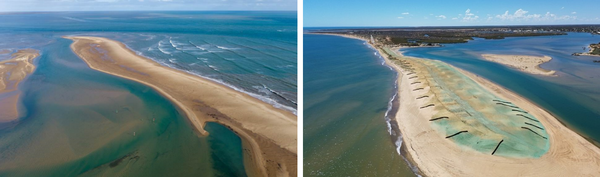
Figure 5. Drone imagery: July 2023 before works had commenced (LHS) and March 2024 after works were completed (RHS).
- © WA govFig5anb
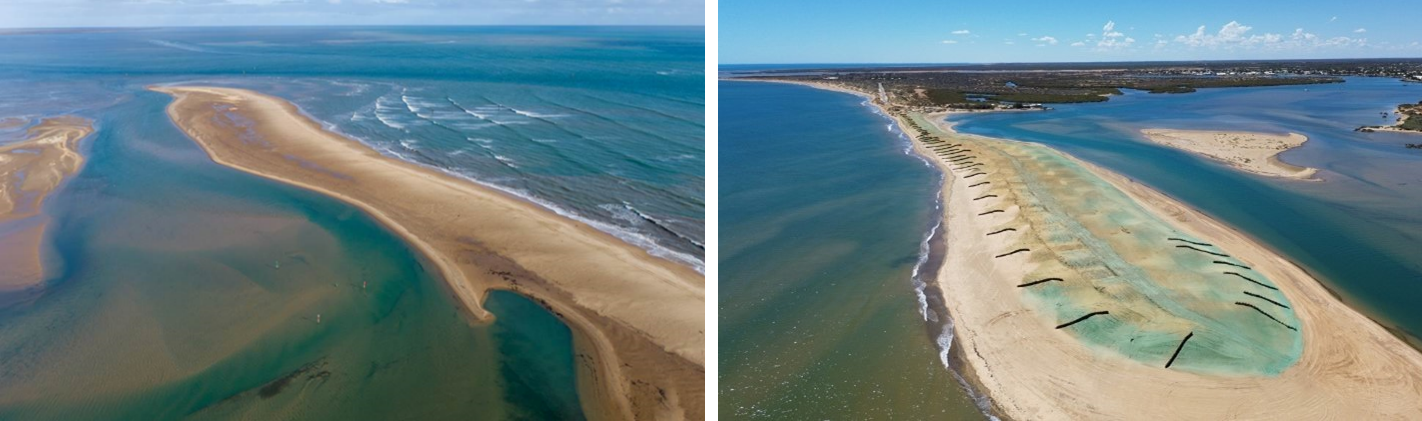
Figure 5. Drone imagery: July 2023 before works had commenced (LHS) and March 2024 after works were completed (RHS).
© WA gov
Tropical Cyclone Sean
In January 2025, Tropical Cyclone Sean hit the WA coastline, reaching Category 4 offshore of Carnarvon. This cyclone resulted in a roughly 1-in-25-year extreme water level measured within the Carnarvon Boat Harbour.
The spit was substantially eroded, with the most severe erosion caused by wave action. The Carnarvon coastline is sheltered by offshore islands from wave energy from the south to west direction, but there is no protection from the northwest. TC Sean produced northwesterly swell waves within Shark Bay - the worst-case scenario for erosion of the spit. Swell waves up to 3m were recorded at a wave buoy located north of Dirk Hartog Island. As a result, the high-water levels coupled with the large swell waves from the north-west direction resulted in substantial erosion of the sand spit (Figure 6). Although the spit did not breach during TC Sean, more than 20 m of erosion occurred in places and many brush fences were undermined and lost.
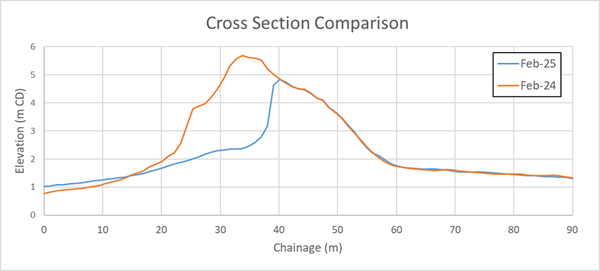
Figure 6. Evolution Cross section of the narrowest point of the spit.
- © WA govFig 6
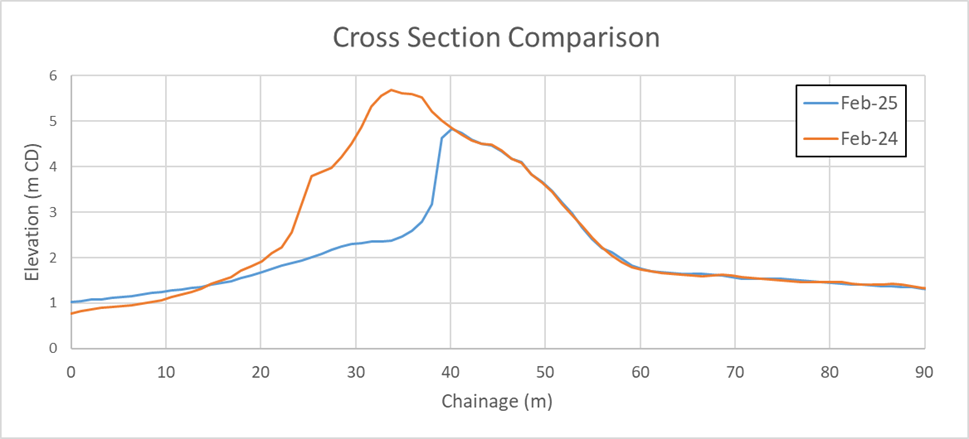
Figure 6. Evolution Cross section of the narrowest point of the spit.
© WA gov
The cyclone event also caused substantial accretion at the end of the spit resulting in some infilling of the entrance channel. Adjustment will be required for the navigational markers and potential maintenance dredging of the channel. The erosion of the spit feature and infilling of the entrance channel can be seen in Figure 6 when comparing the February 2024 and February 2025 elevation data.
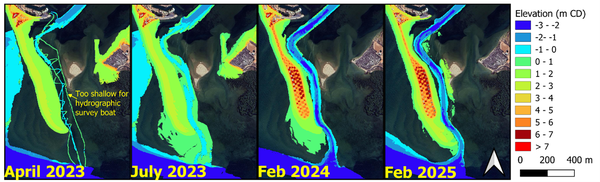
Figure 7. Evolution of the site’s elevation from April 2023 - February 2025.
- © WA govFig7
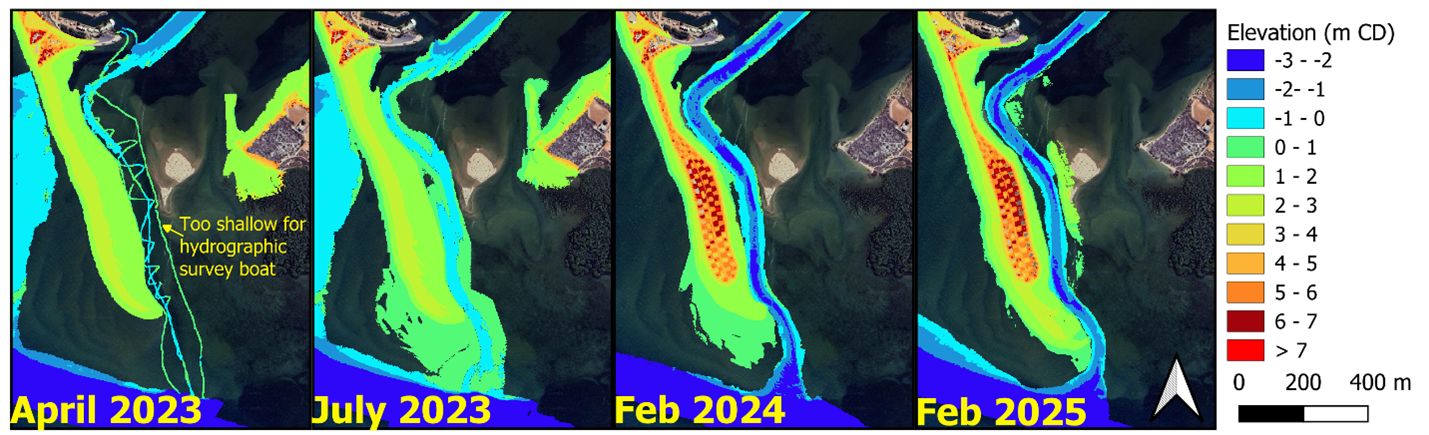
Figure 7. Evolution of the site’s elevation from April 2023 - February 2025.
© WA gov
Lessons learned
This project encountered several issues, but by far the most difficult challenge was the mobile nature of the spit feature. Not being static, the spit was widening, narrowing and lengthening due to environmental forcing during construction. This caused several issues in executing the design as the nourishment footprint had to be refined and adjusted to accommodate the landscape changes.
A key learning for the project team was to shift the bund further from the water line to account for erosion and resulting scarping due to wave run up during periods of higher water level. In hindsight a larger setback would have meant less material being eroded and quickly mobilised following the construction of the bunds.
The dredge material included a substantial amount of clay which means the nourished dune system has different material properties than a purely sand-based dune system. One key issue from this is that the erosion of the placed material resulted in noticeably more scarping due to the cohesive nature of the clay, compared to a typical sandy dune system.
Another lesson is that the narrowest part of the dune design should be wider. The design was constructed to avoid placing any dredge spoil below the high-water mark – because it may be quickly mobilised and deposited into the newly dredged channel. In hindsight, following the significant erosion observed during TC Sean, the narrowest section of the spit is a weak point that could potentially be breached.
Though anticipated and considered in design, the Fascine entrance channel is highly dynamic and has migrated on several occasions. This has caused issues with navigational markers that have had to be shifted to maintain safe navigation through the channel. No solution has been found to address this problem to date apart from regular maintenance dredging.
How would another area replicate this? What should they consider?
Spits are highly dynamic features. While increasing the height of the dune system will reduce the risk of breaching, before undertaking works in and around a spit feature there needs to be careful consideration of narrowing and widening and other dynamic shifts in spit position should be thought through carefully.
Wave run up should be assessed when designing the reclamation footprint and, in particular, there should be flexibility in the design so the contractor is able to react to the on-ground conditions. For example, if erosion is occurring on the spit, then the set out points for the reclamation should be shifted accordingly to avoid rapid erosion and migration of the placed material.
Adopting the use of sacrificial bunds in front of the main dune slope can protect brush fencing and revegetation efforts from erosion.
Maintenance dredging will likely be required for any safely navigable channel in the vicinity of a spit due to their dynamic nature.
Images of the construction process
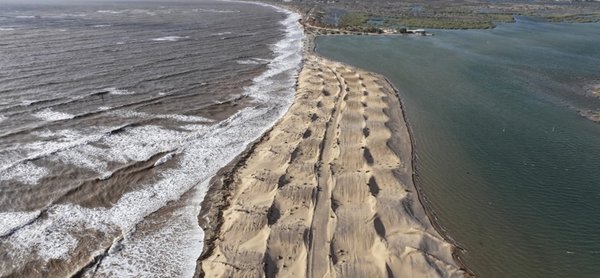
Figure 8. TC Sean swell waves eroding the spit
- © Carnarvon Shire, 2025Fig8
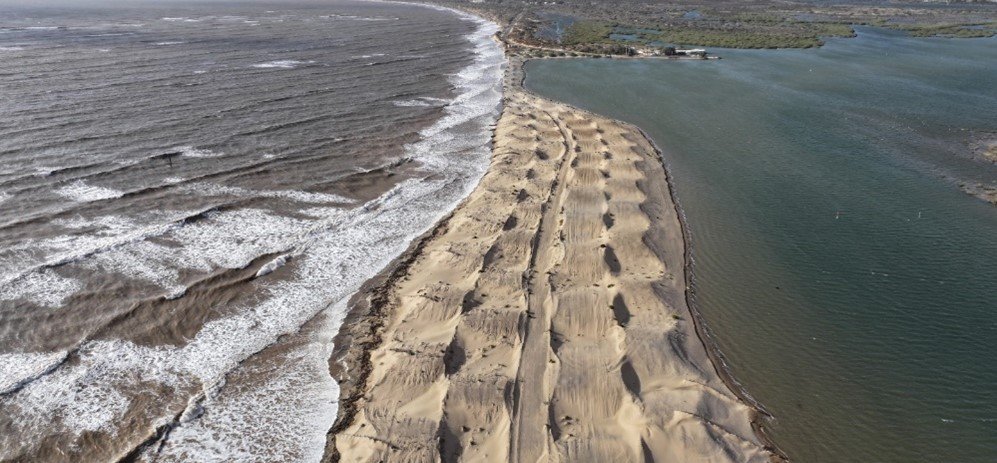
Figure 8. TC Sean swell waves eroding the spit
© Carnarvon Shire, 2025
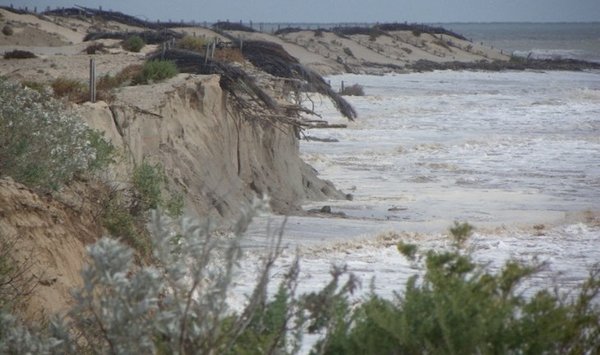
Figure 9. Erosion Scarp during TC Sean
- © Carnarvon Shire, 2025Fig9

Figure 9. Erosion Scarp during TC Sean
© Carnarvon Shire, 2025
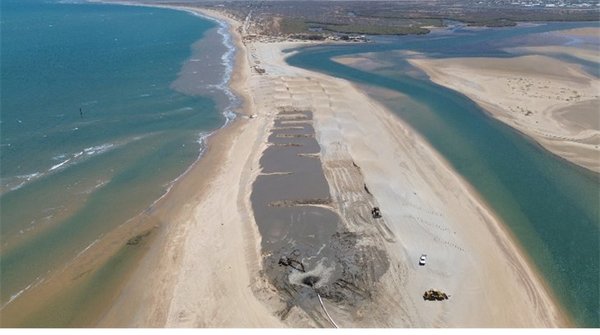
Figure 10. Under construction
- © Maritime Constructions, 2023Fig10
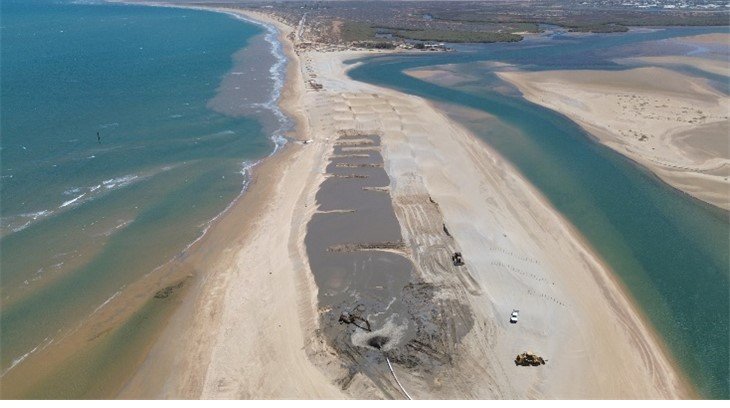
Figure 10. Under construction
© Maritime Constructions, 2023

Figure 11. The construction process
- © Maritime Constructions, 2024Fig11
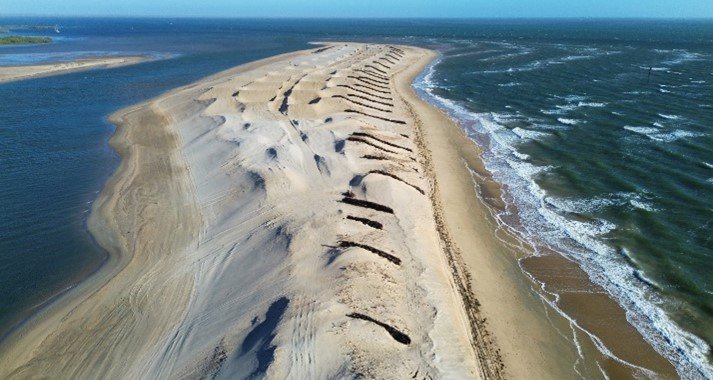
Figure 11. The construction process
© Maritime Constructions, 2024
The works were carried out in collaboration with Barid & Associates (Concept Design), BMT (Detailed Deign) and Maritime Constructions (Dredging and Spit Stabilisation Works).
To cite:
This case study was prepared by Ollie NIckson, Maritime, Department of Transport, WA Government. Please cite as: Nickson, O. 2025: Keeping access open while shoring up the spit at Carnarvon Fascine. Case study for CoastAdapt, National Climate Change Adaptation Research Facility, Griffith University, Gold Coast.