


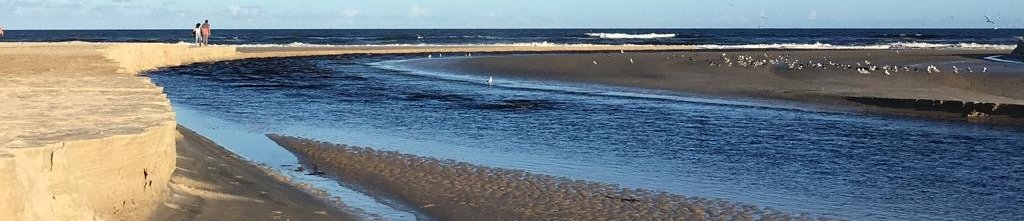
ICOLLs are dynamic coastal waterways
ICOLLs are sensitive coastal waterways due to their dynamic nature of alternating between being open or closed to seawater which results in extreme variations in the water quality chemistry, and biota of these waterways. Irregular opening and closing of these waterways may also affect their human neighbours.
Their intermittently closed nature can lead to localised nuisance flooding, which causes concern for those who live nearby. This frustration can lead to residents undertaking their own work or pressuring councils into an ‘artificial opening’. If done in unfavourable conditions, this can too-rapidly empty the lagoon resulting in environmental damage such as large fish kills.
Study of four ICOLLs in mid and northern NSW
The water quality of four ICOLLs in northern NSW – Belongil and Tallow creeks, Woolgoolga and Hearnes lakes – was examined over a four-month period at times when the ICOLLs were closed and open following both natural and artificial openings.
A multi―parameter water quality meter was used to determine depth, temperature, dissolved oxygen (DO), pH, and salinity. Water samples were also collected for chemical analysis of concentrations of total phosphorous (TP), total nitrogen (TN), total organic carbon (TOC), and total iron (TFe).
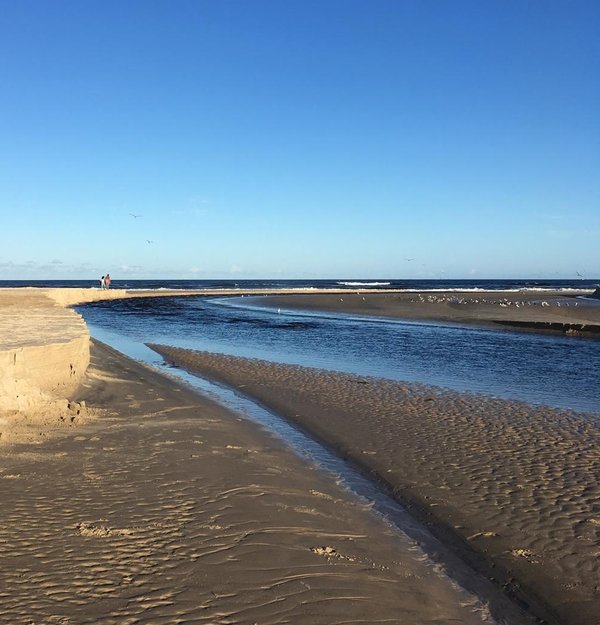
Tallow Creek opening is one of the ICOLLs examined in this study that offers important lessons for coastal managers
- © NCCARFTallow Creek opening
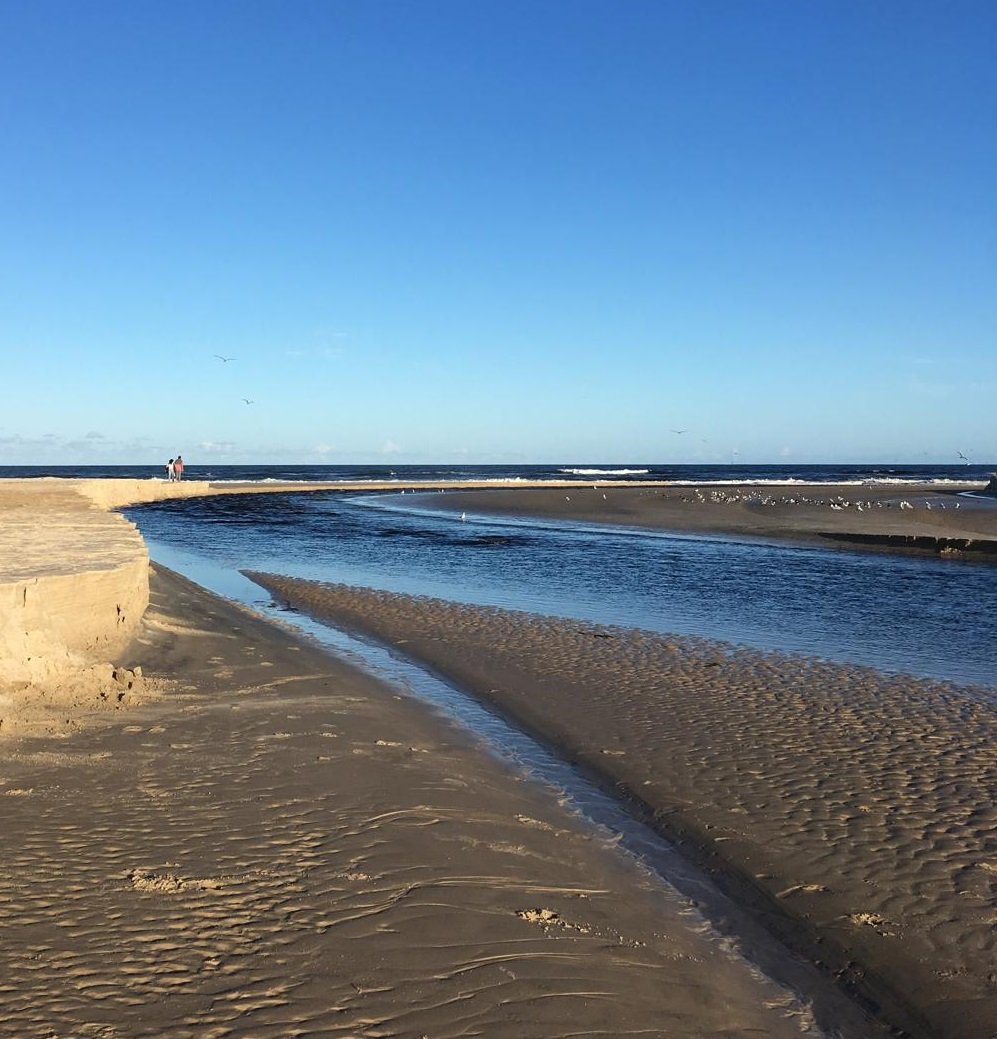
Tallow Creek opening is one of the ICOLLs examined in this study that offers important lessons for coastal managers
© NCCARF
Natural are better than artificial openings
The study found that fluctuations in the water quality of the four ICOLLs were affected by openings, with greater degradation of water quality resulting from artificial openings than during natural openings.
Fish kills occurred directly following two of the three artificial openings: but they did not occur following either of the two natural openings that occurred during the study period.
The study found declines in dissolved oxygen concentrations following the two artificial openings that were associated with fish kills and concluded that;
“The rapid draw-off of surface water following human-driven mechanical breaches of a berm removes available oxygenated fish habitat leaving low DO bottom waters, and strongly changes the water chemistry in that ICOLL.” (p.6).
The study also highlighted several interactions of other parameters sampled that impact on the water quality of ICOLLs and are important in their management including the following.
- ICOLLs that are greater than 1m deep may become stratified as evidenced by changes in temperature, DO, and salinity between surface and bottom waters.
- Groundwater discharge into ICOLLs when water levels are low may carry highly concentrated nutrients such as carbon, nitrogen and phosphorus inputs that may result in the rapid growth of aquatic plants
- Total concentrations of iron in ICOLLs may indicate changes in iron chemistry, which may be associated with changes in pH and salinity and can potentially decrease available DO.
There are multiple drivers and sources contributing to low dissolved oxygen concentrations, unique to each ICOLL and its type of opening, the study concluded. These factors include current and historical catchment uses, legacy inputs, acid sulphate soil runoff, iron chemistry, anoxic pore water drainage during shallow bank exposure, nutrient loading, and the decomposition of dead vegetation.
READ: Some councils' management triggers for artificial opening of ICOLLs
Practical tips for coastal managers
Recommendations for coastal managers that have been learned from managing the ICOLLs covered in the study over the last 20 plus years include the following.
* Know and monitor your ICOLL
The water quality of ICOLLs is affected by several drivers and sources. Each ICOLL has its own distinctive characteristics; each type of opening is unique. All these moving parts add up to a lot of complexity. Consequently, coastal managers need to have a deep understanding of each ICOLL that they manage. This understanding can only be achieved through long term monitoring of a variety of water quality parameters at different sites and depths in the ICOLL, especially just before and after any artificial or natural opening of the ICOLL.
* Natural openings are better than artificial openings
It is known that ICOLLs are naturally dynamic systems and the biotic communities they support, such as wetlands, have adapted to the natural changes that take place in an ICOLL. Consequently, artificial changes to the natural regime can disrupt the ecological balance and may harm certain elements of the biota and threaten the overall biodiversity of the ICOLL.
* Medium to heavy rainfall should follow immediately after artificial opening to mitigate the likely adverse impacts of the opening on water quality.
Typically, when an ICOLL is opened artificially the oxygenated surface waters of the ICOLL are drained, leaving pools of bottom water. Depending on the ICOLL, this bottom water may be poor water quality with low DO levels. Biota, including fish, can become trapped in these pools, and without rapid oxygenation, most will die.
Artificially oxygenating these pools is not a feasible option, even for small ICOLLs. As a result, substantial rainfall shortly after an artificial opening is considered the most effective way to prevent fish kills.
* All government agencies responsible for the management of ICOLLs need to work together and reach an agreed approach to their management.
The dynamic nature of ICOLLs makes their management challenging, particularly due to the potential lack of complete information on key environmental factors that influence their health. This complexity is heightened when artificial interventions, such as openings, are involved, as they can lead to differing opinions within the community.
Therefore, it is essential that the various government agencies involved in managing an ICOLL (e.g., planning, regulation, operational management) collaborate on a unified approach. This approach must be clearly communicated to the community. For instance, the ICOLL management team could establish transparent triggers for openings and ensure they are effectively explained to the public.
Controversy may arise, especially if mismanagement results in environmental degradation, such as fish kills. This underscores the importance of having a well-coordinated, agreed-upon management strategy among government agencies that is consistently followed.
To cite:
This case study was prepared by NCCARF. Please cite as: NCCARF, 2024: Not an open and shut case: artificial opening of ICOLLS. Case study for CoastAdapt, National Climate Change Adaptation Research Facility, Griffith University, Gold Coast.