


Little Penguins face a number of threats
Little Penguins (Eudyptula minor) are found around the southern coastline of the Australian mainland, the Bass Strait islands and Tasmania. Their populations currently face an increasing spectrum of threats – primarily introduced vertebrate predators such as cats, dogs and on the Australian mainland, foxes (Stevenson and Woehler 2007, Blamey et al. 2024). The increasing frequency and duration of human recreational activities and an increasing human population living at the coast actively reduce and fragment the available nesting habitats for Little Penguins throughout much of their range.
Little Penguins exhibit an almost paradoxical relationship with people. If they experience disturbance at or near to their colonies, they will abandon these areas. The ever-increasing night-time illumination associated with human coastal communities and infrastructure near penguin landing and nesting sites will see them avoid these areas.
Single predation events by dogs and other predators can have catastrophic and long-term impacts on colony dynamics (Blamey et al. 2024). Studies have shown these events can take years or decades to recover, and in some cases, colonies will be lost due to the loss of breeding adults.
Yet Little Penguins will readily adopt human infrastructures as nesting and moulting sites (Marker et al. 2024). Little Penguins often nest close to human settlements on coastal structures such as breakwaters (St Kilda breakwater, Port Phillip Bay) and ferry terminals (Manly, Sydney Harbour), tolerating the regular human disturbance in exchange for a nesting site.
The Penguin Parade at Victoria’s Phillip Island is perhaps the most extreme example of habituation and tolerance of human intrusions into their breeding and moulting timetables.
Climate risks and impacts
Little Penguins already face increasing human activities in coastal areas, and projected sea-level rises will further reduce the availability and suitability of coastal habitats for these birds.
These increases in sea levels will exacerbate the fragmentation of remaining nesting habitats, particularly in areas with sandy foreshores. The combination of increasing human activities and human presence in coastal margins with the projected sea level rises combine to create a ‘coastal squeeze’ that threatens many flora and fauna species that can only live on a coast (DPIPWE 2016).
Identifying and implementing adaptation actions
The adoption of human coastal infrastructure by Little Penguins for nesting and moulting is particularly helpful as it allows for practical on-ground conservation and management efforts to protect existing colonies.
These efforts can enhance the recovery of a penguin colony following a predation event, minimise the risk to breeding and moulting penguins while ashore, and provide a long-term solution to nesting habitat loss from sea-level rises.
Little Penguins’ breeding timetables are becoming less seasonal and less synchronised than in the past. With breeding now reported for much of the year, the birds are ashore for longer periods that increase the risk of predation of the penguins. Rising sea-surface temperatures are believed to be involved, but the exact causal relationship(s) are unclear (but see Cullen et al. 2009, Chambers et al. 2011, 2012).
Introducing culverts to help penguins cross
Bruny Island, approximately 20 km south of Hobart, supports numerous Little Penguin colonies around its coastline. One of the colonies is on The Neck – a narrow sandy isthmus that joins North and South Bruny Islands. The Bruny Island Main Road is located through the colony, and until recently, approximately 2.5 km of the road through the penguin colony was unsealed. Night-time traffic over the years resulted in an annual loss of penguins after being struck by vehicles.
The Tasmanian Government undertook to seal the road. The design and implementation of the road and car park upgrade was managed to minimise impacts to the Little Penguin colony, as the upgrade was expected to result in an increase in vehicular traffic volume and speeds.
The upgrade required the road to be strengthened against projected sea-level rises; this was to be achieved by a rock seawall. To minimise the risk to penguins from the increased traffic, four under-road culverts were installed to provide access to the interior of the colony from the landing beach.
The use of culverts to facilitate Little Penguin access to their colony was adopted based on the use of an under-road culvert at the Blue Penguin Colony at Oamaru, New Zealand. There, a 25 m long culvert 450 mm diameter was installed under the road approximately 100 m from the main colony in 2016 to reduce the numbers of penguins crossing the road leading to the Oamaru Blue Penguin colony’s Visitor Centre.
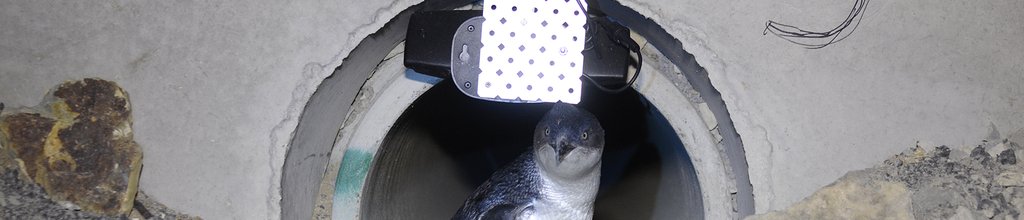
At Bruny Island, four circular 750 mm diameter culverts were placed under the road specifically to facilitate Little Penguin access to the colony on the inland side of the Main Road. In addition to the culverts, fencing was also erected on both sides along the roadside shoulder for approximately 800 m to prevent Little Penguins gaining access to the road.
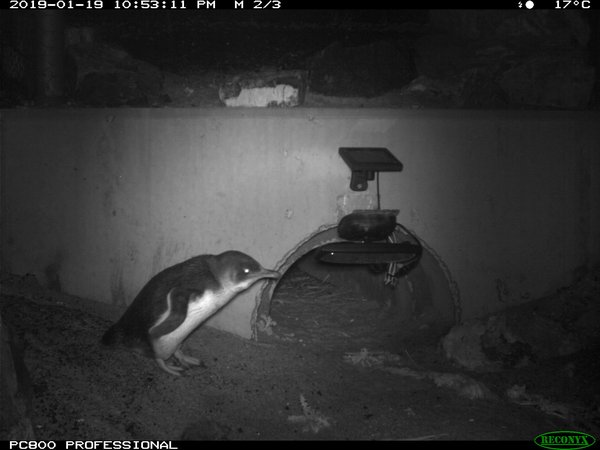
Little Penguin approaching culvert entrance.
- © from Woehler and Scolari 2019.03. IMG_0089
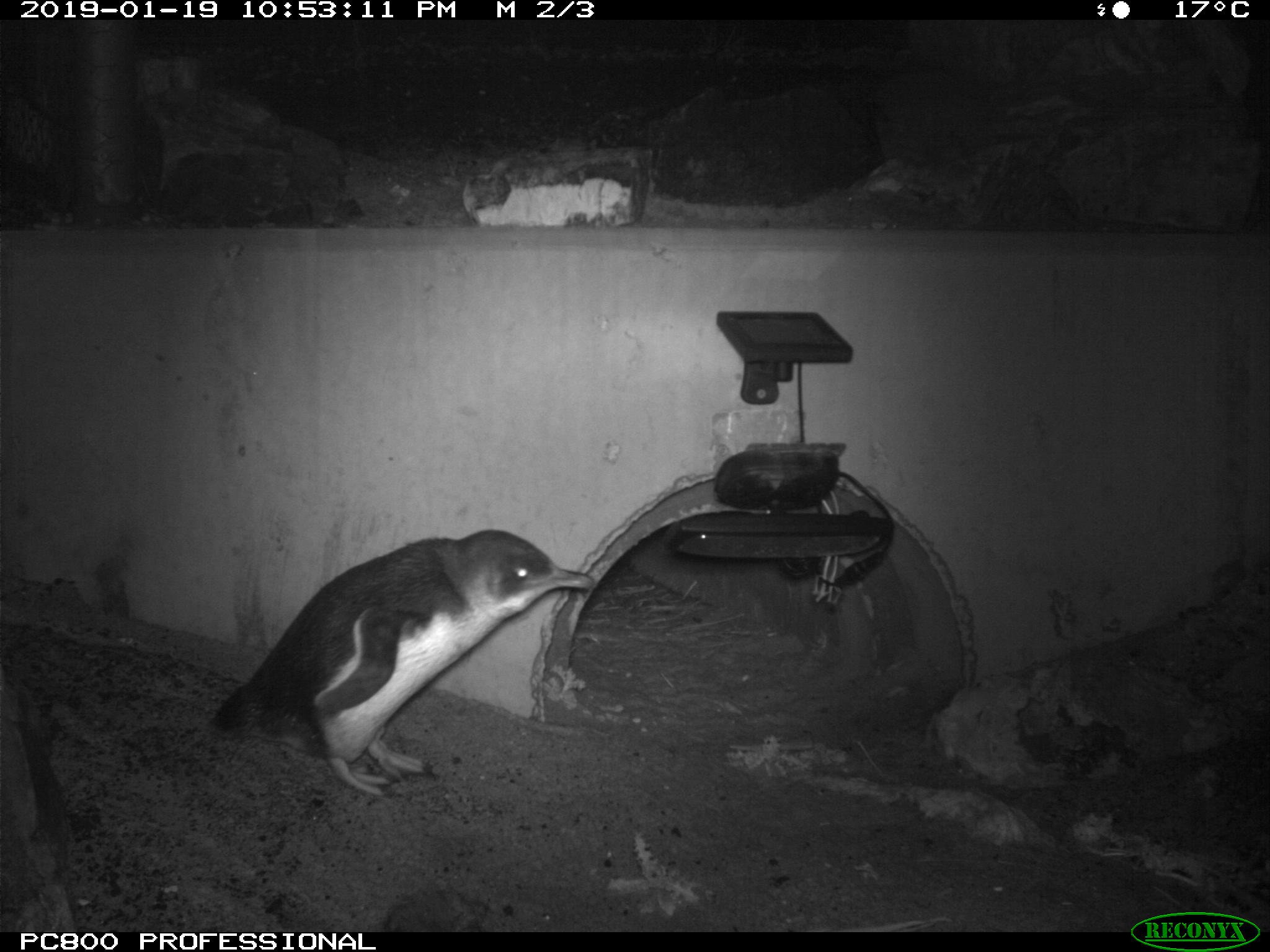
Little Penguin approaching culvert entrance.
© from Woehler and Scolari 2019.
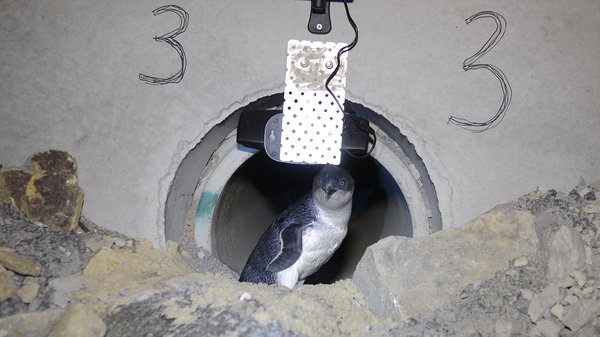
Little Penguin at entrance of Culvert 3.
- © E.J. Woehler01. Little Penguin 48289
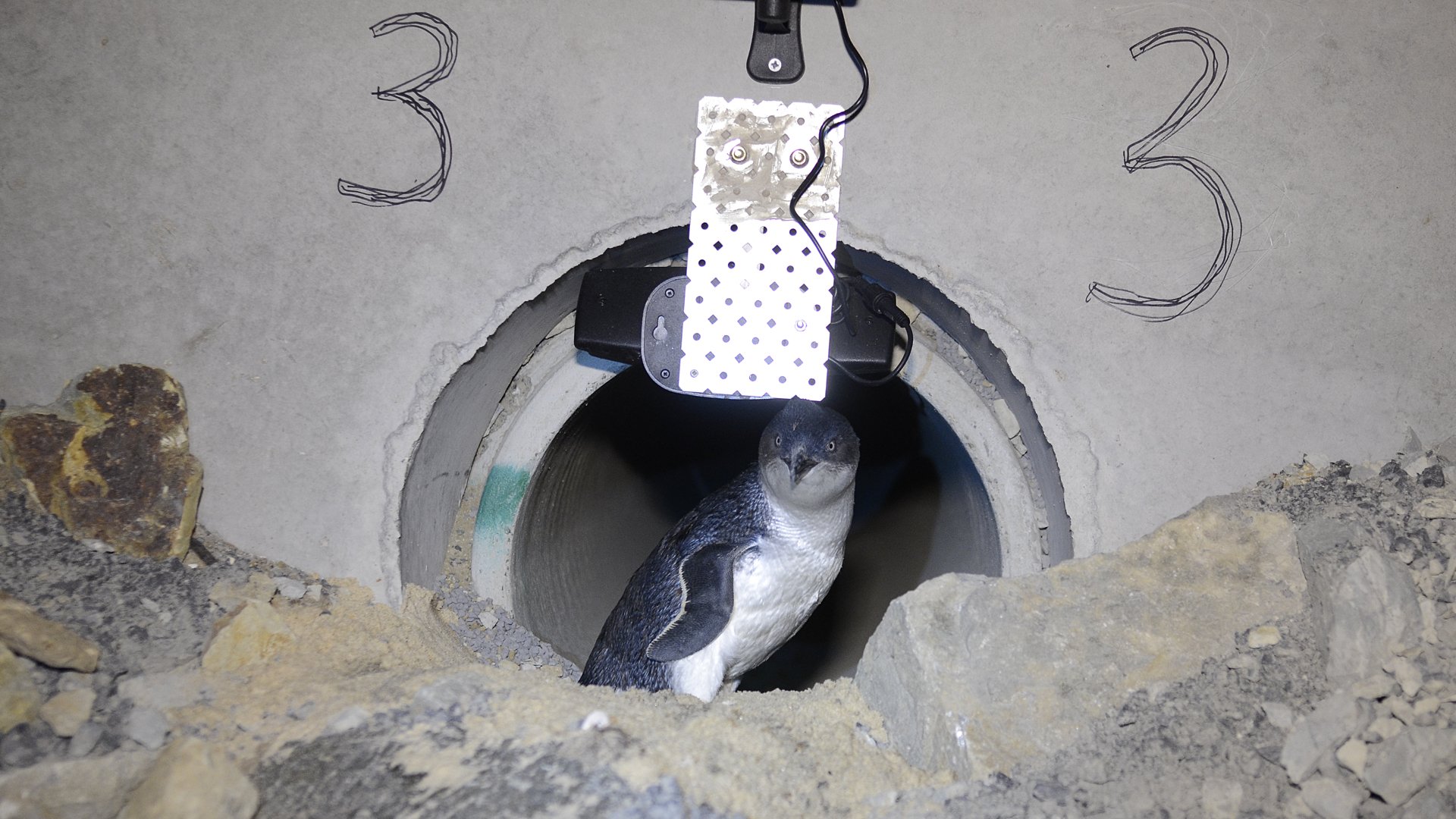
Little Penguin at entrance of Culvert 3.
© E.J. Woehler
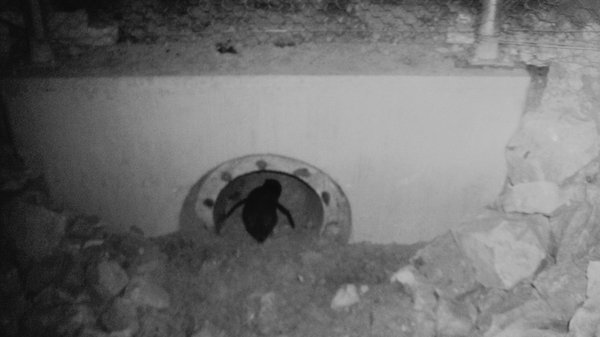
Little Penguin entering a culvert.
- © from Woehler et al. 2018.02. Fig 2 ex DSC02092

Little Penguin entering a culvert.
© from Woehler et al. 2018.
Outcomes and next steps
Observations indicated that there was a rapid adoption and use of the culverts by the penguins as the breeding season commenced (Woehler et al. 2018). The use of the culverts increased, reflecting both the increase in penguins breeding in the colony and their adoption of the culverts. Based on the experiences at Oamaru and at Bruny Island, once the penguins had accepted and adopted the culvert as an access route to the colony, they willingly used the culverts (Woehler and Scoleri 2019).
The results from Oamaru and Bruny Island serve as useful precedents and pragmatic guide for future coastal construction projects involving wildlife, particularly Little Penguins throughout their range.
The rapid adoption and use of the culverts by pengiuns has eliminated the incidence of penguin road kill at the colony. The costs associated with the culverts and fencing were negligible with respect to the total cost for the road upgrade, thereby removing any barriers to use these strategies in similar projects elsewhere.
To cite:
This case study was prepared by Dr Eric J. Woehler, OAM.
Please cite as: Woehler, E.J., 2024: Little Penguins readily adopt new homes, which heartens conservation efforts. Case study for CoastAdapt, National Climate Change Adaptation Research Facility, Griffith University, Gold Coast.
References
Blamey L.K., C. Bulman, G.N. Tuck, E.J. Woehler, P. Marker, R. Monash and T.A. Patterson, 2024: Evaluating risks to seabirds on the urban-coastal interface: modelling dog attacks on little penguin (Eudyptula minor) populations in Tasmania. Aquatic Conservation: Marine and Freshwater Ecosystems 34, e4113. https://doi.org/10.1002/aqc.4113
Chambers L.E., P. Dann, C. Devney, N. Dunlop and E.J. Woehler, 2012: Seabirds. In: Marine Climate Change in Australia: Impacts and Adaptation Responses 2012 Report Card. CSIRO. Poloczanska ES, AJ Hobday, AJ Richardson (eds). https://researchers.mq.edu.au/en/publications/marine-climate-change-in-australia-impacts-and-adaptation-respons-2
Chambers L.E., C.A. Devney, B.C. Congdon, N. Dunlop, E.J. Woehler, and P. Dann 2011: Observed and predicted impacts of climate on Australian seabirds. Emu 111, 235-251. https://doi.org/10.1071/MU10033
Cullen J.M., L.E. Chambers, P.C. Coutin and P. Dann 2009: Predicting onset and success of breeding in little penguins Eudyptula minor from ocean temperatures. Marine Ecology Progress Series 378, 269-278. https://www.int-res.com/articles/meps2009/378/m378p269.pdf
Department of Primary Industries, Parks, Water and Environment (DPIPWE) 2016. Impact of sea level rise on coastal natural values in Tasmania. Natural and Cultural Heritage Division, Department of Primary Industries, Parks, Water and Environment, Hobart, 144pp. https://nla.gov.au/nla.obj-1382804175/view
Marker P.F., A.B. Wind and E.J. Woehler 2024: Guidelines for works in, and management of, Little Penguin habitat. BirdLife Tasmania. 37pp. https://wildcaretas.org.au/wp-content/uploads/2024/05/Marker-et-al-2024-Guidelines-Little-Penguins-27-May-2024.pdf
Stevenson C. and E.J. Woehler 2007: Population decreases in little penguins Eudyptula minor in southeast Tasmania, Australia. Marine Ornithology 35, 71-76. http://www.marineornithology.org/PDF/35_1/35_1_71-76.pdf
Woehler E.J. and V. Scoleri 2019: Little Penguin use of under - road culverts, Bruny Island 2018/19. Report to Department of State Growth, May 2019. BirdLife Tasmania Technical Report 2019 - 02, 9pp.
Woehler E.J., P. Vertigan and R. Broeren 2018: Little Penguin adoption of under - road culverts, Bruny Island 2017/18. Report to Department of State Growth. BirdLife Tasmania Technical Report 2018 - 02, 15pp.