



At a glance
- Inundation by projected sea level rises and a predicted increase in the frequency of storm surges is likely to have a significant adverse impact on the habitats and associated biodiversity along Australia’s coastline. The impacts of projected sea level rises on beach-nesting shorebirds and seabirds, and native coastal vegetation were assessed across all land tenure in Tasmania in an ongoing study using GIS-based rules and risk assessment methods. From the initial assessment, 118 coastal sites were identified and mapped as the highest priorities for conservation management.
- Broad options for the conservation of beach-nesting shorebirds and seabirds, and native coastal vegetation in priority sites were developed as practical adaptation responses. Three response types were identified: refugia sites, retreat pathway sites (threat avoidance areas) and squeezed-out sites (with a high sea level rise threat). For refugia, it is recommended that land managers minimise activities that may cause disturbance or present threats to natural values. For retreat pathways, facilitating protection of retreat pathways is important through minimising new developments or infrastructure, and by minimising disturbance and physical threats. For areas that are to be inundated or squeezed out, it may be important to consider alternative management options including translocation and monitoring of the location to assess impacts.
- The project has identified a relatively short list of high-risk values (beach-nesting shorebirds and seabirds, and coastal-obligate native plant species sites), with the Tasmanian coast zoned into three management response categories, allowing for efficient and effective allocation of management effort and resources for dealing with these sites. This is the first time such an approach has been undertaken in Australia, and the results of this approach clearly demonstrate that it is possible to effectively prioritise sites for biodiversity conservation management to mitigate the expected impacts of projected sea level rises on natural coastal natural values.
- This case study provides a 2024 update to a 2016 case study.

Impact of sea-level rise on natural coastal values in Tasmania
Sea level rise is expected to impact coastal biodiversity in numerous and compounding ways, however information about the types of likely impacts to vulnerable natural values is currently lacking for much of Australia’s coastline.
This ongoing study categorised the sea level rise-related impact types expected to occur along sandy Tasmanian beaches where beach-nesting shorebirds, coastal-obligate (i.e. can only live in coastal areas) and coastal native vegetation are present.
The study demonstrated that it is possible to prioritise sites effectively for biodiversity conservation management to address the expected adverse impacts of sea level rise on natural coastal values.
It identified a relatively short list of high risk natural coastal values, with the Tasmanian coast zoned into three management response categories (squeezed-out, retreat and refugia). This allowed for efficient and effective allocation of management effort and resources for dealing with these sites. Our approach also identified species that, although not currently formally listed as Vulnerable or Endangered, may be threatened in the near future by a very high likelihood of coastal inundation of critical coastal breeding habitat.
a study complements the conservation assessment of Tasmania’s shorebirds (see Mapping the Tasmania coast to identify coastal bird breeding spots).
This case study provides a contemporary update (December 2024) to the original 2016 assessment reported in case study Impact of sea level rise on natural values in Tasmania.
Background and context
Tasmania is the southern island state of Australia, situated in temperate latitudes and bears the brunt of the full force of the ‘Roaring 40s’. It has approximately 5,400 km of coastline, with the highest ratio of coastline per unit area of land of any state in Australia.
This case study assessed the impacts on the whole of the Tasmanian coast where inundation by projected rising sea levels and predicted increases in the frequency of storm surges are likely to have a significant adverse impact on coastal habitats, and particularly on coastal-obligate species.
There have been recent advances and refinements in the data on projected sea level rise and coastal geomorphology, largely based on LiDAR mapping. Extensive contemporary biodiversity mapping data have been captured concurrently, commencing in the early 1990s (Figure 1). In combination, these data ensured that Tasmanian researchers and managers were well-positioned to assess the vulnerability (sensitivity + exposures to threats) of natural coastal values to projected sea level rises.
This assessment would determine and establish priorities where contemporary conservation management efforts should occur in order to maximize conservation successes for the future.
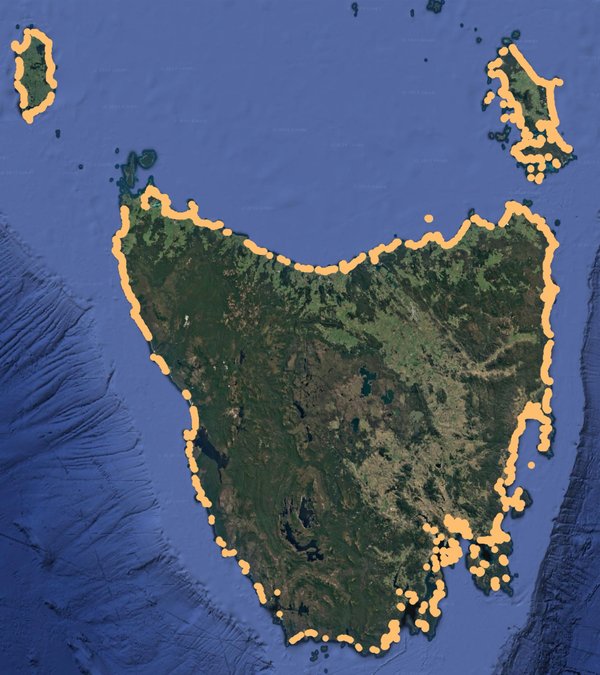
Figure 1: Map showing locations of breeding territories of resident shorebirds and small terns in Tasmania based on mapping surveys 1992 – present (Woehler 2021, 2024a,b).
- Base map Google Earth.Map of Tas
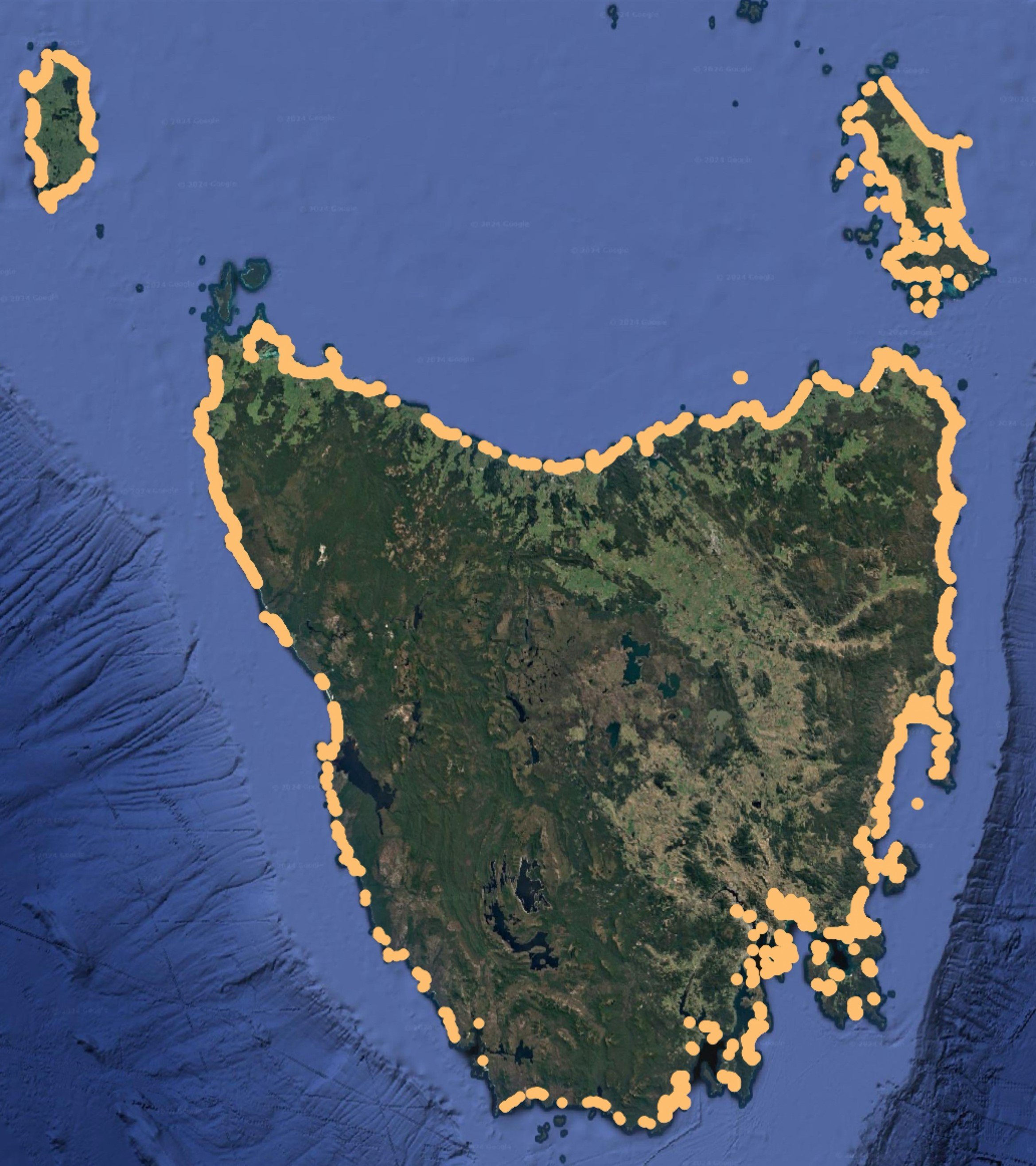
Figure 1: Map showing locations of breeding territories of resident shorebirds and small terns in Tasmania based on mapping surveys 1992 – present (Woehler 2021, 2024a,b).
Base map Google Earth.
However, it still remains a complex task to undertake vulnerability assessment and prioritising management amongst coastal sites and natural values, in part due to the extensive and convoluted Tasmanian coastline.
It is crucial to understand the range of impacts of projected sea level rises to Tasmania’s coastal biodiversity, given the State’s high biological and geomorphologic richness and diversity, and the presence of many nationally- and internationally-significant natural values. The ongoing Tasmanian effort is seen as a pilot for similar approaches in mainland states.
Climate risks and impacts addressed
Inundation by projected rising sea levels and the predicted increased frequency of storm surges is likely to have a significant impact on the broad spectrum of habitats along Tasmania’s coastline and the species that depend on them. Additional adverse impacts to coastal vegetation and species are expected to result from increased saltwater intrusion into freshwater systems, and an associated increase in storm surges and salt spray; in combination, these will result in additional biological and ecological pressures to coastal ecosystems. Changes in coastal geomorphology can have profound impacts on the availability of different habitats along the coast.
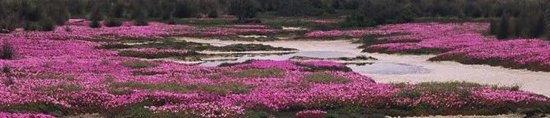
The impacts of sea level rise on plant species is not well studied in Tasmania, other than studies of the adaptive capacity of saltmarshes to retreat. These studies suggest that coastal saltmarsh vegetation may have the capacity to retreat landward, given sufficient room and suitable conditions (Figure 2).
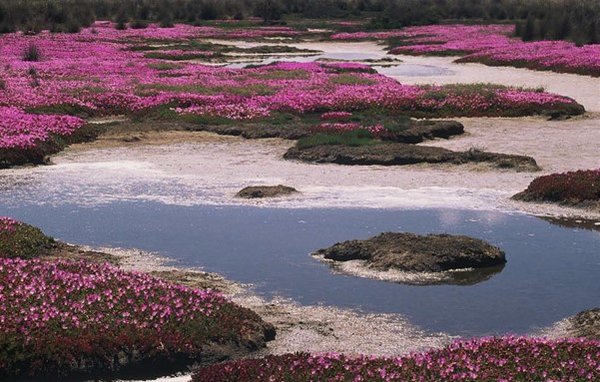
Figure 2: Round-leaved Pigface (Disphyma australe) in flower in saltmarsh at Lauderdale.
- ©Peter Tonelli – TasNature.Roundleafed pigface
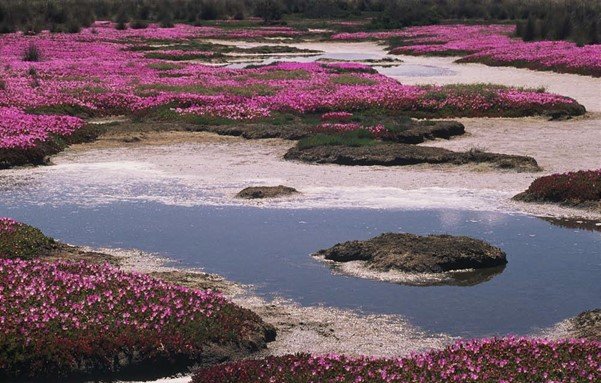
Figure 2: Round-leaved Pigface (Disphyma australe) in flower in saltmarsh at Lauderdale.
©Peter Tonelli – TasNature.
Globally-averaged sea level has risen by 21 cm in the last century in Tasmania, and for many locations a 50 cm sea level rise would result in the present 1-in-100-year storm surge event becoming an annual or more frequent event by 2100. Over 25% of the Tasmania coastline is at risk from inundation and erosion, sand dune mobility, rock falls and slumping as a result of projected sea level rises and predicted increased frequency of storm surges associated with climate change.
The coast has been identified as critical at-risk habitat for four species of resident coastal-nesting shorebirds (Figures 3 and 4) and two species of small terns (Figure 4), coastal vegetation and a range of coastal-obligate species.
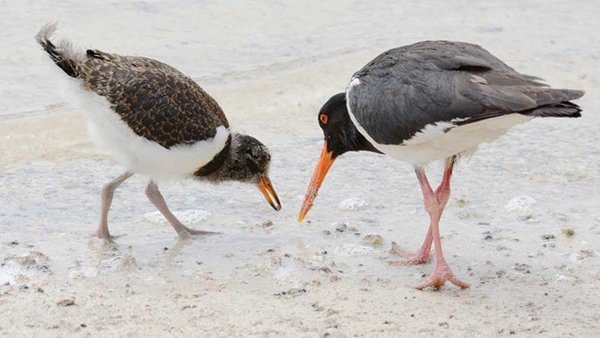
Figure 3: Adult Pied Oystercatcher with large chick feeding in coastal shallows.
- © E.J. WoehlerOyster catcher
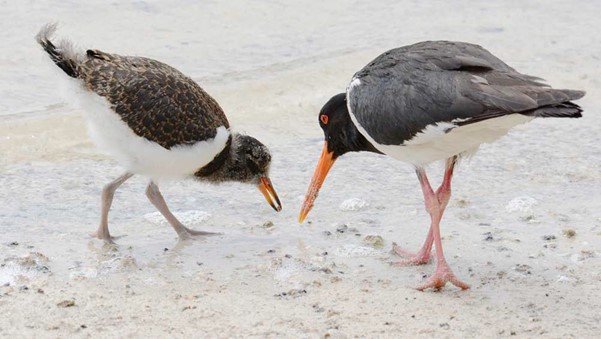
Figure 3: Adult Pied Oystercatcher with large chick feeding in coastal shallows.
© E.J. Woehler
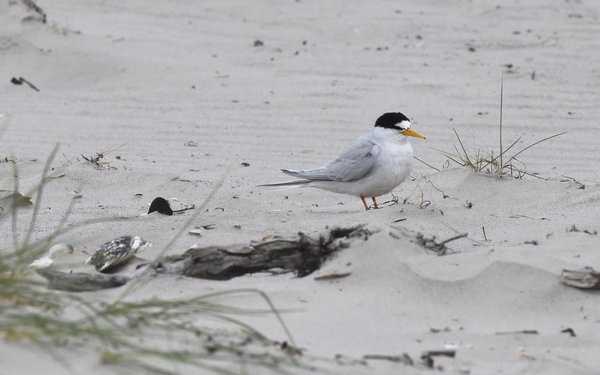
Figure 4: A breeding Little Tern
- © E.J. Woehler09. Little Tern 28261
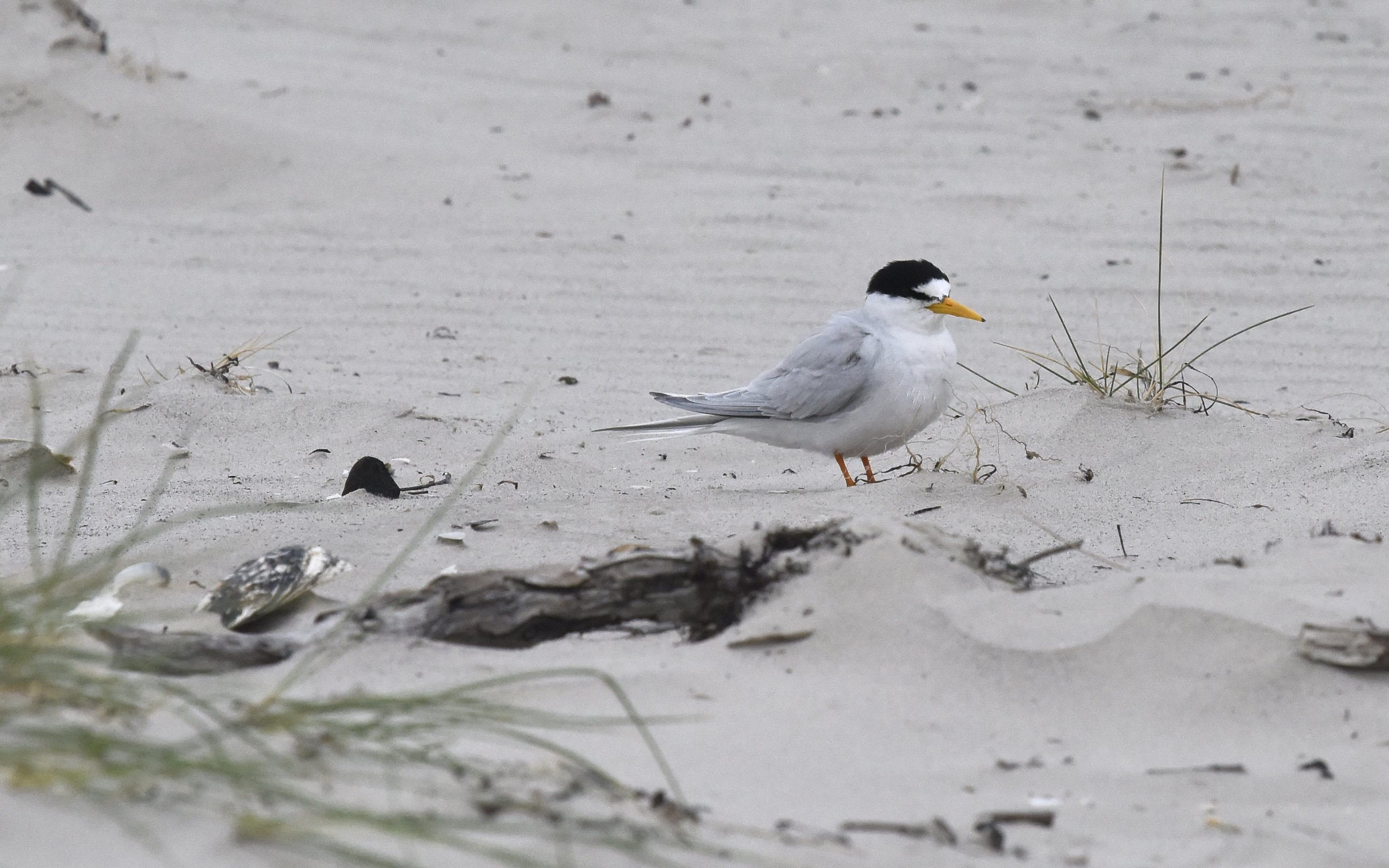
Figure 4: A breeding Little Tern
© E.J. Woehler
Previous risk assessments comprise inundation modelling that showed how sea level rises are expected to affect Tasmania’s coastline by 2100, and coastal geomorphic mapping (Smartline), which describes the vulnerability of Tasmanian and mainland coasts to sea level rise. The diversity of Tasmanian coastal landforms, in combination with likely erosional processes allowed various key factors to be identified in those studies, and applied to a detailed line map of the state’s coastal landforms.
This current case study only examined the consequences of projected sea level rises on coastal species – not assessed was the additional, significant potential impact of climate change (i.e., rising global temperatures) on coastal ecosystems.
The risk-assessment approach utilised for this project identified priority sites for coastal species that allowed for a range of site-specific response options that could be translated into on-ground conservation management at each site.
The current prioritisation approach was shown to be better than a traditional risk assessment approach as it considered all species regardless of their formal conservation status. The current risk assessment identified species that, although not currently formally listed as Vulnerable or Endangered, may be threatened by a very high likelihood of coastal inundation in the near future.
Further, three plant species were prioritised by the current approach that were not identified within the top five high-risk species based on the traditional risk assessment that only considered listed species. These three species have a very high to extreme likelihood of habitat inundation, with 72% to 100% of their currently-known distributions projected to be inundated.
Adaptation actions
A key outcome of the assessment was development of a set of maps for use by public land managers such as the Tasmania Parks & Wildlife Service and Local Governments, for conservation planning purposes (Figure 5). The maps inform land management processes, including reserve selection, local government planning, infrastructure placement (sensitive, appropriate or strategic) and other land management considerations in coastal areas.
Management options for the priority sites identified have been developed, which are applicable under any land tenure. Sites were prioritised to assist planners and land managers to respond efficiently to projected sea level rise impacts to coastal vegetation and/or shorebirds. This will ensure that highly vulnerable sites are managed to remove as many other threats as possible and remove, where possible, any barriers to adaptation to projected higher sea levels at the sites.

Figure 5: Map showing results for Marion Bay, southeast Tasmania. The beach supports six species of breeding shorebirds and four vegetation communities, all identified as being at risk from sea-level rise.
- © DPIPWE 2016map of Marion Bay
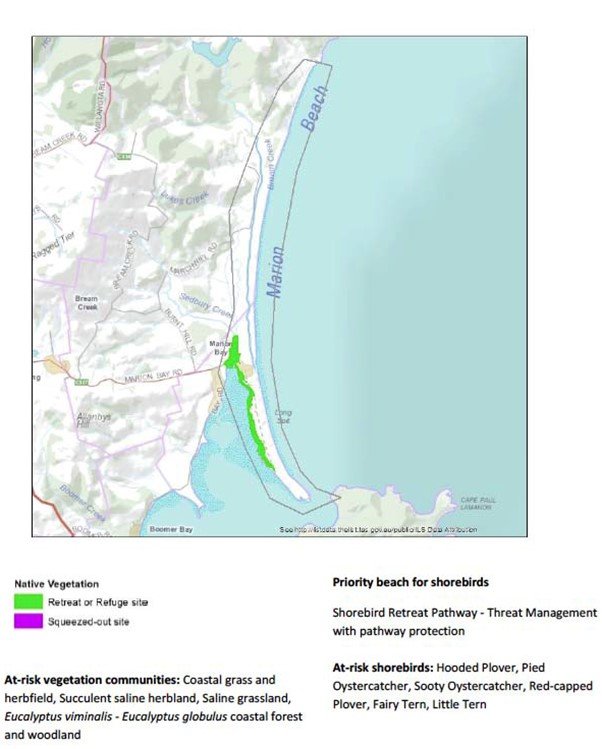
Figure 5: Map showing results for Marion Bay, southeast Tasmania. The beach supports six species of breeding shorebirds and four vegetation communities, all identified as being at risk from sea-level rise.
© DPIPWE 2016
Multipartner collaboration
One important outcome of this work was the strong multi-partner collaboration. This work was a collaboration among the Department of Natural Resource and Environment Tasmania (formerly the Department of Primary Industries, Parks, Water and Environment), the University of Tasmania, Natural Resource Management South and the Australasian Seabird Group (a special interest group of BirdLife Australia).
Project members worked closely together to explore how the Tasmanian coastal environment and its biodiversity could be prioritised for conservation management effort in the face of current and projected sea-level rise impacts. Invaluable to the success of the project was the social component of this collaboration, which included strong stakeholder engagement and commitment, along with networking and the ownership of a transparent and agreed approach.
This multi-disciplinary partnership enabled the success of this project through embracing government and non-government bodies, researchers, planners, policy makers and the community.
Collaborations are more time-consuming, but the greater investment of time and effort was recouped by having the many stakeholders actively contributing in the project and concurring on the outcomes. This high level of transparency and involvement ensured widespread acceptance of the prioritisation for coastal areas. With the data collection and shorebird and tern mapping ongoing, the approach offers the potential for updates at regular intervals as sufficient new data are available. This ensures coastal managers and communities can be informed by contemporary assessments and analyses.
Outcomes and next steps
Management actions are needed to minimize the risk of loss of Australia’s coastal biodiversity from projected sea-level rises and the predicted increases in the frequency of storm surges. The risk assessment approach adopted in this study identified the beaches that require further on-site investigations for the site-specific management or adaptation required at the landscape scale.
Future efforts will look at the significance of sites based on the species that are at priority locations, and the adaptive capacity of the species present. Whilst generalised adaptation principles have been developed, site-specific management actions are needed for those sites to minimise the risk of loss of Tasmania’s coastal biodiversity from projected sea-level rises. A first-pass assessment to identify vulnerable areas of the Tasmanian coastline derived from coastal bird breeding habitat will inform future analyses. [see Mapping the Tasmanian coast to identify coastal bird breeding spots]
Further work is also needed to understand impacts of projected sea level rises on Tasmanian coastal freshwater and brackish water-bodies. To enable interpretation of this analysis by land managers, a report summarising the priority beaches arising from this work, and recommended conservation management work, has been compiled and made available to planners.
Lessons learned
During the course of the research, new sea level rise modelling and natural values datasets became available, so the models were re-run with these new data to obtain the most contemporary outcomes. This resulted in considerable delays to the original schedule, but did not significantly change the results between the two data sets. The clear advice to others considering similar risk assessments is to go with the best data you have at the time when the need exists, rather than waiting for the elusive data on the horizon!
The approach for this project could easily be applied to other regions around Australia. Similar efforts to map coastal areas with LiDAR and to map natural coastal values are underway elsewhere around the coast. A key achievement of this project was the development and use of an approach that appears to be one of the most advanced in Australia yet is relatively simple to apply with a standard GIS software.
This is the first time such an integrated approach has been undertaken in Australia, and is one of very few worldwide. Previous efforts to conserve coastal values have been undertaken for relatively small areas and/or fewer coastal values. This initial effort is the first holistic approach to identifying priorities for the conservation of coastal values in Australia at the landscape scale (i.e., statewide) and for such a broad spectrum of natural coastal values.
To cite:
This case study was updated by Dr Eric J. Woehler, OAM.
Please cite as: Woehler, EJ, 2024: Impact of sea level rise on natural coastal values in Tasmania. Case Study for CoastAdapt, National Climate Change Adaptation Research Facility, Gold Coast.
Further reading
DPIPWE 2016. Impact of sea level rise on coastal natural values in Tasmania. Natural and Cultural Heritage Division, Department of Primary Industries, Parks, Water and Environment, Hobart, 146pp. https://nla.gov.au/nla.obj-1382804175/view
Woehler E.J. 2021a. Contemporary population estimates for Eastern Hooded Plover Thinornis cucullatus and Australian Pied Oystercatcher Haematopus longirostris in Tasmania. Tasmanian Bird Report 41, 19-23.
Woehler E.J. 2021b. An overview of the major threats to resident and migratory shorebirds and small terns in Tasmania. Tasmanian Bird Report 41, 35-45.
Woehler E.J. 2024a. Coasts and marine – Resident shorebirds. In: Tasmanian 2024 State of the Environment Report. Volume 1. Summary report. pp 106 – 108. Tasmanian Planning Commission 2024, Hobart. https://www.planning.tas.gov.au/__data/assets/pdf_file/0006/779856/Tas-2024-State-of-the-Environment-Report-2024-Volume-1.pdf
Woehler E.J. 2024b. Coasts and marine – Resident shorebirds. In: Tasmanian 2024 State of the Environment Report. Volume 2. Technical reports Part A. pp 105 – 112. Tasmanian Planning Commission 2024, Hobart. https://www.planning.tas.gov.au/__data/assets/pdf_file/0007/779857/Tas-2024-State-of-the-Environment-Report-2024-Volume-2-Part-A.pdf