




At a glance
- Strong cultural connection to Sea Country: 91% of Aboriginal people in coastal NSW engaged in cultural activities on Sea Country in the past year, with recreation, fishing, and camping being common practices.
- Importance for wellbeing: Sea Country is rated as extremely important for quality of life, providing food, cultural identity, and mental/emotional health benefits.
- Major threats identified: Climate change, habitat loss, water quality decline, and reduced seafood abundance were seen as significant threats to cultural connections and traditions.
- Dissatisfaction with management: Many respondents felt current management fails to respect cultural rights, lacks consultation, and limits access, with 75% reporting no engagement from government agencies.

First NSW survey of Aboriginal cultural connection
A survey of coastal Aboriginal people in NSW is part of a new program of systematic monitoring of the cultural dimensions of the state's Marine Estate, which includes coastal waters to three nautical miles.
A better understanding of the concerns and ideas for managing Sea Country will help to improve management of the coast into the future.
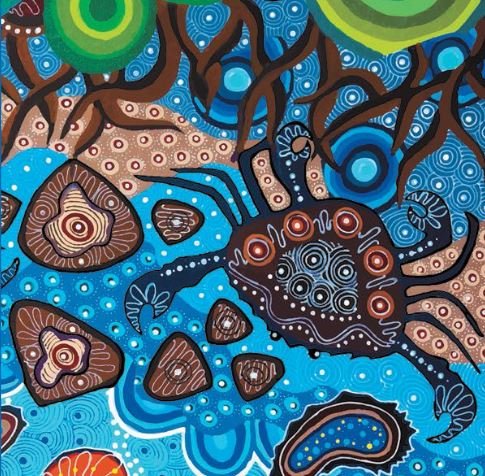
Art from the cover of the report from the first NSW survey of Aboriginal Cultural connection
- © Bindarray Maagun (River Feast) by Gumbaynggirr artist Lavinnia InglisNSW sea country cover

Art from the cover of the report from the first NSW survey of Aboriginal Cultural connection
© Bindarray Maagun (River Feast) by Gumbaynggirr artist Lavinnia Inglis
Interactions with Sea Country
The research showed that nearly half (48%) of Aboriginal people visited their local Sea Country at least once a week to undertake cultural activities or traditions. The most popular use was recreation (75%) followed by hook and line fishing (61%) and camping/staying on Sea Country (57%).
On a statewide level, 91% of Aboriginal people participated in at least one cultural activity or tradition on Sea Country in the past 12 months, the three most common activities being cultural celebrations; funerals or sorry business; and passing on or receiving cultural knowledge.
an animation by NSW Fisheries about working together to care for Sea Country
Sea Country is important for quality of life
Participants rated Sea Country as extremely important for their quality of life, the most frequently mentioned factors being: as a source of food (22%); cultural connection (16%); and as a conduit for mental and emotional health (16%).
Connection to Sea Country contributes to the social, cultural and spiritual aspects of Aboriginal people’s lives. Respondents rated Sea Country as important for spending time with family and community; their cultural identity; and their emotional and mental health.
Cultural connections
Aboriginal people reported cultural connections with a wide range of fish and animals, including various fish species, dolphins and whales, birds (e.g. osprey, black duck, black swan) and invertebrates (e.g. oysters, abalone, pipis).
Connections or relationships with particular places on Sea Country were also diverse. More than 20% of respondents said they were most connected to their own cultural Nation’s Sea Country; while 17% stated a specific area within their nation, nine per cent to specific sites or areas with family or traditional connections and 6% indicated a connection to all Sea Country.
Caring for Sea Country
Aboriginal people feel strongly that the health of Sea Country is critical for protecting their culture and traditions. They also have a strong sense of personal responsibility about caring for Sea Country, which means keeping it clean, protecting Sea Country in general and preserving it for future generations.
Threats to cultural connections with Sea Country
When asked to rate the impact of 11 key threats on their cultural connections to Sea Country, all threats were perceived to have a major impact on cultural connections. These threats included climate change, damage to or loss of habitat, water quality, reduction in abundance of seafood, decline in wildlife, and overcrowding.
Impacts were felt to emotional, mental and spiritual health, cultural identity, cultural practices, traditional food collection, and Aboriginal people’s ability to pass down traditional teachings to future generations.
Management of Sea Country: room for improvement
Overall, Aboriginal people were dissatisfied with management of Sea Country, with at least one in five reporting they were not at all satisfied. They were mostly dissatisfied with the way current rules do not recognise Aboriginal cultural rights or allow them to undertake cultural activities and traditions.
Reasons for dissatisfaction with Sea Country management included over-development and destruction of sites on land, fears of being fined or being restricted from accessing areas and lack of ability to pass on cultural knowledge and practices.
Respondents were also dissatisfied with engagement and communication from government agencies on how local Sea Country is managed.
There was a widespread view that it was not easy to find or understand information about how and why decisions were made. Most respondents (75%) reported that they had not been consulted by the government to talk about management of Sea Country. Overall, respondents disagreed that there are opportunities for training, employment and joint management of Sea Country.
The survey is the first of what is intended to be a continuing conversation on the importance of and responsibilities for maintaining healthy Sea Country. It will be run every three years to track trends in community wellbeing associated with Sea Country.
To cite:
This case study was prepared by NCCARF. Please cite as: NCCARF, 2024: NSW survey explores connections to Sea Country. Case study for CoastAdapt, National Climate Change Adaptation Research Facility, Griffith University, Gold Coast.