



At a glance
- Contaminated waste in the coastal zone, located in former landfill sites in the sand dunes of Port Fairy, Victoria, is at risk of washing into the ocean due to dune erosion and sea level rise.
- Planning for the long-term management or mitigation of this waste is a highly complex process impacted by multiple layers of state and federal legislation, presenting a labyrinth of approvals processes that must be navigated.
- Parts of this legislation and its associated guidelines and frameworks have been in flux, further complicating planning efforts.
- Factors ranging from the presence of protected coastal flora and fauna to cultural heritage, add additional layers of complexity to coastal contaminated land management planning.

Breach at the beach
Port Fairy is a historic town and working port situated on the Moyne River, within the Moyne Shire Council of southeast Victoria. To the east of town, Port Fairy Bay’s sandy beaches are backed by dunes, which were historically mined for their sand. The mining activity created large pits in the dunes that were later repurposed as convenient tip sites for the town’s waste, including its nightsoil before the introduction of town sewerage. These unlined landfill pits were finally closed in the 1990s.
Today, the smaller of the two landfill sites, located on land managed by Victoria’s Department of Energy, Environment and Climate Action (DEECA), contains approximately 22,000m3 of waste. The larger site, owned by Moyne Shire Council, contains approximately 150,000m3 of waste. Testing at the site has found potentially hazardous asbestos cement sheeting, heavy metals and hydrocarbons.
The risk that these contaminants pose to human health and the environment is considered low while they remain contained within the site. The key concern is the ongoing erosion of the dunes the sites are located in.
In 2011, erosion events cut into the seaward side of both sites, spilling waste into the environment.
The red tape tangle
In the wake of the landfill site breach, Moyne Shire Council and DEECA began assessing the sites and considering long term options to manage or mitigate the contamination risk posed by ongoing dune erosion and rising sea levels. More than a decade later, this process is still ongoing, as the team navigates multiple areas of state and commonwealth environmental legislation, and multiple layers of government culminating in the state minister, to gain all the necessary approvals and funding.
During the first phase of work, risk assessment auditors assessed the site, and in 2018 consultants completed a long-term management plan. The plan recommended building two rock sea walls to protect the sites to 2100 predicted sea level rise. In April 2019, the state government provided a $1.5 million grant to Moyne Shire Council to cover the cost of building the walls, sourcing sand to replenish eroded dunes, and to dig a test pit to conduct a more detailed site contamination assessment.
In 2020, Council and DEECA each resolved to build a rock wall on their sites. The design was taken to public consultation. During the consultation, objections were raised because federally protected Hooded Plovers had in recent years started nesting on the beach near the landfill sites.
In early 2021, to begin to gain approvals for the rock wall works, biodiversity assessments were started to satisfy the federal Environment Protection and Biodiversity Conservation Act, and the Victorian Flora and Fauna Guarantee Act and Planning and Environment Act.
At the same time, DEECA reevaluated the project in light of the Victorian Marine and Coastal Act, introduced into law in 2018. The Act was followed by the release of the Marine and Coastal policy in 2020, the Marine and Coastal strategy in 2022, and the Victorian Resilient Coasts Guidance and Framework in 2023.
Rather than defending contaminated coastal sites against erosion – such as with a rock wall – the new laws and guidelines prioritise adaptation actions in the order of: non-intervention, avoid, nature-based methods, accommodate, retreat, and then protect. DEECA decided to put the rock wall project on hold to reconsider these alternative options.
- about the response to the community consultation undertaken in early 2023 for the Port Fairy contaminated land site
- technical documents for management of the site including site adaptation options: adapt (long term management), protect (rock revetment) or retreat (remove the waste), https://engage.vic.gov.au/port-fairy-landfill-management
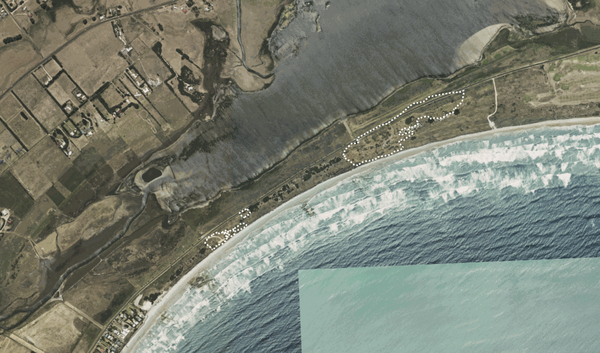
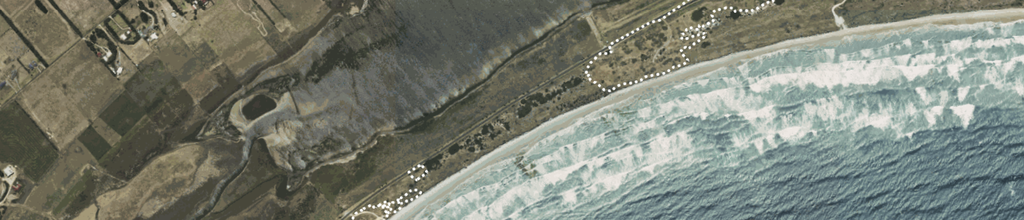
Locations of decommissioned landfills, East Beach, Port Fairy
- © Victorian Government. Engage Victoria: Port Fairy Landfill Managementpics of landfill location
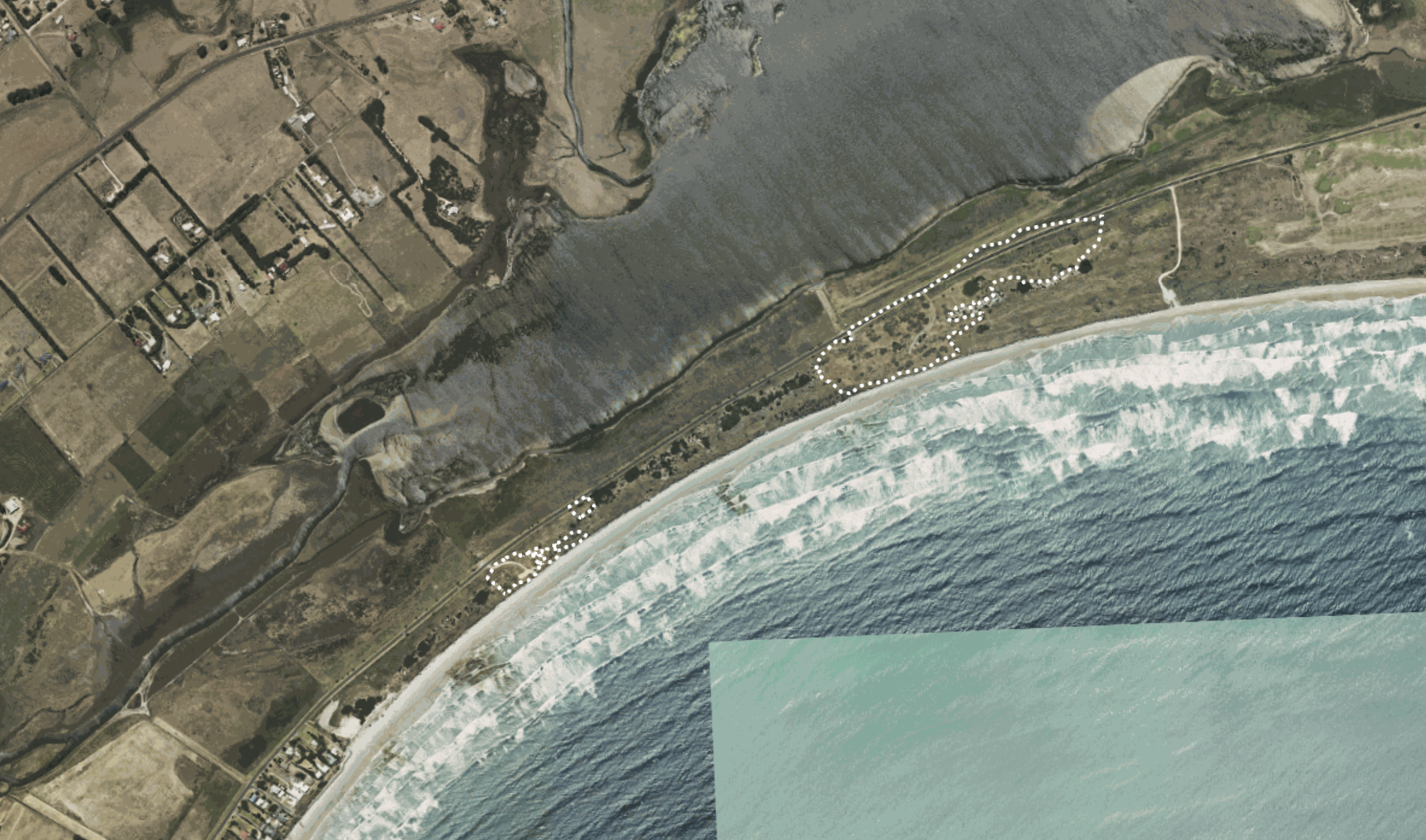
Locations of decommissioned landfills, East Beach, Port Fairy
© Victorian Government. Engage Victoria: Port Fairy Landfill Management
For the Port Fairy landfill sites, remediation rather than protection would involve removal of all the waste to a site accredited to accept contaminated waste, and then backfilling and restoring the dune habitat. This process might cost in the region of $150 million, although detailed costing for this approach is still underway. A second round of community consultation in 2023 found strong support for waste removal and site remediation.
Each step in the planning process can reveal a further set of legislative complexities to be navigated. For example, to conduct site drilling and waste testing to gain a further understanding of the contamination status of the sites and potential remediation costs, the team had to seek cultural heritage approval and expert oversight; acquire permits and offsets due to the presence of native vegetation; and time the works to avoid impact to hooded plovers.
In June 2024, a contract was awarded for consultants to review all previous investigations, planning and analysis conducted to date, and develop a new long-term coastal adaptation plan and supporting business case for the proposed works. This work will be presented to the minister to seek ministerial approval and funding for the long-term management of Port Fairy’s coastal zone landfill sites.
Approvals on approvals - and lessons for other councils
This contaminated site is located in Victoria, but some lessons will still be useful for councils in other jurisdictions.
- Multiple areas of state and federal legislation must be navigated, and a ‘spaghetti tree’ of approvals sought, to address the problem of contaminated landfill sites in the coastal zone. This process can take years to work through.
- Specialist consultants who know all the relevant legislation, and who know the right questions to ask to bring to light all the approvals that might be required, are key to the process. Over the course of this process, consultant fees can be significant.
- Even among specialised consultancies, few people have breadth and depth of knowledge to smoothly negotiate all the relevant guidelines and legislation. The complexity involved makes it hard to document a workflow through the branching tree of approvals processes involved, often resulting in projects relying on corporate knowledge in the heads of key individuals.
- To get approval for defensive or remediation works in coastal areas with protected flora and fauna, offsets and mitigations for impacted species must be proposed. Previous mitigation works, even those recently introduced, cannot be considered in an application for works; new or additional mitigation must be proposed.
- The range of long-term management options available for coastal contaminated waste sites, which spans building defensive rock walls, to soft engineering, to site remediation, further complicates the process. Consultants need a firm plan or clear direction from project decision makers before they can consider the implications of works under the Environment Protection and Biodiversity Conservation Act, for example.
- Council and DEECA working together has added complexity to the project management, but also provides a broader base of in-house expertise that can complement the work of consultants.
To cite:
This case study was prepared by NCCARF.
Please cite as: NCCARF, 2024: Complex and costly: manging contaminated land sites in an eroding coastline. Case study for CoastAdapt, National Climate Change Adaptation Research Facility, Griffith University, Gold Coast.