



At a glance
- Urban development in coastal areas presents significant challenges for water quality and marine ecosystems. Construction sites can be a major source of erosion and sediment that can runoff into waterways with heavy rain.
- The councils-led 'Get the Site Right' campaign in New South Wales is designed to raise awareness, ensure compliance, and ultimately reduce the harmful impacts of construction activities on the coastal environment.
- It includes cooperative approach to education, capacity building and compliance for controlling erosion across building sites: but it has been equally important in providing feedback to local and state regulators and compliance staff.
- The program is a joint taskforce of local councils, catchment groups, and NSW government agencies and aims to reduce erosion and sediment control on commercial and residential building sites across NSW.

Site runoff is a problem for water quality
The councils-led 'Get the Site Right' campaign is designed to raise awareness, ensure compliance, and ultimately reduce the harmful impacts of construction activities on the coastal environment.
Urban development in coastal areas poses significant challenges for water quality and marine ecosystems. Poorly managed construction sites can generate significant amounts of sediment, which is washed into stormwater drains and, eventually, into water bodies such as creeks, rivers, and coastal waters.
This sediment then degrades water quality and harms marine life by destroying habitats, reducing oxygen levels in the water, and introducing toxic substances. Sediment in water also reduces light penetration, smothers aquatic habitats, and transports pollutants such as heavy metals and nutrients that can cause algal blooms.
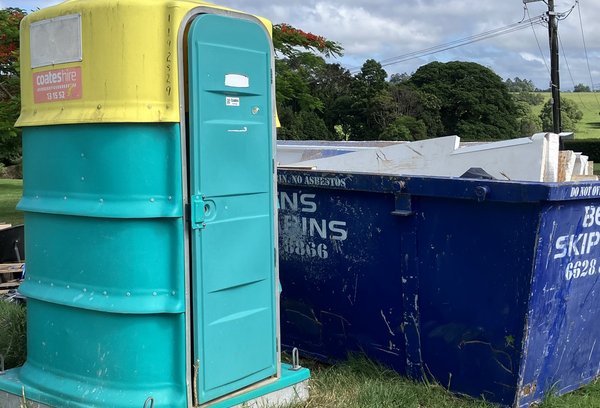
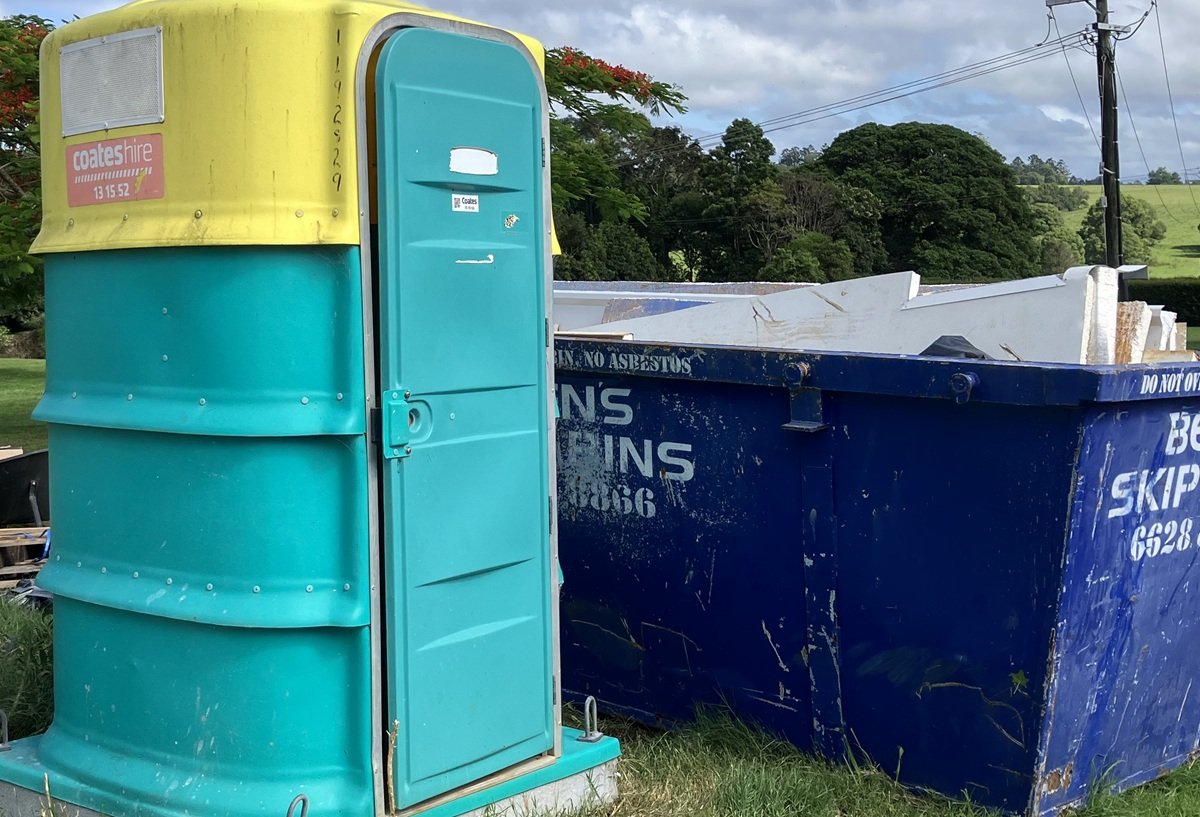
Construction sites are particularly vulnerable because they often involve major earthworks that can expose large areas of loose soil. Even smaller tasks such as washing down tools can have significant impacts. Without effective erosion and sediment control measures in rainfall easily washes sediment off site and into watercourses.
“Stronger site controls are not only about compliance, they’re about protecting the health of our waterways, safeguarding biodiversity and ensuring safe recreational spaces for our communities.”
Councillor Shannon Welch, Chair of the Sydney Coastal Councils Group.
Despite the existence of regulations that require construction sites to manage erosion and sediment control, compliance can often be inconsistent. Builders and developers may lack awareness of their responsibilities, and enforcement of these regulations varies across council and state authorities.
bins
From local to state-wide
Get the Site Right targets erosion and sediment control on commercial and residential building sites statewide. It began as a collaboration led by the Parramatta River Catchment Group and other Sydney-based catchment alliances. It has since expanded to include councils across Sydney and regional NSW.
Today, it operates as a joint taskforce of local councils, catchment groups, and NSW government agencies, including the Environment Protection Authority (EPA) and the Department of Planning, Housing and Infrastructure.
a webinar developed for participating councils on the need to ensure building sites control erosion and sediment for the health of waterways (14 minutes).
a webinar from industry association Stormwater NSW in March 2025, which covers technical and regulatory topics (90 minutes).
Regulations for erosion and sediment control
Local councils and government agencies have specific regulations regarding erosion and sediment control, with potential penalties for non-compliance.
Management at a building site begins with an erosion and sediment control plan (ESCP)
– submitted as part of the development application – that outlines specific measures on a building site such as sediment fencing, silt barriers, stormwater diversion, stockpile storage, waste receptacles, equipment washdown controls and stabilisation through landscaping and vegetation.
Local government requirements and regulations are outlined in the resource colloquially known as the 'Blue book', which provides guidance on site assessment, planning, design, and construction of erosion and sediment control measures.
what is required from the 'Blue book', or its formal title Managing Urban Stormwater: Soils and Construction
Educating workers with varying backgrounds
The education aspect of the Get the Site Right program is critical. Workers from construction sites cover a range of roles and come from varied backgrounds, which can mean they have limited exposure or understanding of environmental issues.
Furthermore, trades training may not include education on environmental issues and how best to reduce environmental impacts. And migrant labour is common in the construction industry and language barriers, plus mobility across jobs and sites, and lack of continuity may all play a role in on-site norms around considering environmental impacts.
As well as providing education on site, the program is also working with industry partners to have environmental topics included in trade and vocational training. Broader initiatives across NSW aim to embed sustainability and erosion control practices into construction trades training programs
Developing locally relevant education materials
The Get the Site Right program produces highly visual education materials designed to cater to varying literacy levels and language skills among construction workers.
These resources are flexible and can be customised by councils to include images of local waterways. By featuring familiar beaches, rivers, or fishing spots - where construction workers or their families swim surf or fish - the materials make the issue of site erosion and water runoff more relatable and so connect environmental protection to places workers value for recreation.
what's right in this flyer, produced by the Georges River Council.
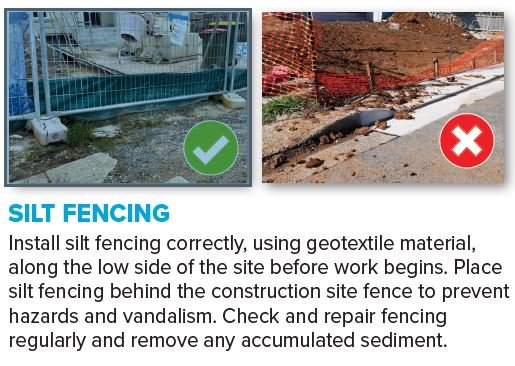
Silt fencing
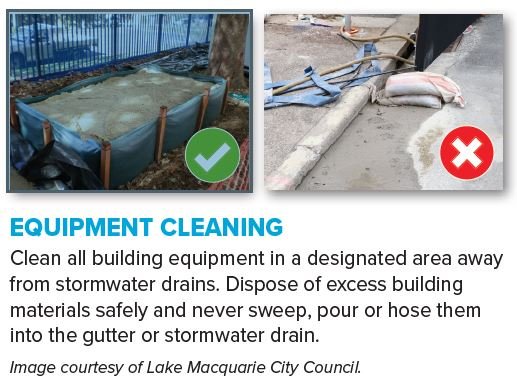
A sample of the education materials produced by the Georges River Council.
- © Get the Site Rightconstruction equipment cleaning

A sample of the education materials produced by the Georges River Council.
© Get the Site Right
Current guidelines
In 2024, the guidelines for erosion and sediment control were updated.
The guidelines are available on the NSW government planning portal and provide practical advice to assist industry to meet their obligations under their development consent.
Compliance 'blitz' each year
Compliance is important, both to reduce pollution, but also as an opportunity to educate construction managers and workers.
The Get the Site Right campaign conducts a one-day blitz in March and a week-long blitz in August, during which council and EPA officers inspect hundreds of construction sites across NSW. They check for measures such as sediment fences, traps, and stabilised access points.
Sites that are found to be non-compliant receive warnings or fined, depending on the severity of the breach. Penalties under NSW law range from $15,000 to $45,000 depending on the offence.
Compliance
Regulatory staff across 20 councils and the EPA inspected 867 sites and issued more than 70 penalty notices totalling $404,780 for breaches including sediment run-off and poor stockpile controls.
This blitz in March 2025 revealed that compliance on construction sites was only 48.35.
To cite:
This case study was prepared by NCCARF.
Please cite as: NCCARF, 2025: Get the site right to reduce runoff from construction sites. Case study for CoastAdapt, National Climate Change Adaptation Research Facility, Griffith University, Gold Coast.