


Can living seawalls work in a lake?
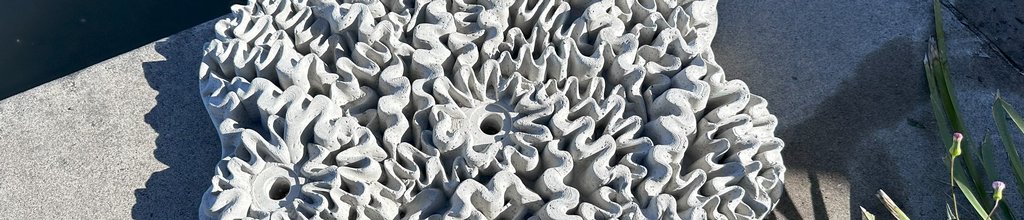
At Brightwater Lake, an artificial lake on Queensland’s Sunshine Coast, the local council has installed 50 living seawall panels on the lake wall.
Living seawall panels were developed by the Sydney Institute of Marine Science and were first installed in Sydney in 2019. Since then they have been successfully used in a number of coastal settings.
The Sunshine Coast Council was keen to see if they could be used in a non-coastal setting and provide similar biodiversity and water quality benefits.Beginning in mid-June 2023, the 18-month research trial by the Sunshine Coast Council in partnership with the University of the Sunshine Coast is the first time the panels have been used in a non-coastal environment.
With hundreds of kilometres of vertical seawalls lining canal estates around the Gold Coast, acting project leader Sam Cook believes there is potential for many more installations if the current project is successful.
WATCH: a video of Sunshine Coast Council officers describing a trial of living seawalls in a non-coastal environment.
Installing the panels
As the seawall panels are about 50-55cm high, in this non-tidal system they needed to be completely submerged, explains Cook.
This quickly narrowed down the placement to two sites, one near the weir and the other near the salinity pump. The habitat at the two sites is noticeably different, with a rocky substrate at the weir and a sandier substrate near the pump site. Seagrass patches occur at both sites.
A commercial diving team installed 25 tiles at each site in June 2023.
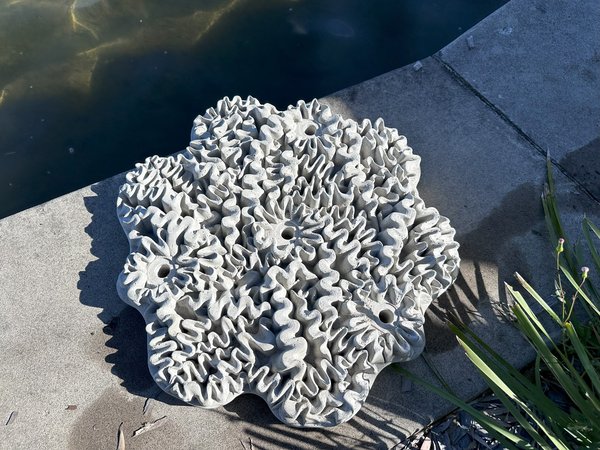
SCC_canal_panel waiting to be installed
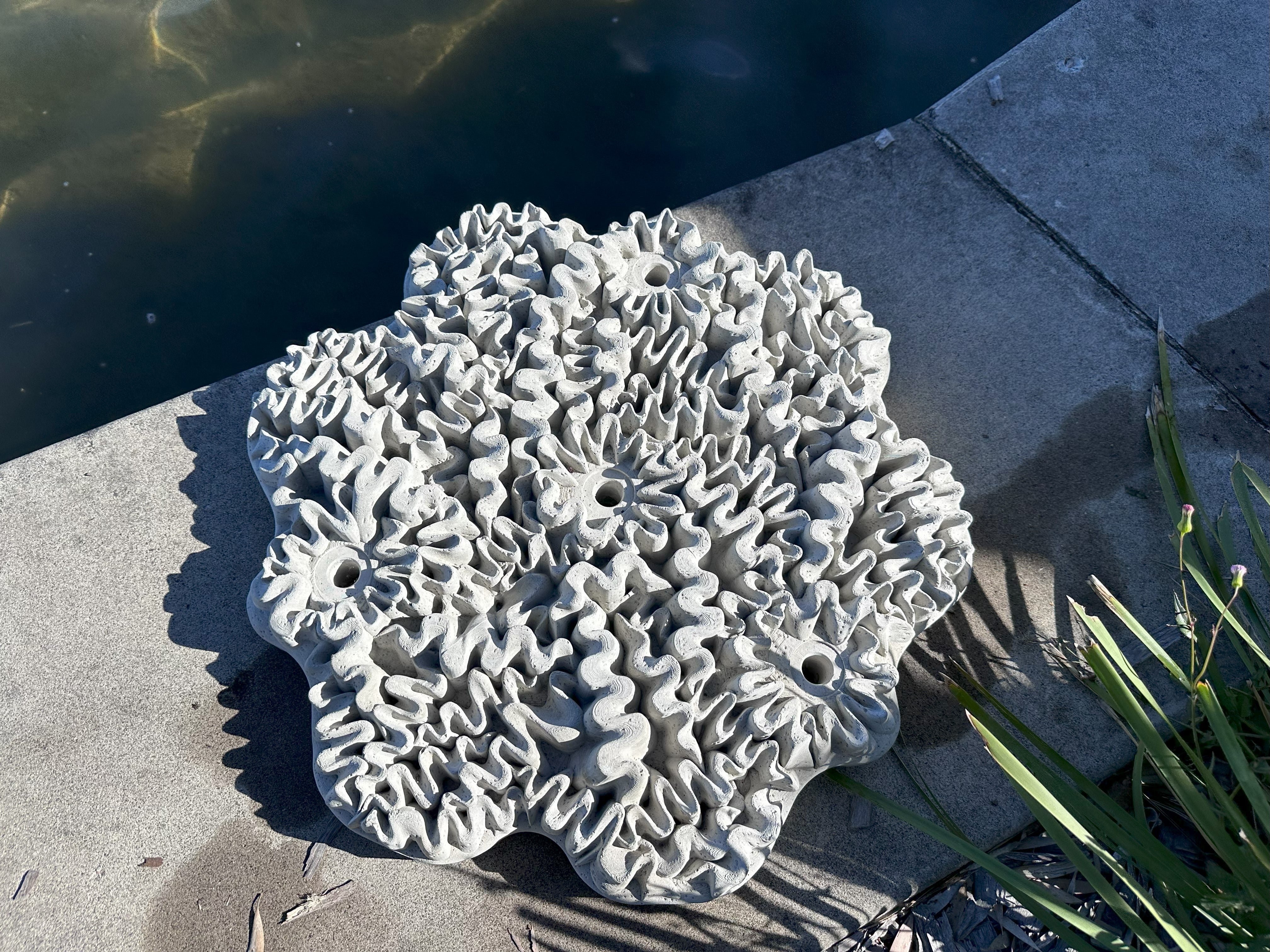
Panel for the living seawall before installation.
© Sunshine Coast Council
Monitoring the panels
A team led by Chris Henderson at the University of the Sunshine Coast is monitoring the tiles to assess the colonisation and variety of species inhabiting the seawalls and their vicinity.
Dr Henderson and his team are using remote underwater video systems to survey the structure of fish communities at the two sites. So far, they have conducted three surveys: before seawall installation, two-four weeks after installation, and six months after installation. The surveys involved fish sampling during high tide in daylight hours.
The monitoring reveals a significant shift in the fish community present at each site, with a shift away from species moving past the wall to species that are using the tiles to feed or to live in. Over the three surveys, they have found 27 fish species across the tiles and control locations. At the weir location, there is now a greater diversity at the seawall tile sites than the control sites.
Although the most recent sampling recorded the lowest fish numbers, Dr Henderson believes this reflects the shift from species traversing the seawalls to species using the wall (e.g. small gobies and larger fish feeding on the wall.) He expects that over time, the Living Seawalls will provide greater feeding opportunities for fish, leading to a greater abundance of harvested species and a greater biodiversity of fish using the seawall.
The next round of sampling will occur in June 2024, one year after installation of the Living Seawall tiles.
Communication with the community
The council regularly communicates updates about the project to the Brightwater Residents Association, as well as updates on its website and Facebook page; letterbox drops when the tiles were being installed, and signage at the two sites.
Challenges
Because the tiles are underwater and swimming is not recommended in the lake, it is difficult to show people what the tiles look like. Providing information about the project will be much easier once they are able to make the underwater videos.
While the project used the tiles created by Living Seawalls with funding from the council’s environment levy, Cook hopes that in future there is possibility to design and build their own tiles.
To cite:
This case study was prepared by NCCARF. Please cite as: NCCARF, 2024: Trialling a living seawall in a lake on the Sunshine Coast. Case study for CoastAdapt, National Climate Change Adaptation Research Facility, Griffith University, Gold Coast.