



At a glance
- The NSW Wellbeing Survey found strong emotional, mental, and physical health benefits from coastal access, with recreation being the primary use.
- Respondents expressed a deep sense of responsibility to pass on a healthy coast to future generations.
- Key concerns included litter, overcrowding, illegal activities, climate change impacts, habitat loss, and wildlife decline.
- The survey established a framework for ongoing monitoring of social, cultural, economic, and environmental benefits linked to the marine estate.
NSW's first coastal wellbeing survey
The May 2024 release of the first NSW Marine Estate Community Wellbeing Surveys provides a snapshot of views of coastal residents and visitors. The surveys reflect the views – across 11 locations along the NSW coast – of more than 2000 coastal residents, more than 850 young residents (14-17 years called ‘youth’) and more than 1000 coastal visitors.
The surveys are part of the NSW government’s Marine Estate Management Strategy, which is described as a coordinated, quadruple bottom-line approach.
The systematic monitoring of the human (social, cultural, economic) dimensions of the marine estate is a significant challenge and until now the state’s marine managers have lacked the data to quantify community benefits and monitor wellbeing.
a related case study on the Indigenous survey NSW survey explores connections to Sea Country
Healthy coast, healthy community
A key component of the project was the development of a community wellbeing framework as the first step to bridge this data gap. Community wellbeing was defined as the total of economic, social, cultural and environmental benefits derived from the NSW marine estate.
The surveys, conducted in 2021 by market research company Ipsos, are the first application of the framework and will be repeated every three years, collecting data on benefits and threats to track spatial and temporal trends in community wellbeing associated with the marine estate.
For the purpose of the survey, the NSW coast was broken into seven discrete regions: North Coast (upper and lower); Hunter; Central Coast; Greater Sydney; South East Coast (upper and lower).
The survey questionnaires captured information on topics related to the marine estate; including connections; awareness of benefits and threats; perceptions of environmental health; and stewardship.
READ: about the NSW Community Wellbeing Framework
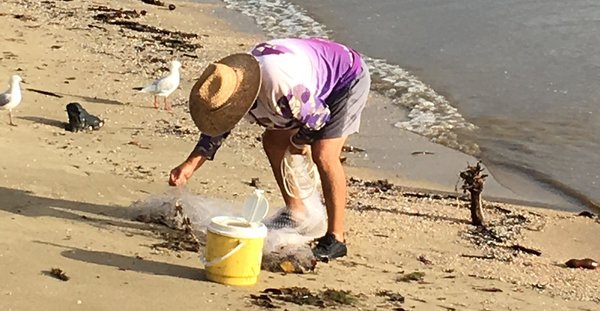
The coast contributes to quality of life for many.
- © NCCARFIMG_4186_cropped

The coast contributes to quality of life for many.
© NCCARF
The NSW coast was regarded as important by all groups as contributing to quality of life through environmental qualities, recreational opportunities and facilitating improved emotional, mental and physical health.
Overall, the coastal residents and visitors view the current health of the marine natural environment as positive with 82% of residents and 75% of visitors rating it as either good or very good. By contrast, 54% of youth-rated environmental health as good or very good.
For coastal residents and youth, the most popular activities include going to the beach; land-based exercise; water sports; picnicking, sightseeing, and visiting coastal cafes; and nature watching. The activities were the same for both the youth and wider residential groups, although the rate of participation for the youth segment was much higher. For visitors, the most common activities were picnicking, sightseeing, visiting local cafes (61%); and beach going (60%).
Ensuring a legacy
Coastal residents and youth reported a high level of connection to the coast, the strongest area of connection being their pride in living on the coast. Visitors identified a moderately positive connection with the NSW coast, with more than 4 in 10 agreeing with the statement “I feel a personal connection to the NSW coast.”
Passing on a healthy coast to future generations was seen as the most important aspect for managing the coast. Many respondents feel a sense of responsibility for maintaining the coast and participating in marine stewardship activities.
The coastal youth ranked very highly two reasons for managing the NSW coast: (1) passing on a healthy coast for the benefit of future generations; and (2) protecting nature (for its own sake) even though it may never be used or seen by humans. The wider resident and visitor groups also prioritised these reasons, with the addition of (3) providing a place where people can connect with nature.
Impacts on wellbeing and the marine estate
A large proportion of visitors indicated they are “fully aware” of a diverse range of threats, such as the danger of marine litter to wildlife; and the fact that most marine litter comes from land sources. The threats identified as having the greatest impact on visitor experience include litter, overcrowding, illegal behaviour, impacts of climate change, loss of natural habitat and decline in wildlife. As well as the above, residents also identified poor water quality and reduced amount of seafood to catch as having an impact on their experience. The youth survey identified overcrowding as the biggest threat (82%); followed by litter (78%); climate change impacts; decline in wildlife; loss of natural habitats; and poor water quality.
The surveys will provide an ongoing platform to capture the views of the NSW community as part of managing the NSW marine estate. The surveys will be repeated in 2024 and trends assessed against the 2021 results.
To cite:
This snapshot was prepared by NCCARF. Please cite as: NCCARF 2024: NSW community wellbeing survey highlights coastal use and values. Snapshot for CoastAdapt, National Climate Change Adaptation Research Facility, Gold Coast.