


At a glance
there are three key phases of the IAP2 framework used in coastal adaptation.
- Inform: Provide clear, one‑way communication so the community understands programs, decisions, and recommendations related to coastal adaptation.
- Consult: Seek community feedback, local knowledge, and values to help shape strategies and proposals, aligning with the IAP2 Consult (and sometimes Involve) level.
- Involve: Enable deeper, two‑way, iterative engagement—such as workshops, dialogues, or codesign processes—to support shared learning and collaborative decision‑making consistent with IAP2 Involve and elements of Empower.
IAP2: a framework for engagement
There are a range of approaches, tools and frameworks for community engagement that have been developed by professional associations, state governments and consultancies.
IAP2 is a international framework designed to support participation of the community.
The advantage of using a readily available framework is that it can help an organisation to think through its goals and strategies. Also, some frameworks have detailed information on tools and resources, or even events and training, that can help build the capacity and confidence of staff and managers
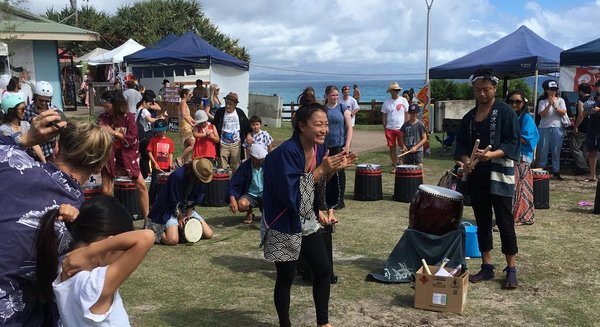
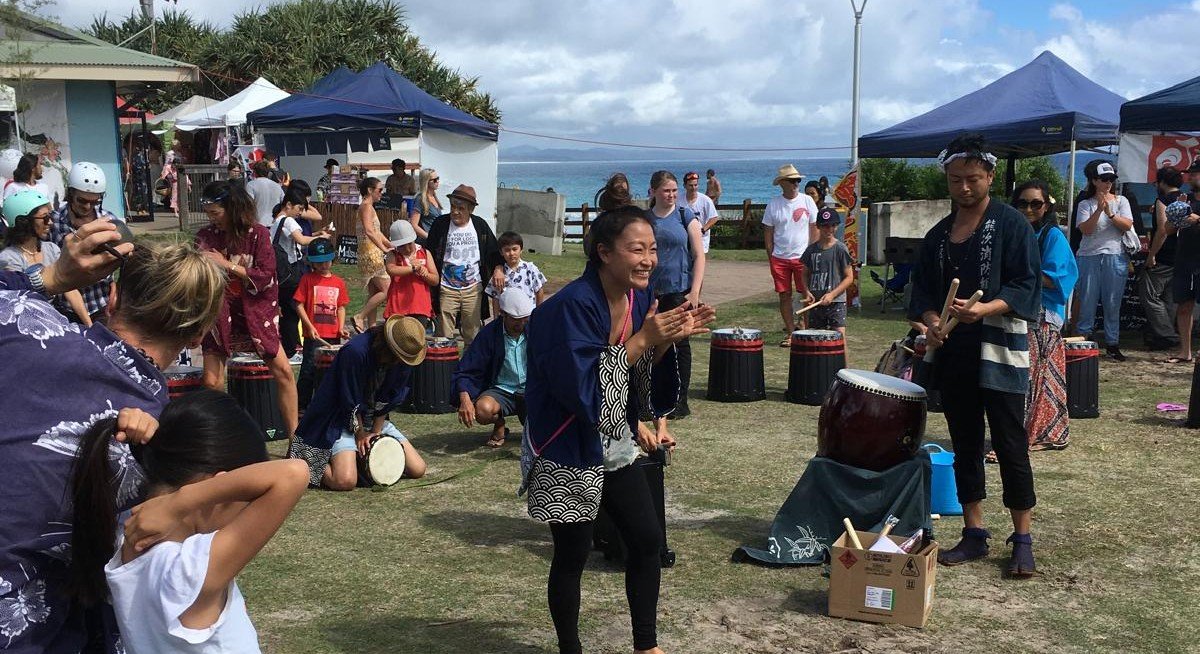
community event
The IAP2 framwork
The International Association of Public Participation (IAP2) framework is commonly used by many organisations, including by most local governments in Australia to guide meaningful public participation in decision-making.
This framework helps organisations choose the appropriate level of involvement, set clear expectations, and build trust by being transparent about how community input will shape decisions.
IAP2 is built around three core pillars:
- Core Values, which set expectations for ethical and effective engagement
- Code of Ethics, which promotes integrity and accountability
- Public Participation Spectrum, which outlines five levels of engagement (Inform, Consult, Involve, Collaborate, Empower) to clarify the public’s role and the degree of influence they can expect in a process.
to the IAP2 podcast series broadly discussing deliberation through a series of interviews and panels.
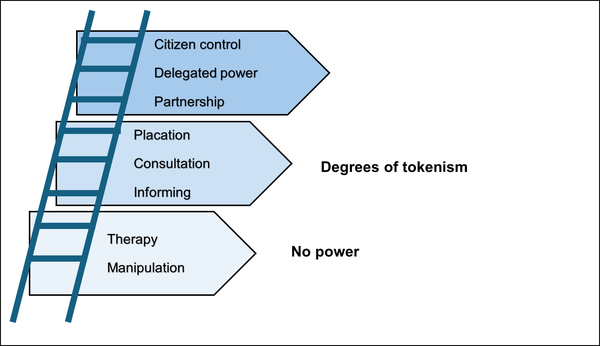
Figure 1: The IAP2 Spectrum draws on Sherry Arnstein’s 1969 Ladder of Citizen Participation, which categorises participation from non‑participation to full citizen control.
- © Arnstein 1969IAP2_PIC

Figure 1: The IAP2 Spectrum draws on Sherry Arnstein’s 1969 Ladder of Citizen Participation, which categorises participation from non‑participation to full citizen control.
© Arnstein 1969
Three types of engagement used in coastal adaptation planning
Coastal adaptation generally requires three broad types of activities. These align with the IAP2 spectrum.
- Informing the community through one-way communication about programs, activities, decisions, actions and recommendations (IAP2 'Inform').
- Consulting the community to request feedback on strategy, proposals, or gathering local knowledge, values etc (IAP2 'Consult' or can overlap with 'Involve').
- Involving the community at a deeper level through two-way, iterative discussions or activities with the community to encourage knowledge sharing, education and decision making. (IAP2 'Involve' or can overlap with codesign or coproduction termed 'Empower').
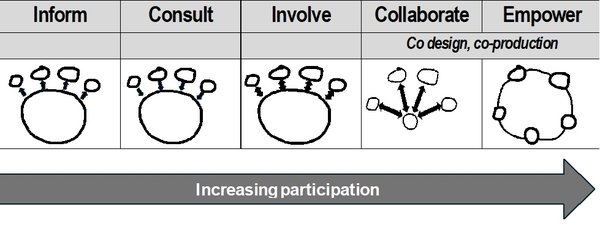
Figure 2: The five phases of the IAP2 spectrum are slightly modified here to include codesign and coproduction, terms used more often than 'empower'. See other resources below for more information about tools and tactics for putting this into practice.
- © IAP2IAP2 spectrum
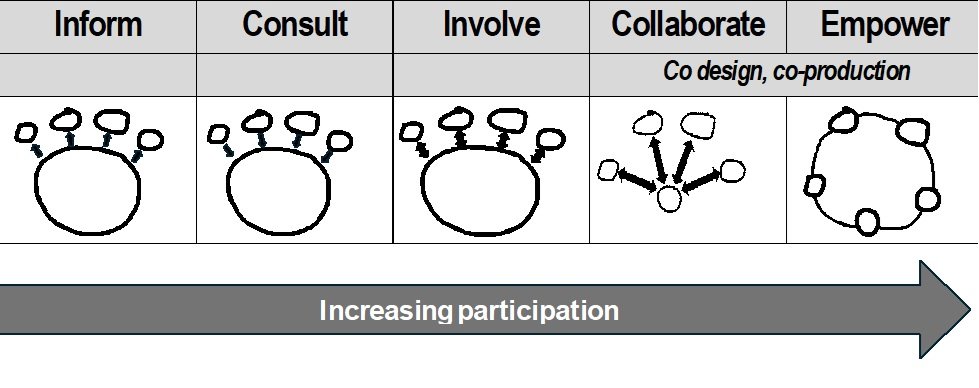
Figure 2: The five phases of the IAP2 spectrum are slightly modified here to include codesign and coproduction, terms used more often than 'empower'. See other resources below for more information about tools and tactics for putting this into practice.
© IAP2
- more from the IAP2 website , which offers some free basic resources and paid opportunities for training.
- CoastAdapt's Information Manual: Community Engagement describes the IAP2 spectrum in more detail.
about the City of Vancouver uses the IAP2 framework to develop a coastal communication toolkit
A Canadian example: City of Vancouver, A public engagement toolkit for sea level rise (Barisky, 2015)
- This project is strongly guided by the IAP2 framework and so provides a good example of how this framework can be practically applied
- It includes several engagement tools tailored to Vancouver context.
- It offers a roadmap demonstrating how tools can be sequenced and layered to create a coherent engagement process, rather than used in isolation. This is particularly novel in climate adaptation contexts, where engagement unfolds across multiple phases of uncertainty.
- It Includes a neighbourhood action toolkit to support residents to organise their own projects for resilience building.
- Although developed in 2015, it still provides the most detailed example we could find on extensive use of IAP2.