


Important to keep in mind
- Engagement and consultation should be done throughout your adaptation journey.
- Learn from what you do by setting clear objectives for each activity you undertake and assess whether you have achieved these effectively. If not, make changes.
Step 1: Identify challenges
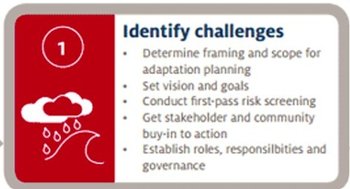
Rules of thumb for Step 1
- Bring together a diverse range of stakeholders, including potential opponents. Early, ongoing engagement is essential.
- Be aware of what just and fair adaptation means for your context.
- Ensure balanced gender and age representation, and include all relevant sectors.
- Compile information on past climate-related events and their impacts.
- Use expert input, simple maps, visuals, and climate projections to assess whether there is a climate risk (first-pass risk assessment or screening).
- Engage decision-makers and get the authority to act.
step1
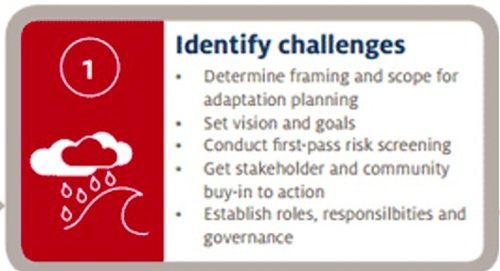
Rules of thumb for Step 1
- Bring together a diverse range of stakeholders, including potential opponents. Early, ongoing engagement is essential.
- Be aware of what just and fair adaptation means for your context.
- Ensure balanced gender and age representation, and include all relevant sectors.
- Compile information on past climate-related events and their impacts.
- Use expert input, simple maps, visuals, and climate projections to assess whether there is a climate risk (first-pass risk assessment or screening).
- Engage decision-makers and get the authority to act.
Step 2: Assess risks and vulnerability
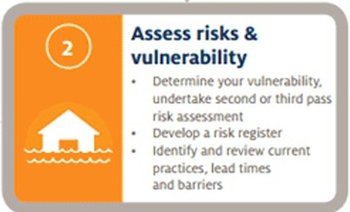
Rules of thumb for Step 2
- Share first pass assessment findings with stakeholders, narrow the focus to consider higher-risk areas, and combine existing data with stakeholder and expert knowledge to run a second-pass risk assessment workshop.
- Before the workshop, identify past climate impacts using freely available data, visualisations, and government studies and reports.
- If major risks are identified, develop a deeper understanding of key issues and discuss potential responses with decision-makers.
- Understand the legal risks of inaction on the identified risk.
step2
Rules of thumb for Step 2
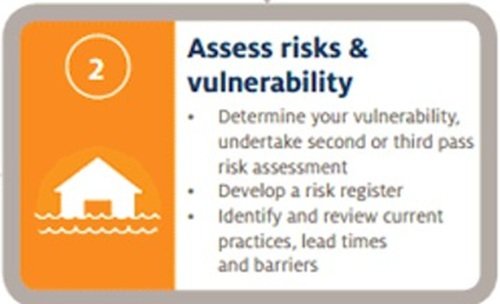
- Share first pass assessment findings with stakeholders, narrow the focus to consider higher-risk areas, and combine existing data with stakeholder and expert knowledge to run a second-pass risk assessment workshop.
- Before the workshop, identify past climate impacts using freely available data, visualisations, and government studies and reports.
- If major risks are identified, develop a deeper understanding of key issues and discuss potential responses with decision-makers.
- Understand the legal risks of inaction on the identified risk.
Step 3: Identify options
Rules of thumb for Step 3
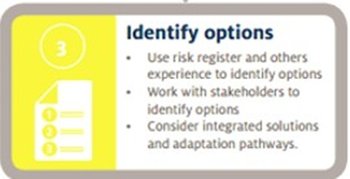
- Explore options that reduce future risk.
- Do not put new development in high-risk areas.
- Support natural adaptation to occur where appropriate.
- Use 'soft' options when suitable: these are social and environmental or nature-based strategies.
- Consult stakeholders to help identify and refine options.
- Consider potential opportunities that could arise from an option being implemented.
- Check that options align with state policies
step3
Rules of thumb for Step 3
- Explore options that reduce future risk.
- Do not put new development in high-risk areas.
- Support natural adaptation to occur where appropriate.
- Use 'soft' options when suitable: these are social and environmental or nature-based strategies.
- Consult stakeholders to help identify and refine options.
- Consider potential opportunities that could arise from an option being implemented.
- Check that options align with state policies
Step 4:
Rules of thumb for Step 4
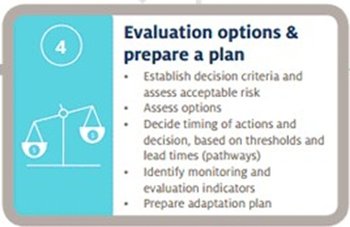
- Prioritise flexible options that can be adapted or expanded over time (i.e. don't commit to something that can't be altered or built-on if necessary).
- Compile existing organisational plans and strategies into a spreadsheet and assess their relevance for managing climate risks.
- Identify performance indicators in consultation with stakeholders: these should include potential community and environmental impacts.
- Where action does not need to occur immediately, define thresholds and triggers for future action.
- Assign responsibility for each action to people or groups
- Develop a simple plan incorporating triggers and responsibilities.
- Include scheduled review points for updating the plan.
step4

Rules of thumb for Step 4
- Prioritise flexible options that can be adapted or expanded over time (i.e. don't commit to something that can't be altered or built-on if necessary).
- Compile existing organisational plans and strategies into a spreadsheet and assess their relevance for managing climate risks.
- Identify performance indicators in consultation with stakeholders: these should include potential community and environmental impacts.
- Where action does not need to occur immediately, define thresholds and triggers for future action.
- Assign responsibility for each action to people or groups
- Develop a simple plan incorporating triggers and responsibilities.
- Include scheduled review points for updating the plan.
Step 5:

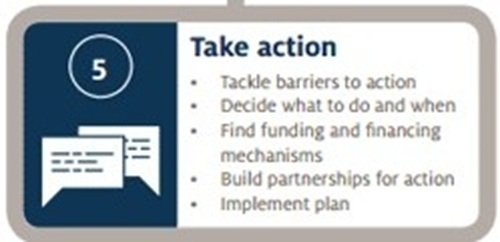
Rules of thumb for Step 5
- Identify potential barriers and include measures to address them.
- Implement actions that reduce risk, avoiding new exposure in high-risk areas.
- If deciding not take action, clearly document the decision-making process.
- Use soft options (social and environmental) where appropriate: and if suitable, enable natural adaptation to occur. Understand the risk of this action committing to this.
- Always consult stakeholders before taking action.
- Where appropriate, collaborate with other organisations across or within sectors to implement adaptation options.
step5
Rules of thumb for Step 5
- Identify potential barriers and include measures to address them.
- Implement actions that reduce risk, avoiding new exposure in high-risk areas.
- If deciding not take action, clearly document the decision-making process.
- Use soft options (social and environmental) where appropriate: and if suitable, enable natural adaptation to occur. Understand the risk of this action committing to this.
- Always consult stakeholders before taking action.
- Where appropriate, collaborate with other organisations across or within sectors to implement adaptation options.
Step 6:
Rules of thumb for Step 6
- If using a threshold-based plan, establish a monitoring system and evaluate outcomes over time.
- Select simple indicators clearly linked to decision outcomes.
- Monitoring thresholds over time can improve efficiency and save resources.
step6
Rules of thumb for Step 6
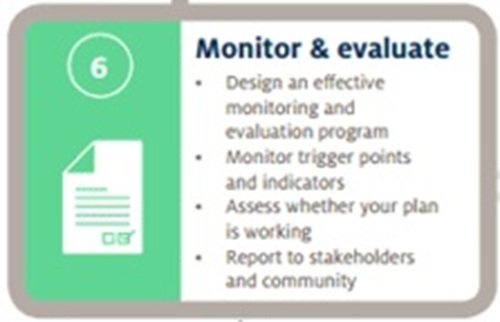
- If using a threshold-based plan, establish a monitoring system and evaluate outcomes over time.
- Select simple indicators clearly linked to decision outcomes.
- Monitoring thresholds over time can improve efficiency and save resources.
READ:
more to Get your bearings on C-CADS