


At a glance
- Australia’s coasts are home to most of the population and also the source and location of much of the nation’s economic activity.
- Climate, particularly temperature, helps shape the distribution, health and functioning of coastal communities, ecosystems, and economies.
- Understanding climate extremes, their frequency and severity, helps to inform planning, regulation and engineering standards for buildings and infrastructure to ensure these are safe and capable to operate under extreme conditions.
- Failing to account for future climate conditions in design and construction can lead to significant costs and risks to human safety and community resilience.
- Climate information - and its variability including weather extremes - are now routinely integrated into many deigns, plans and regulatory frameworks that affect coastal communities.

Australia’s climate has affected the shape and location of coastal communities.
Australia’s climate has influenced the shape and location of coastal communities.
The coastal zone has played a significant role in the lives and livelihoods of Indigenous peoples long before colonisation in the 1700s–1800s. It is well established that Aboriginal peoples have lived on this continent for 50,000 to 60,000 years.
This is reflected in the significance of their oral traditions, stories have been traced back at 21 locations that demonstrate knowledge of coastal inundation. These accounts appear to recall the effects of post-glacial sea-level rise more than 7,000 years ago.
The early location of many early colonial settlements, and the urban centres that followed, was largely influenced by temperate climate conditions. In most locations, this meant regular rainfall, access to fresh water (and assumptions of a stable climate). In contemporary Australia, this has produced a settlement pattern of around 87% of the population lives within 50 km of the coast.
Climate change is now challenging the viability of these settlement patterns as future climate conditions differ significantly from those on which they were originally based. Rising sea levels, increased flooding, and more frequent extreme weather events are placing pressure on infrastructure, housing, and community safety. These impacts are also interconnected, with changes to ecosystems, infrastructure, and economies reinforcing one another and shaping overall community resilience.
As a result, planning is now essential for future conditions rather than historical ones. Planning increasingly considers long-term projections, including conditions expected by 2050 and 2100 (and even beyond), to ensure infrastructure remains viable over its lifespan.
Designing settlements and infrastructure without considering future climate conditions can lead to costly failures, increased safety risks, and reduced community resilience.
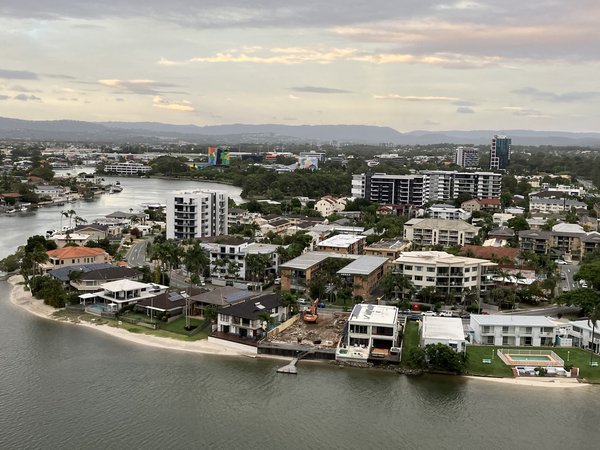
Climate will continue to influence the design and location of settlements and buildings in a range of ways.
- © NCCARFGold Coasty
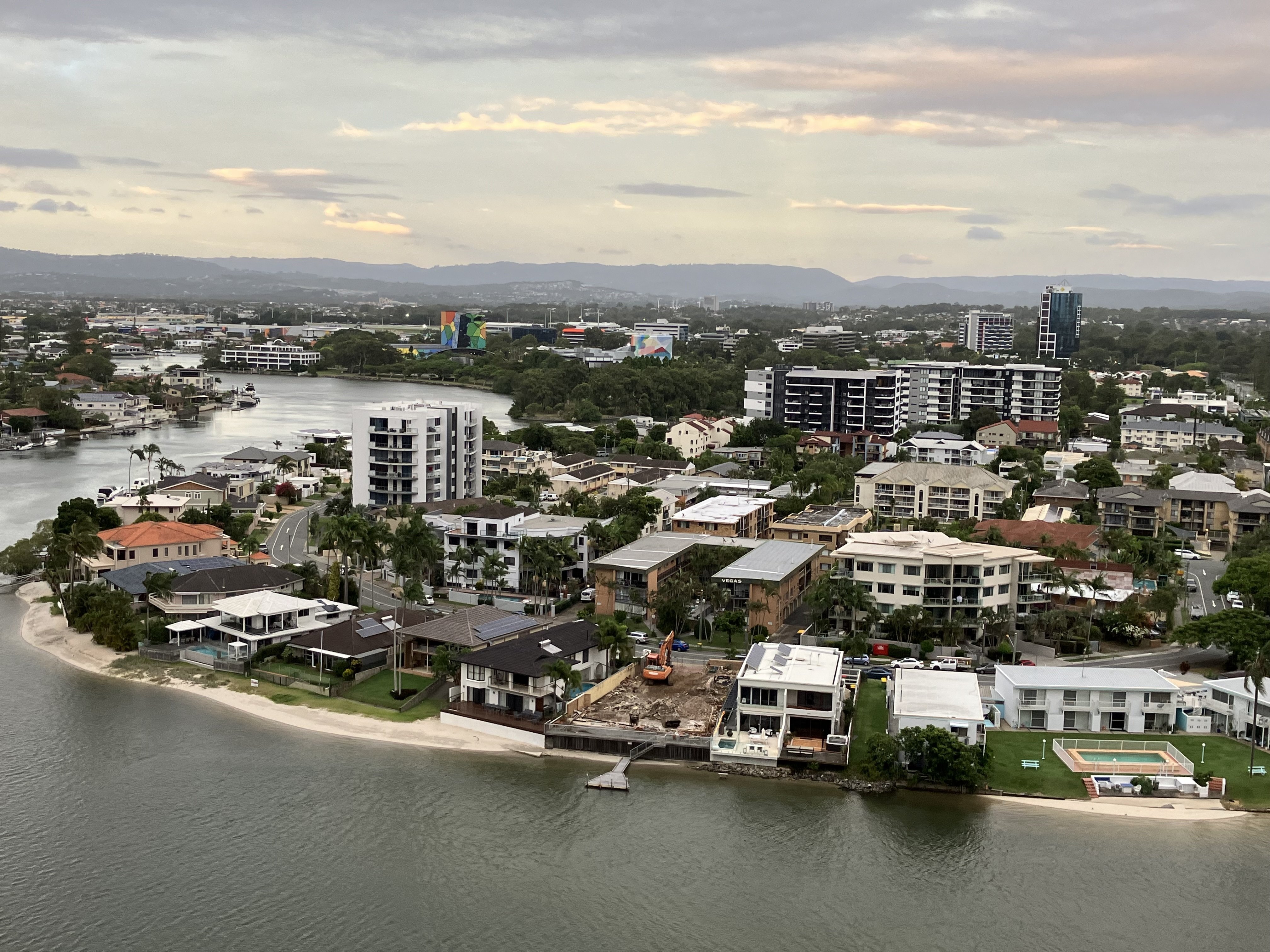
Climate will continue to influence the design and location of settlements and buildings in a range of ways.
© NCCARF
a diverse range of case studies in CoastAdapt that provide details on how climate change will and is affecting Australia's coast and how groups are adapting
Community wellbeing and resilience
The coast plays a vital role in supporting community wellbeing through offering unique environments that enhance wellbeing through recreation, nature connection, and cultural practices.
At the same time, building resilience is increasingly important as communities face greater exposure to climate risks. Strengthening community capacity to prepare for, respond to, and recover from climate-related events is a key component of long-term wellbeing.

Blue spaces, including beaches and waterways, are associated with increased physical activity, social interaction and reduced anxiety and depression.
- © NCCARFIMG_0677_edited

Blue spaces, including beaches and waterways, are associated with increased physical activity, social interaction and reduced anxiety and depression.
© NCCARF
Coping with extreme events
Climate change increases the frequency and intensity of extreme weather events such as cyclones, storm surges, and heatwaves. These events are placing growing pressure on coastal communities as they disrupt or damage buildings, transport systems, and essential services that in turn disrupts lives and livelihoods.
Smaller and regional coastal communities often face greater challenges due to limited resources and infrastructure, increasing their vulnerability to climate impacts.
For example, the Northern Rivers of New South Wales has experience a series of devastating floods, with 2022 being the most severe. Recovery has continued in the years since - interrupted by other extreme weather events - highlighting the long-term impacts of such events. Like many communities in high-risk areas, local groups are working to improve preparedness through adaptation planning, resilience building, and disaster response strategies.
These experiences reinforce the importance of understanding climate extremes and incorporating this knowledge into planning and decision-making.
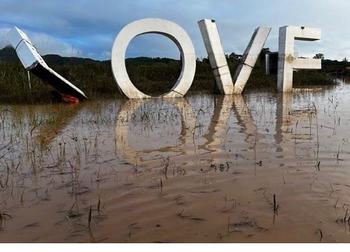
An inundated sculpture in the town of Mullumbimby became a poignant icon during the flood event in early 2022.
- © NCCARFflood_water banner
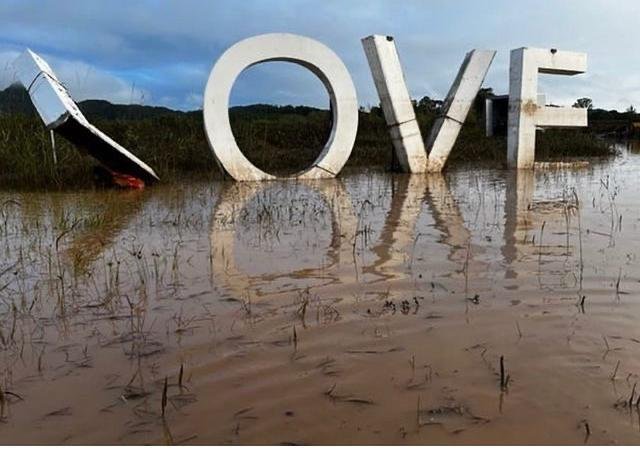
An inundated sculpture in the town of Mullumbimby became a poignant icon during the flood event in early 2022.
© NCCARF
a video about resilience building in the Northern NSW after the 2022 floods. The Leading Australian Resilient Communities (LARC) program was sponsored in the region by the Australian Rural Leadership Foundation and the Regional Australia Institute.
Climate change and design and infrastructure
Climate change directly affects the safety, design, and long-term resilience of settlements and infrastructure. As extreme events become more frequent and severe, infrastructure must be designed to withstand conditions that may exceed past experience.
Climate changes influences the location, design and operation of settlements in key ways.
- Flood risk management: Location and growth of settlements on coastal floodplains is increasingly being challenged as many coastal cities experience large flood events more regularly.
- Coastal setbacks: These buffer zones (with no permanent constructions) in planning guidelines are designed to reduce exposure to erosion and storm impacts.
- Infrastructure design: Buildings, roads and transport systems must withstand extreme weather conditions such as cyclones and storms. in particular, the design and construction of coastal protection works, harbour works and jetties requires consideration of tides and significant wave heights
- Engineering standards: The Building Code of Australia has developed a climate zone map to inform building design and construction practices to help ensure that buildings withstand likely physical impacts, including those from gale-force winds during tropical cyclones and East Coast Lows.
These measures highlight how important it is to desgin for future climate conditions to reduce risks to safety and ensure infrastructure remains functional under a changing climate.
As coastal communities adapt to climate change, it is essential to consider issues of fairness and equity. Climate change does not affect all communities equally, and many of the most vulnerable populations contribute the least to global emissions.
Just and equitable adaptation is critical to ensuring that responses to climate risks do not create new vulnerabilities or worsen existing inequalities. This includes protecting homes, livelihoods, cultural heritage, and community wellbeing, particularly in areas most exposed to sea-level rise and extreme events.
about just and fair adaptation to make sure you are not increasing the risk of maladaptation in the longer term.
Importance of caring for Sea Country
The coast holds deep cultural and spiritual significance for Aboriginal and Torres Strait Islander peoples. Sea Country refers to the deep cultural, spiritual, and ancestral connections that Aboriginal and Torres Strait Islander peoples have with the ocean and coast.
Caring for Sea Country acknowledges that people belong to and care for the sea through respect, responsibility, and reciprocity maintained through cultural practices including ceremony, storytelling, and traditional management. Connecting with Sea Country is linked to improved mental wellbeing and a stronger sense of belonging.
Indigenous knowledge systems provide valuable insights into long-term environmental change and climate variability. Recognising and incorporating this knowledge into coastal management supports more inclusive and effective decision-making.
Recognising Sea Country means valuing Indigenous knowledge and reshaping how decisions about the ocean are made, based on care, connection and shared responsibility. It also also linked with acknowledgement of Indigenous fishing rights and support for other economic opportunities for Indigenous mob.
the significance of Sea Country and climate change
a CoastAdapt case study that describes an important survey NSW explores connection to Sea Country.
Importance of climate for coastal ecosystems
Australia’s coastal ecosystems are adapted to the atmospheric and marine climates they experience and so any changes in climate will lead to changes in these ecosystems. Land-based ecosystems are mostly influenced by patterns of air temperature and precipitation, which include daily and seasonal changes along with humidity and wind, and the nature of the land surface. At the shoreline, important drivers are wave energy, tidal range and water temperature.
For many coastal ecosystems, their distribution and health are mainly determined by temperature. Many species live within narrow temperature ranges. For example, many reef-building corals have evolved within a narrow range of preferred temperature and few species survive quite small increases in temperature – even just 1-2°C hotter – if the warmer conditions persist for too many days. There have been several coral bleaching events on the Great Barrier Reef over the past two decades, with four mass bleaching events between 2016-2022.
about the climate change on coastal ecosystems
Some examples of climate impacts
Small climatic changes can have significant impacts on ecosystems and the services they provide, including coastal protection, biodiversity, and resources for communities.
- Recurrent coral bleaching in the Great Barrier Reef has been widely reported over a series of recent summers. Depletion of this internationally significant ecosystem includes the loss of biodiversity, the loss of the coastal protection offered by the reef system, and the decline of the valuable tourism industry that sustains many coastal communities.
- Turtle embryo development occurs within a narrow thermal range with the sex of a turtle determined by the embryo’s incubation temperature. A decline in turtle breeding capacity is likely to reduce the population, with cultural impacts for Indigenous people through cultural knowledge and ceremonies connected to these species.
a video on the cultural significance of turtles for one mob in the Great Barrier Reef
- Recent declines of giant kelp off the eastern and southern coasts of Australia have been attributed to rising sea temperatures. Demise of kelp forests includes a decline in this natural carbon sequestration capacity, plus a loss essential habitats for shelter, breeding, and food sources of many other marine species include those important for commercial fisheries
a video about a project restoring Tasmania's giant kelp forests.
Importance of climate for coastal economies
Climate change presents a substantial and measurable risk to Australia’s coastal economy and it affects physical assets but also employment, tourism and long‑term economic stability, making it a critical systemic risk to the nation's coastal economy. Some key statistics.
- The nation's population distribution is a risk to the economy as more than 85-87% of Australians live within 50 km of the coast, concentrating people, businesses and assets in vulnerable areas (DCCEEW, 2021).
- More than $226 billion in coastal property and infrastructure is projected to be at risk of inundation and erosion under high sea‑level scenarios by 2100 (DCCEEW, 2021)
- Australia’s ocean industries generate $229 billion in economic output each year and support more than 700,000 jobs through supporting major industries including tourism, shipping, fisheries and offshore energy.
- Key coastal industries are also at risk. The Great Barrier Reef alone contributes around $9 billion annually to the Australian economy and supports approximately 77,000 jobs, yet is highly vulnerable to ocean warming, coral bleaching and other climate-related impacts (Deloittes, 2025).
These risks highlight the importance of integrating climate projections into planning, investment, and economic decision-making to ensure long-term resilience.
Most coastal cities and towns are developing climate change planning responses, with climate variability and extreme weather now embedded in many regulations. However, effective implementation requires sustained investment and strong leadership.
- more in the CoastAdapt summary of the National and State climate risk assessments
- and the full resources
A 2022 report of the Economic impacts from sea level rise and storm surge in Victoria, Australia over the 21st century (full report and summary) considered the impacts across residential and commercial assets, reserves and conservation areas, infrastructure, parks, industrial and agricultural assets.
- Losses are estimated to be more than $337 billion in 2100, or 2.68% of the projected gross state product (GSP) of Victoria.
- Economic damages (market and non-market values) varied considerably across the different subregions and land use classes of Victoria. Economic losses in residential areas will be mostly around Port Phillip Bay and areas east of Melbourne. Most commercial damage will be around Docklands and Southbank.
- The (separately modelled) impacts from sea level rise and storm surge on wetlands potentially add between $46.05 billion and $104.92 billion to the 2100 loss estimates.
For infrastructure that supports economic activities, climate plays a critical role in shaping its design, location, and operation. Today, climate thresholds and operating ranges are incorporated into the design, construction, and management of both small and large-scale infrastructure. The importance of this integration is revealed when these climate thresholds are exceeded.
For example, during the 2009 heatwave in southeast Australia the Basslink interconnector (which allows trading of electricity between Tasmania and the mainland) shut down after it reached maximum operating temperature. Thus cut power to thousands of Victorian businesses and households.
For coastal industries that depend on natural resources such as fisheries, productivity is linked to oceanic climate factors, particularly sea surface temperatures and seasonal patterns in coastal currents. Impacts of changes to marine life will be experienced across scales: from individuals to communities and organisations.
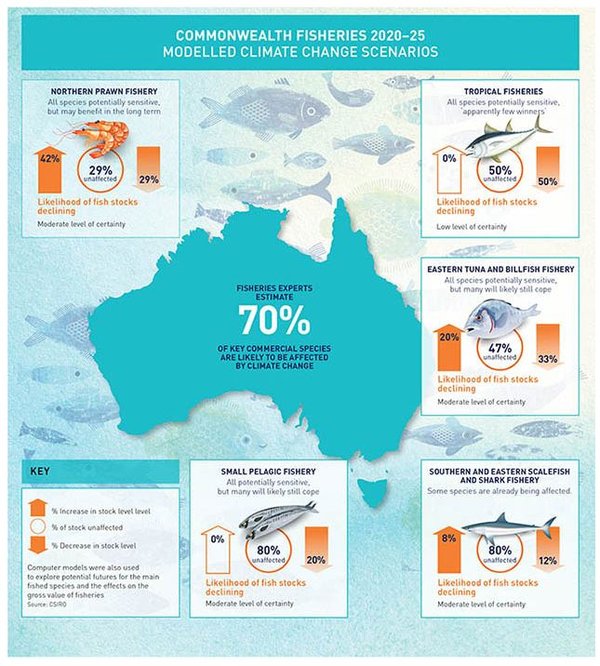
Commonwealth fisheries 2020-2025 modelled climate change scenarios
- @ AFMA, Fiona JamesFisheries infographic - Fiona James ARMA
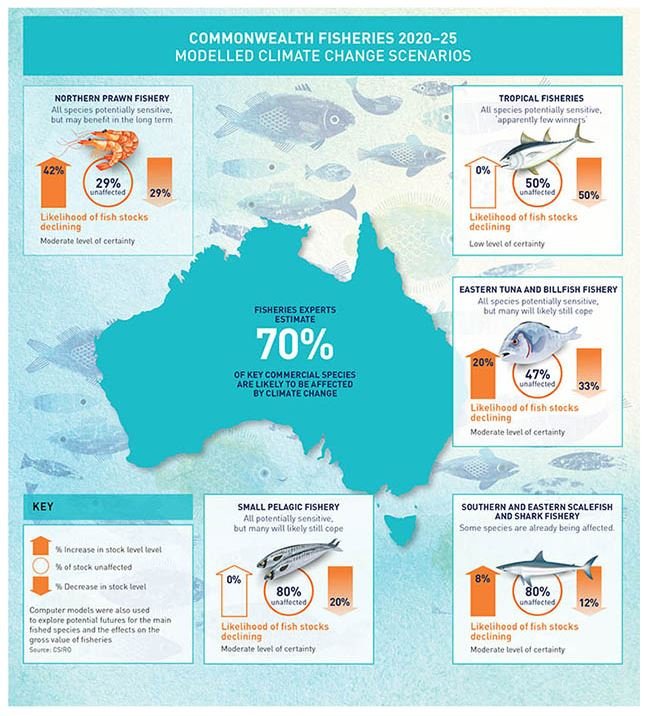
Commonwealth fisheries 2020-2025 modelled climate change scenarios
@ AFMA, Fiona James
Coastal ecosystems (both terrestrial and marine) are one of the major drivers of Australia’s tourism industry, supporting important and iconic locations for recreation and sport. The Great Barrier Reef catchment receives about 2.3 million international and 1.8 million domestic visitors per year (Tourism Research Australia 2015). It contributes $6.4 billion annually to the nation's economy and supports 64,000 jobs. (Deloitte Access Economics 2016).
about the Impacts on coastal tourism