



At a glance
- Rocky shores offer coastal protection: they dissipate wave energy, reduce erosion, and slow cliff retreat through their solid structure and complex features like platforms and boulders.
- They are of ecological significant: they host diverse, often endemic species adapted to harsh intertidal conditions and serve as feeding grounds for birds and fish.
- Rocky shores have important social and cultural values: they have sustained Aboriginal and Torres Strait Islander communities for millennia and remain important for recreation and education.
- Threats include urbanisation, trampling, harvesting, pollution, and climate-driven marine heatwaves degrade these habitats
- Adaptive strategies include monitoring, cultural co-management, protected area management, pollution control, and visitor education.

Rocky shores
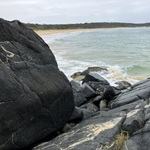
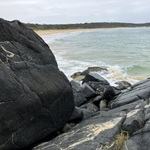
Rocky shores are a defining feature of much of Australia’s coastline, particularly along high-energy open coasts in southern and eastern Australia and in parts of Western Australia. They include cliffs, headlands, rock platforms and boulder fields that are exposed to waves and tides.
In contrast to sandy beaches, rocky shores tend to feature solid substrates, minimal sediment movement, and sharply defined zones shaped by tides and wave action.
Rocky shores are dynamic environments that play an important role in coastal protection, biodiversity, cultural values and community use.
IMG_5387
© NCCARF
Coastal protection
Rocky coasts are critical for coastal protection, significantly reducing coastal erosion and flooding through their physical structure and ecological function. Their solid structure and wave-cut platforms dissipate wave energy, reducing the impact of storm surges, reducing erosion and slowing cliff retreat. Their structural complexity such as cliffs, boulders and tide pools further break wave force, while algae and stone-boring organisms help maintain rock integrity to reduce erosion.
a CoastAdapt case study about protecting dinosaur footprints tracks on a Victorian rocky shore
Ecological role
Ecologically, rocky shores range across a wide variety of geomorphic settings, from high-energy headlands and wave-cut platforms on exposed coasts to more sheltered environments like estuaries and intertidal reef flats.
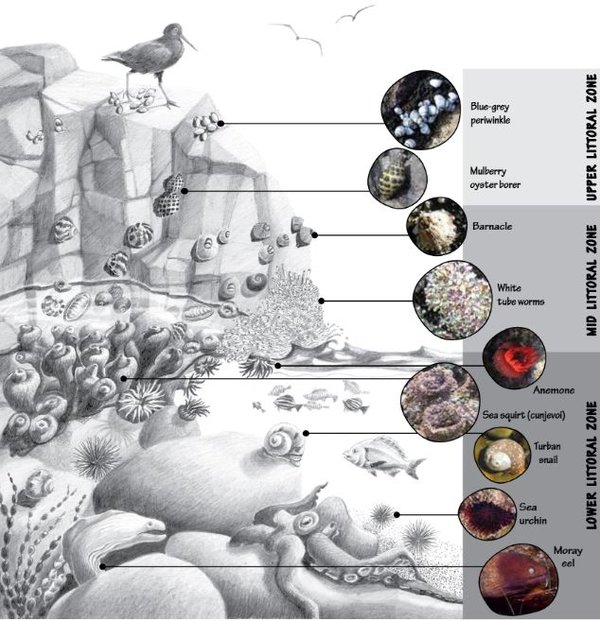
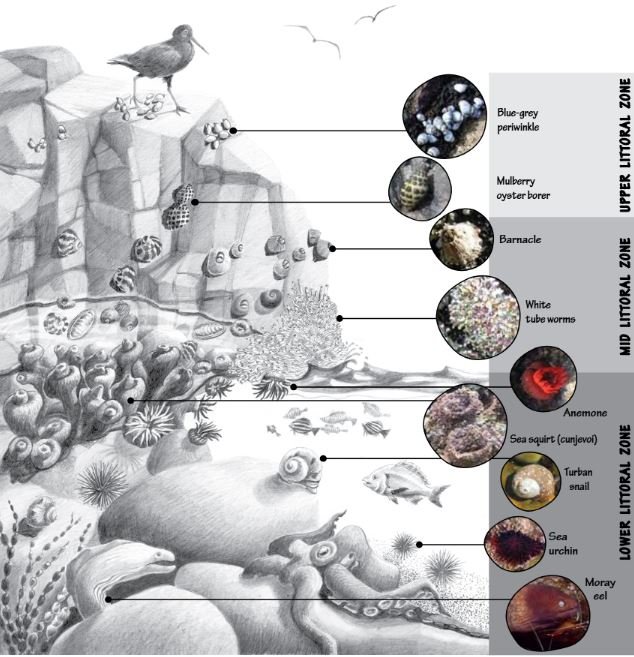
These habitats create complex microenvironments that support specialised communities of marine plants and animals adapted to living at the land-sea boundary with extreme gradients of moisture, temperature, and salinity. Many species found on rocky shores occur only in that region (endemic), particularly along southern Australia’s shores.
They also serve as important feeding grounds for birds and fish.
Human influences
Rocky shore environments provide a wide range of ecological, cultural, and economic benefits. These intertidal zones have supported Aboriginal and Torres Strait Islander communities for millennia, offering shellfish, seaweeds, and other marine resources that remain important for traditional diets and cultural practices (Australian Institute of Aboriginal and Torres Strait Islander Studies, 2023).
Rocky shorelines are focal points for human activity and face pressures from both land and sea. Those located near urban areas are vulnerable to a range of stressors such as trampling, harvesting, bait collection, artificial lighting, and poor water quality
Trampling can damage habit-forming species, such as mussels and macroalgae, which restructures ecological communities. Harvesting – particularly illegal harvesting - and bait collection further deplete key intertidal species, altering trophic interactions and paving the way for invasive organisms. Urbanisation exacerbates these effects by fragmenting habitats and intensifying threats such as light pollution. Sewage, urban runoff, and bushfire debris can bring toxins, nutrients and sediment that reduces water quality and damages intertidal organisms.
drawing_Anne_Willman
© NSW DPI. Drawing by Anne Willman
LEARN: more about rocky shores - including their flora and fauna from an education module developed by NSW DPI.
Adaptation and management of rocky shores
To manage rocky shores in a changing climate requires:
- regular monitoring of erosion and biodiversity is essential to track the impacts of climate change and inform adaptive management
- engaging with Traditional Owners to ensure cultural knowledge is integrated into conservation strategies, strengthening both ecological and cultural outcomes
- ensuring conservation and management through utilising through protected areas
- improving water quality controls to limit urban runoff and pollution to help maintain the health of these sensitive intertidal ecosystems
- developing education programs and clear signage to reduce trampling and illegal harvesting.
Stay safe by the shore
Both Queensland and Victoria provide tips for the community to stay safe while exploring rocky shores. These can be jointly summarised by the following points.
- Plan ahead and stay alert:
- check tides and weather before you go - visit at low tide and avoid rough seas
- watch the waves – don't turn your back on the ocean as unexpected waves can knock you over or drag you out.
- Wear the right gear:
- sturdy shoes with good grip help prevent slips on wet, uneven rocks
- be sun smart and slip on clothing, slop on sunscreen, and slap on a hat.
- Go carefully:
- rocks can be slippery, especially those covered in algae
- know which local wildlife is dangerous and how to avoid them
- keep your hands where you can see them – don’t reach into crevices where dangerous animals may hide.
- Respect wildlife:
- don’t collect shells, plants, or animals
- don't disturb habitats – If you move a rock, put it back
- don’t feed birds, seals, or marine life – they can be harmed by human food
- keep your distance from seals and nesting birds – they need space.
- Reduce rubbish
- take you litter with you – it can harm marine animals and birds
- take a bag and gloves to collect other rubbish you find.