


At a glance
- Tidal wetlands, mangroves, and seagrass meadows in Australia are crucial for sequestering large amounts of carbon, known as 'blue carbon', which contribute significantly to the global carbon budget.
- Restoring blue carbon habitats offers diverse benefits, including coastal protection, improved water quality, enhanced biodiversity, and support for commercial fisheries and improved Indigenous cultural and well-being opportunities.
- Federal and state governments support blue carbon projects through developing guidelines to earn carbon credits and funding demonstration projects to measure restoration benefits.
- Restoring blue carbon ecosystems faces challenges like land ownership issues, climate change impacts, and the complexity of seagrass restoration. Strategies to address these challenges include policy reform, strategic planning and novel approaches.

Blue carbon benefits for coastal habitats
Australia's coastline supports extensive blue carbon ecosystems, including mangroves, saltmarshes, tidal wetlands and seagrass meadows. These habitats contribute to climate regulation, biodiversity conservation and coastal resilience.
Blue carbon refers to atmospheric carbon dioxide (CO₂) absorbed and stored in the vegetation and sediments of coastal ecosystems. These habitats cover a relatively small area globally – about 5% of the sea floor by area – yet they account for a disproportionately large share (about half) of carbon burial capacity due to their deep, waterlogged soils, which slow decomposition and lock away carbon over long periods (centuries to millennia).
Australia has lost substantial areas of coastal habitat since European settlement. Estimates of historical losses vary by ecosystem and location, highlighting the importance of protecting remaining habitats as well as restoring degraded areas.
The benefits of restoration vary between ecosystems and sites. Restoration should therefore begin with clear objectives and an understanding of the ecological processes that sustain the habitat.
Protecting intact ecosystems is particularly important because restoration can be expensive, take many years and may not fully recover the functions of a mature habitat. Restoration complements, rather than replaces, the protection of existing blue carbon ecosystems.
Coastal ecosystems already provide a diverse range of co-benefits beyond carbon storage:
- coastal protection through reducing erosion and storm surges
- improved water quality through filtering nutrients and sediments
- enhanced biodiversity and habitat connectivity
- nursery habitat that supports fisheries productivity
- cultural benefits, particularly when restoration is Indigenous‑led and supports Caring for Country.
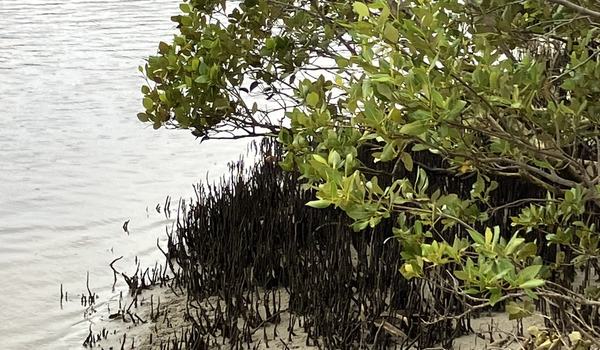
Restoring and protecting blue carbon ecosystems is a cost‑effective way to enhance natural carbon capture and is increasingly prioritised as a nature‑based climate strategy.
- © NCCARFblue carbon landing
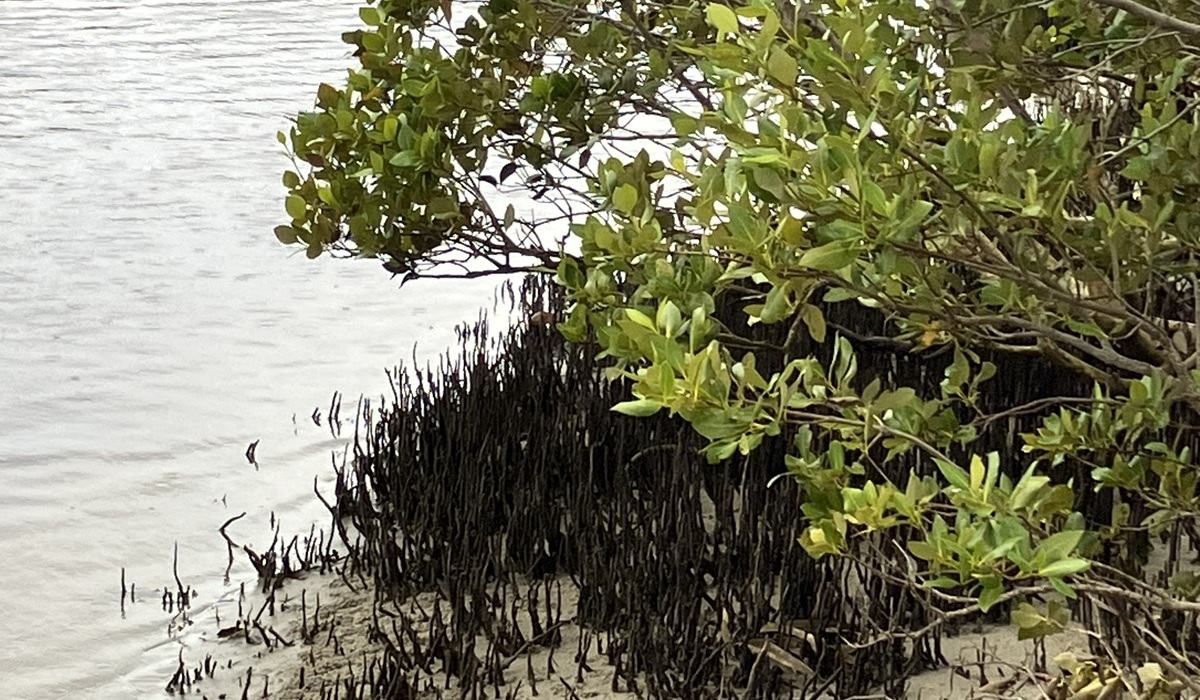
Restoring and protecting blue carbon ecosystems is a cost‑effective way to enhance natural carbon capture and is increasingly prioritised as a nature‑based climate strategy.
© NCCARF
Opportunities for carbon markets and habitat restoration
When blue carbon coastal ecosystems are drained or disturbed – such as for building development or agriculture – they can lose ecological function and release plumes of carbon dioxide back into the atmosphere, contributing to climate change. The amount released depends on the ecosystem, the type and extent of disturbance, and site conditions.
Restoring degraded habitats can help recover carbon-storage capacity while also improving biodiversity and other ecosystem services. In some circumstances, carbon-credit revenue can help meet restoration and management costs.
However, not every restoration project is eligible for carbon credits, and not every eligible project is financially viable. Project developers need to consider:
- the eligibility requirements of the applicable carbon-credit method
- the likely quantity and timing of credits
- feasibility studies, restoration and monitoring costs
- land tenure, legal rights and governance arrangements
- reporting, permanence and other ongoing obligations
- carbon-credit prices and access to buyers
- other funding sources and the project's wider environmental and cultural objectives.
Carbon finance should be considered alongside grants, government programmes, philanthropic funding, partnerships and other mechanisms that can support coastal restoration.
from five federally funded blue carbon demonstration projects that:
- test the Emissions Reduction Fund (ERF) tidal restoration blue carbon methodology
- measure the climate, biodiversity and cultural benefits and the financial values of ecosystems services.
how Australian Government is also supporting blue carbon projects by developing guidelines for:
- reporting on the ecosystem services provided by coastal blue carbon ecosystems in A guide to measuring and accounting for the benefits of restoring blue carbon ecosystems
- planning a blue carbon project in Restoring blue carbon ecosystems: a best practice guideline for hydrologic assessments
Blue carbon credits explained
Habitat restoration has a nationally significant carbon sequestration potential. Australia has pioneered implementing blue-carbon-based strategies to help meet its carbon commitments under the 2016 Paris Agreement.
Australia's Australian Carbon Credit Unit (ACCU) Scheme provides a framework through which eligible projects can earn credits for emissions reductions or carbon sequestration.
The tidal restoration of blue carbon ecosystems method enables eligible projects to generate ACCUs by restoring tidal inundation to certain previously drained coastal wetlands. This may involve removing or modifying structures such as sea walls, levees or bunds to allow tidal water to return.
The method uses the Blue Carbon Accounting Model (BlueCAM) to estimate abatement in accordance with the method's requirements. Project proponents must meet applicable eligibility, monitoring, reporting and other requirements.
Credits may provide revenue to support project implementation and ongoing management, but the financial return depends on the amount of eligible abatement, project costs, crediting arrangements and market conditions.
Other approaches to blue carbon restoration and accounting are also being investigated. These include activities that protect or restore vegetation and reduce damage to coastal habitats. Such activities should not be assumed to generate ACCUs unless they meet the requirements of an applicable, current method.
- how a project can earn carbon credits Blue carbon method: proposed new method under the Emissions Reduction Fund
- to calculate the amount of carbon a project has abated using the ERF’s new blue carbon accounting model (BlueCAM)
Additional methods are being explored to expand the scope of blue carbon accounting through vegetation protection, grazing exclusion, and broader habitat restoration.
For example, research is collecting baseline data for a blue carbon method based on restoring wetland habitat by fencing the area to exclude damage-causing farmed and feral non-native ungulates such as cattle and pigs.
Opportunities for Indigenous-led carbon projects
Traditional Owners have enduring relationships with coastal Country and hold knowledge that can contribute to the protection, restoration and management of blue carbon ecosystems.
Blue carbon projects can create opportunities for employment, skills development, cultural knowledge transmission, ecological monitoring and long-term stewardship. They may also provide opportunities to participate in carbon markets and shape decisions about the future management of Country.
Indigenous leadership should be considered part of project governance, rather than an additional benefit to be pursued after the project has been designed. Effective projects recognise Traditional Owner rights, priorities and governance arrangements from the earliest planning stage.
about work by the National Environmental Science Program, Marine and Coastal Hub on:
- opportunities for Indigenous mob through carbon projects (NESP, 2024)
- improving engagement with Indigenous people around their involvement in carbon markets
Blue carbon projects across Australia
Australian states and territories have different coastal environments, restoration priorities and policy settings. Local case studies can help practitioners understand how projects are developed, funded and implemented in different contexts.
CoastAdapt case studies across Australian jurisdictions
- Building a blue carbon project strategy in New South Wales
- NT potential for blue carbon restoration
- Exploring the co-benefits of blue carbon habitat restoration in Queensland
- Piloting blue carbon ecosystem restoration in South Australia
- Blue carbon and broader benefits of saltmarsh regeneration in Tasmania
- Blue carbon habitat restoration in Victoria
Planning a successful blue carbon project
Research has identified several factors that improve coastal habitat restoration efforts. In tidal wetland regeneration, for example, these factors include the following.
- Select the right site, which includes avoiding sites with excess erosion or sediment deposition
- Select the right plant species for the region, and minimising stress on plants such as poor soil nutrients or the impact of herbivores.
- Use strategies such as planting in high density clumps, with high species diversity, and fertilising the soil.
- Consider projected climate change – note the poleward shift of ecosystems due to rising temperatures – to future-proof restoration efforts at certain points along the coast.
Long-term monitoring and adaptive management are also important because restoration outcomes can vary considerably among sites and over time.
Challenges to consider
Land tenure and governance
Coastal land tenure can complicate restoration, particularly where habitats extend across public and private land or where coastal boundaries shift over time. Questions about ownership, access, decision-making authority and the right to undertake restoration may affect both project implementation and carbon-credit eligibility.
In most Australian states and territories, the ‘mean high water mark’ defines the legal boundary between private property and public land along the coast. This ambiguous and dynamic boundary can result in a lack of clarity as to whether mangrove and tidal wetland habitats are located on public or private land, or straddle both.
Early engagement with tenure – boundary ambiguity and legal rights, including rights of Traditional Owners – clarified through contractual agreements at the start of any blue carbon habitat restoration project.
This step adds time and expense; researchers have called for policy and law reform to reduce this barrier to blue carbon ecosystem restoration.
Blue coastal squeeze
Coastal development and infrastructure can prevent mangroves, saltmarshes and other coastal habitats from moving inland as sea levels rise. This process, known as coastal squeeze, can reduce habitat extent and undermine restoration outcomes.
Project planning should consider future habitat distributions, opportunities to protect migration corridors and the implications of nearby infrastructure and land-use decisions. Restoration should be integrated with broader coastal planning wherever possible.
This should be considered during project planning and site selection.
Complexity and uncertainty
Restoration outcomes can vary depending on site conditions, ecological responses, and climate impacts. In addition, future risks such as sea-level rise, marine heatwaves, cyclones and changing sediment regimes may affect long-term ecosystem condition and carbon storage.
This uncertainty can present challenges for investors and project developers, reinforcing the need for adaptive management, robust monitoring and realistic expectations about project performance over time.
Blue carbon restoration presents a significant opportunity to deliver climate, biodiversity and cultural benefits simultaneously. However, achieving these outcomes requires more than efforts in ecological restoration alone.
Success depends on integrated approaches that combine robust scientific knowledge, supportive policy and carbon-market frameworks, clear governance and tenure arrangements, and meaningful, long-term partnerships with Indigenous communities.
Carbon projects also face financial and regulatory uncertainty. Revenue depends on eligible abatement, project costs, market conditions and compliance with the applicable method. Carbon-credit income should not be assumed to cover all restoration and management costs.
Seagrass restoration can be technically demanding and costly compared to other blue carbon interventions. Unlike some tidal wetland restoration projects, which may focus on restoring tidal exchange, seagrass recovery often depends on addressing the environmental pressures responsible for its decline.
These pressures can include poor water clarity, excess nutrients, catchment-derived sediment, physical disturbance and marine heatwaves. Their relative importance varies between locations.
Successful restoration therefore requires an understanding of the causes of decline and whether the conditions needed for seagrass recovery can be sustained.
Approaches may include:
- improving water quality and reducing nutrient and sediment inputs from catchments
- protecting existing seagrass meadows from further disturbance
- assessing sediment stability and suitable growing conditions
- trialling restoration techniques at appropriate scales before expanding interventions
- monitoring survival, growth and recovery over time.
Research and restoration trials in Australia and New Zealand have explored techniques such as using biodegradable hessian or jute to stabilise sediments around replanted seagrass. Such techniques may be useful in particular settings, but their suitability and effectiveness must be assessed for each site.
about a CoastAdapt case study about coastal seagrass restoration led by Indigenous mob in Shark Bay in Western Australia
about a blue carbon project at Duck Creek in northern NSW.