


At a glance
- Insurance underpins everyday economic activities such as home ownership, mortgages, business lending and supply chains.
- Australia’s highly urbanised coastline faces escalating risks from sea-level rise, storm surge and erosion, placing pressure on insurance affordability and availability.
- Residential property insurance in Australia explicitly excludes “actions of the sea”, leaving households exposed to some of the most significant coastal hazards.
- Rising premiums and withdrawal of cover are shaping how, where and whether coastal communities can adapt.

What is insurance?
Insurance is a mechanism for managing financial risk by pooling losses across many policyholders. The individuals or organisation enters into an agreement (via an insurance policy) to pay premiums in exchange for compensation if they suffer specified losses from unexpected events.
The insurer uses statistical analysis to predict risks and set premiums accordingly, ensuring that claims can be covered.
Importantly, insurance is designed to cover risks that are rare, rapid and random. It is not designed to cover slow-onset, predictable and cumulative processes such as gradual sea-level rise. This distinction is central to understanding why many coastal climate risks sit at (or outside!) the margins of the insurance system.
From an adaptation perspective, insurance does more than compensate losses. When it functions well, it has the potential to:
- transfer financial risk from households and businesses to broader financial markets
- incentivise risk reduction through pricing signals and policy conditions
- support faster recovery after extreme events, particularly for vulnerable populations.
However, insurance can also unintentionally discourage adaptation if poorly aligned, for example when public compensation reduces incentives for risk mitigation. Or when prolonged or perceived unfair compensation processes results in further trauma for those affected, and delays recovery.
Three paradoxes of insurance
paradox stick fig
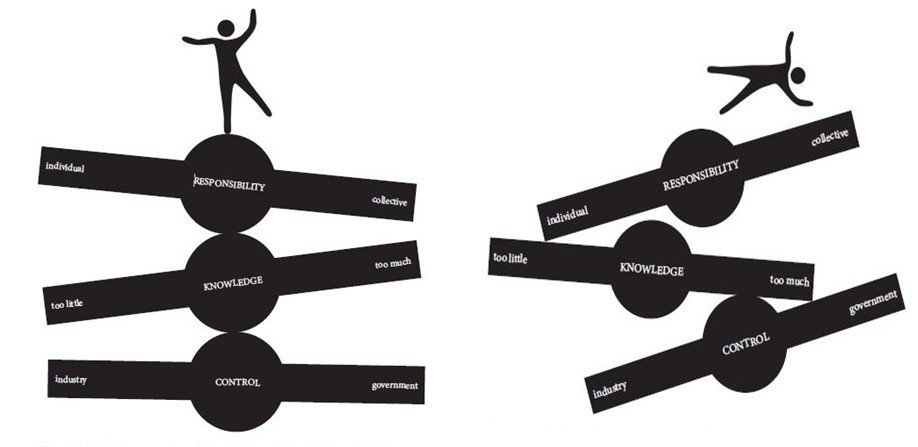
The three paradoxes of insurance: control, knowledge and responsibility.
Source: Jarzabkowski et al. 2023
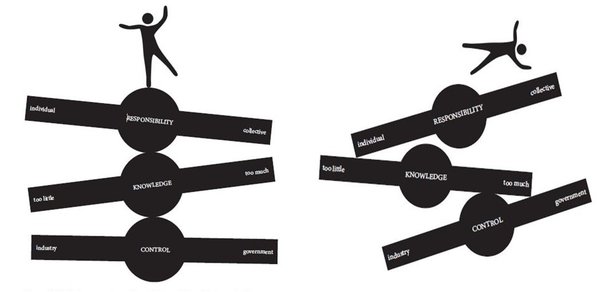
The three paradoxes of insurance: control, knowledge and responsibility.
- Source: Jarzabkowski et al. 2023paradox stick fig
The three paradoxes of insurance: control, knowledge and responsibility.
Source: Jarzabkowski et al. 2023
Insurance relies on a delicate balancing between several conflicting yet connected (and paradoxical) forces. These paradoxes address three key questions that underpin insurance:
- Control paradox: Who controls insurance protection? How the market provides protection requires a balance between private insurance companies and the government.
- Knowledge paradox: How well is the risk understood? The risk must be well understood – neither too little nor too much.
- Responsibility paradox: Who pays for protection? This involves balancing individual responsibility for paying premiums with the collective responsibility of covering losses from pooled premiums.
Risk becomes insurable when it reaches a "sweet spot" of dynamic balance among these paradoxes. Therefore, any imbalance means some disaster risks are pushed out of the insurability zone.
Insurance in a changing climate
Traditionally, insurance has served as a societal safety net, distributing losses across society and over time. In the context of climate change, the role of insurance also has social and political dimensions that influences vulnerability, recovery and long-term adaptation pathways.
When insurance works effectively – through affordable premiums, clear coverage, prompt assistance and rapid payouts – it can reduce recovery times and thus long term social harm, especially for more vulnerable populations.
Yet climate change is testing these benefits. As risks escalate, insurers respond by raising premiums, tightening terms or withdrawing cover, shifting more risk back onto households and governments.
How risk is transferred can also promote undesirable behaviour. For example, if government takes over or covers the risk, then there may be less incentive to mitigate the risk or take out private insurance.
"A robust insurance industry benefits individuals and governments. These benefits are economic. Each percentage point increase in property insurance in a country reduces disaster-recovery times by almost 12 months. The benefits are also social. Extensive insurance enables disaster-affected people to return to their normal lives within approximately 12 months."
Jarzabkowski et al. 2023
Coastal hazards and actions of the sea
Insurance companies operating in Australia recognise, but do not cover, damage caused by 'actions of the sea' in residential building insurance policies (called here ‘house insurance policies’: note that this discussion does not include house contents’).
The term 'actions of the sea', typically includes the following, which differ in their mechanisms and consequences.
- Sea-level rise, which increases the frequency of inundation of properties during high or king tides in low-lying areas, e.g. estuary shorelines.
- Storm surge, driven by cyclones and East Coast Lows, can cause rapid and severe flooding of buildings; rising sea levels magnify these impacts.
- Coastal erosion, caused by storm surge and sea-level rise, can remove land, cause damage to buildings or undermine foundations to cause collapse.
- In some cases, king tides, which can cause temporary flooding and exacerbate failures of urban drainage failures, especially when combined with storms
These hazards are excluded because they are cumulative, and increasingly foreseeable and so create an accumulation risk that insurer can't readily absorb. In effect, these processes challenge the conventional event-based logic of insurance.
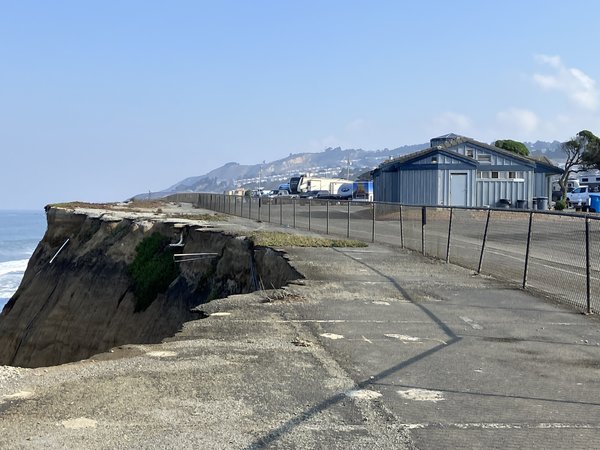
Business premises are also at risk: this US campground has lost several camper van sites to coastal erosion. A fence now keeps visitors and vans from the fragile clifftop. Discarded remnants of services hang from the cliff face.
- @ NCCARFD_Coastal erosion
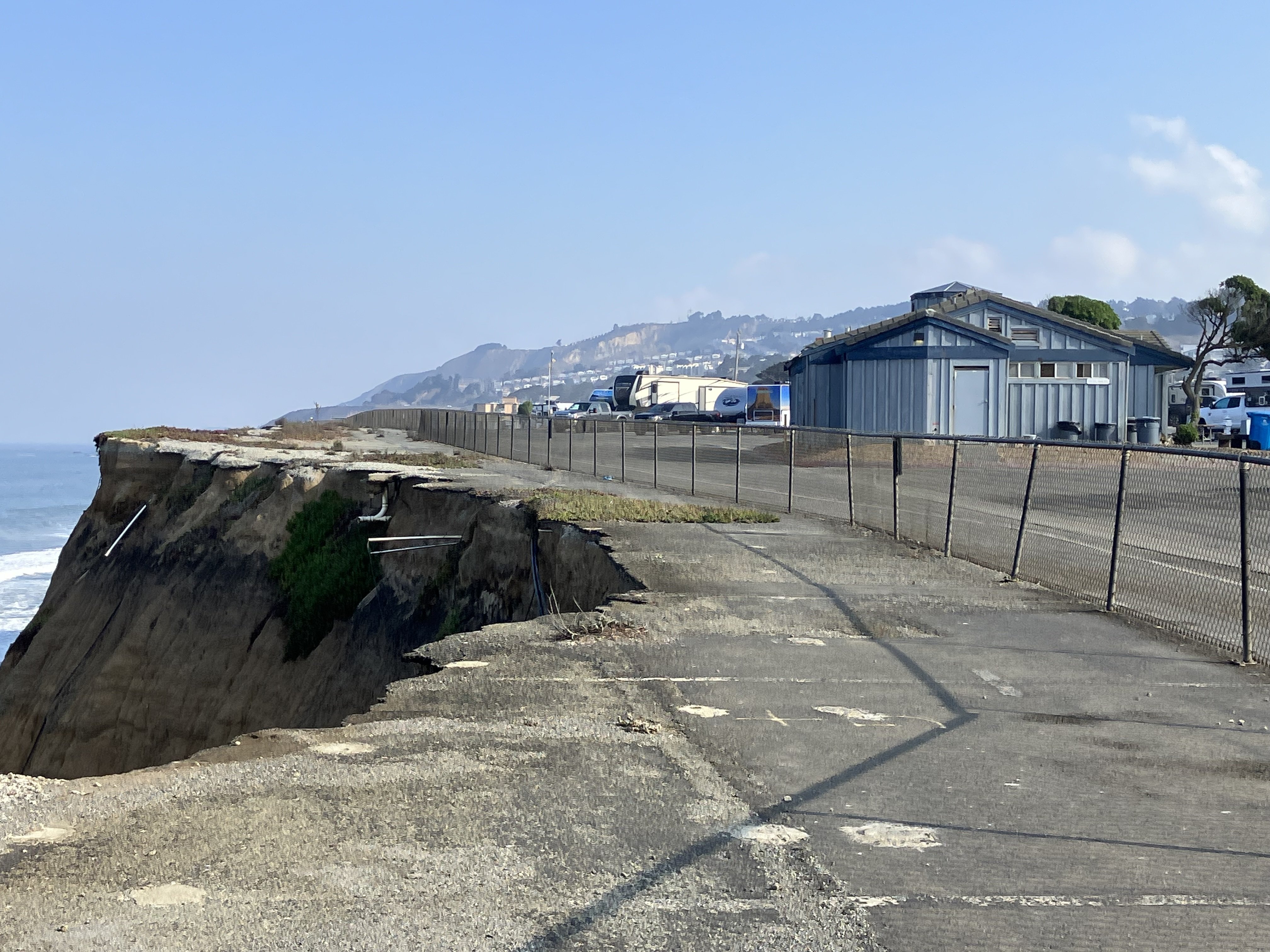
Business premises are also at risk: this US campground has lost several camper van sites to coastal erosion. A fence now keeps visitors and vans from the fragile clifftop. Discarded remnants of services hang from the cliff face.
@ NCCARF
Australia is on the front line of climate change. We’re witnessing more frequent and intense extreme weather events while development continues expanding into high-risk areas, asset values climb, and inflationary pressures drive up reconstruction and repair costs. Currently, extreme weather events cost Australians around $4.5 billion annually.
Insurance Council of Australia (2025) Catastrophe Report 2024–25
Affordability is dropping
Insurance affordability in Australia has dropped significantly in recent years. The Actuaries Institute reports that:
- in 2022 that about one million ‘vulnerable’ households spend an average of 7.4 weeks of their gross annual income on home insurance
- by 2023 report, this had worsened, with 12% of households being “affordability stressed”, spending 8.8 weeks of gross annual income on insurance.
The Actuaries Institute describes these vulnerable households as more likely to be older, renting, have less savings and are located in lower socioeconomic areas. For these households, high premiums make it harder to invest in risk reduction and in recovery from extreme events.
Insurance costs in coastal areas have long been predicted to rise due to increasing intensity and frequency of extreme events (HoR SCCCWEA 2009, Chapter 4).
Australian household insurance bills (house, contents and vehicles) have risen by 10% from 2002 to 2024 (see figure below). By 2025, in some high risk areas, premiums have risen by up to 30% due to extreme weather events and reinsurance costs.
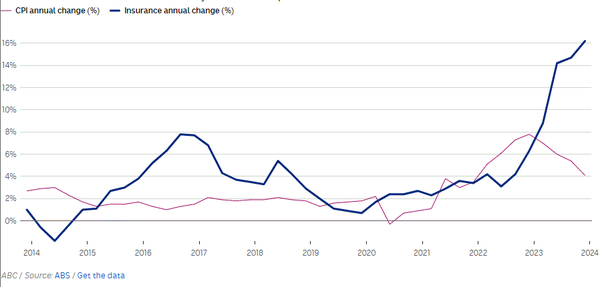
Household insurance bills have increased 10% from 2022 to 2024.
- Source: ABC, from ABS data https://datawrapper.dwcdn.net/fuj0C/6/?abcnewsembedheight=300insurance costs
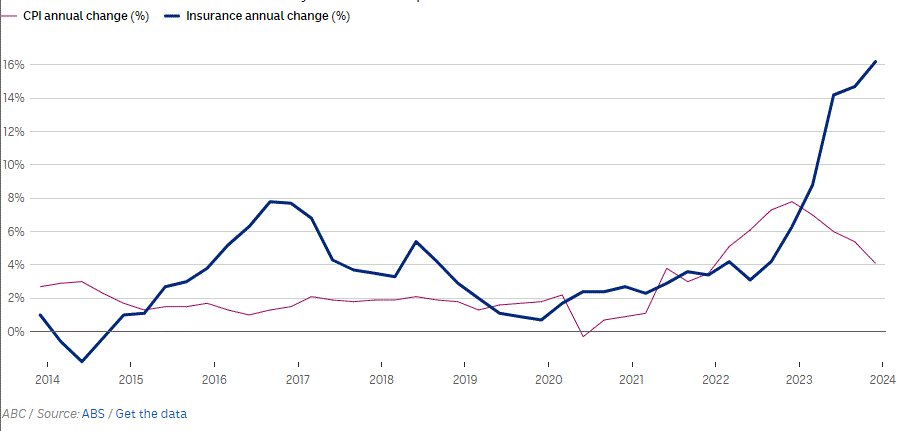
Household insurance bills have increased 10% from 2022 to 2024.
Source: ABC, from ABS data https://datawrapper.dwcdn.net/fuj0C/6/?abcnewsembedheight=300
to Actuaries Institute (2022) podcast:
Home insurance affordability and socioeconomic equity in a changing climate.
Underinsurance is common and growing
High insurance premiums can exacerbate underinsurance, where homes are not sufficiently insured or go uninsured.
Underinsurance occurs when coverage is not sufficient to cover the full cost of a loss or claim after an extreme event: home owners end up with insufficient funds to rebuild and furnish their property, leaving them financially exposed.
Home underinsurance in Australia is already a significant (and increasing) problem for individuals and governments. Approximately 23% of Australian households do not have building or contents insurance.
This is likely to worsen with:
- high costs of living already pinching household budgets
- increasing cost of house insurance with any real or perceived increase in coastal risk
Underinsurance has problems beyond individual hardship. It presents problems for governments as it increases demands on government assistance and can entrench long-term inequality.
Homeowners tend to underinsure because they:
- underestimate the complex and increasing costs of rebuilding a house and replacing contents
- may intentionally opt for a lower coverage amount to reduce their insurance premiums
- may not trust insurers to pay out post-disaster.
"What you see are people who are long-term uninsured, lack access to other financial systems, people who have houses that aren't safe and can't get back into them for more than two years afterwards. They suffer really serious effects that flow through to the next generation."
Prof Paula Jarzabkowski, insurance academic from UQ (Davis, 2024).
Continuity of cover and potential uninsurability
As coastal risks intensify, insurers may further increase premiums or withdraw from certain locations altogether.
In 2022, the Climate Council report Uninsurable Nation (Hutley et al. 2022) predicted that by 2030:
- one in 25 (or 3.6% or 520,940) properties will be ‘high risk’ and effectively uninsurable
- one in 11 (9%) properties ‘medium risk’ and potentially underinsured: their annual damage cost is approximately 0.2-1% of the property replacement cost.
This trajectory raises critical questions for coastal adaptation. Where insurability declines, communities face hard choices between risk reduction, relocation, public intervention or acceptance of loss.
Implications for coastal adaptation
Insurance plays a pivotal but limited role in coastal adaptation. It can support preparedness and recovery, but it cannot cover all risks or substitute for land-use planning, hazard mitigation or difficult conversations about managed retreat. As climate change pushes more coastal risks beyond the scope of private insurance, adaptation will increasingly require more coordinated responses across insurers, governments and communities.