


At a glance
- Volunteers willingly offer their time and effort for the common good and without financial gain. In Australia, volunteering remains a valued form of community participation, with people engaging across a wide range of activities.
- For climate change adaptation, the most common activities include community or environmental projects, disaster response and recovery and climate activism
- Concepts of volunteering have expanded beyond traditional models – of individuals who commit to volunteering activities run by an organisation – to now include informal, episodic, and spontaneous that are flexible ways to contribute.
- Volunteering provides a variety of personal and social benefits including: improved wellbeing and mental health; strengthened social cohesion and community ties, opportunities to develop skills and expand social networks; deepening learning and connection to place.
- Volunteering on community and environmental projects can contribute to addressing ecoanxiety – amongst youth in particular – by providing a sense of purpose and agency in the face of climate change.
- There are many resources available through Volunteering Australia, which also has state-based agencies.

What is volunteering?
Volunteers Australia defines volunteering as “time willingly given for the common good and without financial gain”. Volunteers tend to contribute in areas such as caring for elderly/youth, caring for animals, and supporting cultural activities such as art or sport.
Until recently, volunteering was often regarded as occurring through or within an organisation, now called formal volunteering. This include structured roles and activities and may include some training. Formal volunteering currently faces challenges of declining participation rates. This is exacerbated by cost-of-living pressures: around 25% of people 18-34 indicate financial reasons for why they do not volunteer.
Informal volunteering occurs outside the structure of an organisation, which includes helping people in the community (except family) providing home or personal assistance; or giving someone professional advice. Informal volunteering can also include episodic and spontaneous volunteering.
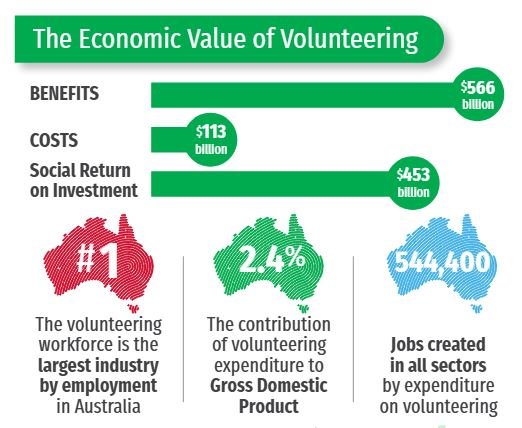
Volunteering contributes significant economic value to the nation.
- © Snapshot 2024Economic value of volunteering
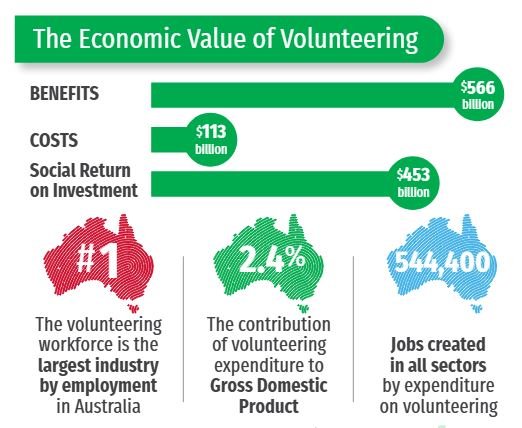
Volunteering contributes significant economic value to the nation.
© Snapshot 2024

For climate change adaptation, the most common volunteering activities include contributing to community or environmental projects, disaster response and recovery, and climate activism.
- © NCCARFPlanting

For climate change adaptation, the most common volunteering activities include contributing to community or environmental projects, disaster response and recovery, and climate activism.
© NCCARF
Volunteering now takes many forms
Episodic and spontaneous volunteers emerge with opportunities
Episodic volunteerism is short term, time limited, often project based volunteering on irregular or periodic or recurring basis. Individuals might participate in diverse periodic, non-committal volunteer opportunities.
These volunteers are motivated by wanting to contribute but are time poor and do not want to commit to more time intensive or regular opportunities. Key is making the experience meaningful, so they are encouraged to come back to volunteer again. The disadvantage for an organisation is the amount of training required for what may be limited rewards in terms of the time a volunteer may stay involved
These opportunities can include anything from grey nomads helping in remote communities, to individuals helping at mega sporting in events like the Olympics. Coastal examples include beach cleanup days. or citizen scientists monitoring particular species, for example during sea turtle breeding seasons.
Spontaneous volunteerism is a type of episodic volunteerism that is now a key feature of disaster events. For example, in major floods in Queensland and New South Wales, where ‘tinny armies’ have stepped up to rescue trapped residents during floods or ‘mud armies’ that help clean up residential areas or support community resilience organisations.
many resources and guides on spontaneous volunteers in extreme events on AIDR Knowledge Hub
a CoastAdapt case study of Better understanding volunteers - about the experience of PerthNRM, an organisation that surveys their volunteers to find out how to better work together.
Online volunteers or 'digital volunteerism' can broaden opportunities
Digital volunteerism increased dramatically during the COVID19 pandemic. These are often called expert or skilled volunteers or technical assistance volunteers.
These volunteers offer specialised skills that align with their interests or professional expertise. This may offer more interesting and meaningful experiences to the individual. However, they also require special skills and sensitivity in how these volunteers work with the in-house experts and systems!
There are advantages in digital volunteerism for both participants and the organisation. It enables flexibility of who, when, and how volunteers provide their skills and labour and so can broaden and diversify participation. It enables people with restricted time or mobility to contribute at a time and place that suits them.
Disadvantages of digital volunteerism include security concerns as the volunteers may handle sensitive data or other aspects of projects that require confidentiality: organisations (and volunteers) need to ensure effective training in digital security.
Volunteers also need to ensure that they are signing up to real opportunities and not scam organisations.
Volunteering can support social cohesion: it can bring together people from different backgrounds, offering opportunities for social interaction and shared experiences for people with diverse opinions who otherwise might rarely cross paths.
from a blog on tips and tricks on expert volunteerism: also knows as technical assistance volunteers (Cravens n.d.)
CoastAdapt's article and case studies on citizen science projects, which can include different types of volunteerism, including digital volunteers.
Why individuals volunteer
Australians volunteer primarily to express their values, build social connections, and engage in meaningful personal or environmental causes, often combining altruistic intentions with personal growth. The key reasons include the following.
- To help others and make a difference: Most volunteers are driven by a desire to contribute to society and support causes they care about, especially community and environmental issues. Some volunteers are driven by strong environmental values and a sense of responsibility to protect nature.
- To give back: Volunteering is also a way for people to give back to communities or causes that have positively impacted them.
- For personal growth and learning: Volunteering offers chances to learn new skills, gain knowledge, and grow personally—particularly in conservation and nature-based roles.
- For social connection: Many people volunteer to meet others, build friendships, and feel part of a community.
- To develop new skills and improve opportunities: Younger volunteers in particular are often motivated by opportunities to boost employability and gain experience.
Participation in volunteering can depending on an individual's resources (mostly but not only time) as well as their motivation, satisfaction, and rewards. Young people’s volunteering may be influenced by their socioeconomic circumstances, education levels, gender, location, ability and cultural identifications
Our study has identified three types of volunteers. Type 1, the Expert Volunteer, has a desire to learn and practice their skills during volunteering. Type 2, the Supporting Volunteer, mostly volunteers for social and career benefit. Type 3, the Involved Volunteer, feels connected to a place and wants to participate in keeping that area healthy, clean, and existing.
Maggie Murmanns, Ocean Connect
Tips to attract and keep volunteers
- Appeal to personal motivations
Volunteers are more likely to join and stay when they feel personally connected to a cause. For effective recruitment, segment potential volunteers by their core motivations - such as social, community-focused, or altruistic - and tailor messaging and roles accordingly. And emphasise shared values, altruism, and personal satisfaction to attract people who care about community and environmental issues (Ziemek, 2006).
- Clearly communicate organisational values
Volunteers want to support causes that reflect their own beliefs. Their retention improves when roles meet emotional, cognitive, and social needs (Conduit et al., 2019). Use personal invitations and word-of-mouth
Encouragement from friends, family, or respected community members is one of the most effective ways to attract volunteers, especially in rural and regional areas (Haski-Leventhal et al., 2009).
- Recognise and appreciate volunteers
A simple thank-you can go a long way. Acknowledging effort and connecting it to the broader conservation mission helps maintain long-term motivation (Wolcott et al., 2008).
If volunteers feel overburdened or undervalued, they often disengage and may seek volunteers elsewhere. (Williams et al 2023
- Show outcomes and on-ground impact
Optimism is important for retaining volunteers and so they need to believe their work is making a difference through highlighting successes and celebrating small wins. Share clear outcomes, celebrate small wins, and communicate how their efforts are making a difference (Shum et al., 2023).
- Foster social connections
Build community through team-building, social media, and shared experiences. Volunteers are more likely to stay engaged if they feel part of a group and their work matters.
- Offer opportunities for developing skills, learning and growth
Promote skill-building, environmental knowledge, and personal development. These are especially appealing to young people and those seeking career experience (Anderson & Cairncross, 2005).
- Make volunteering convenient
Flexible, short-term, virtual, or event-based roles lower the barrier to participation. This is particularly useful for time-poor or first-time volunteers.
- Support volunteer managers
Invest in training and resources for coordinators of volunteer programs. Effective management is critical for volunteer satisfaction and program success (Kappelides et al., 2020). Volunteers are more committed when an organisation is well-run, with clear responsibilities and communication. And a functional and helpful website also helps!
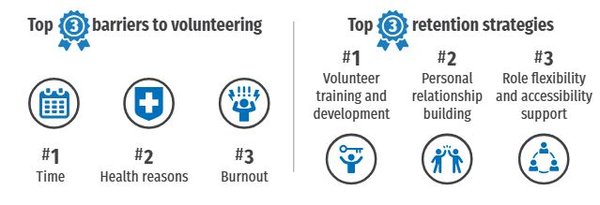
barriers and enablers
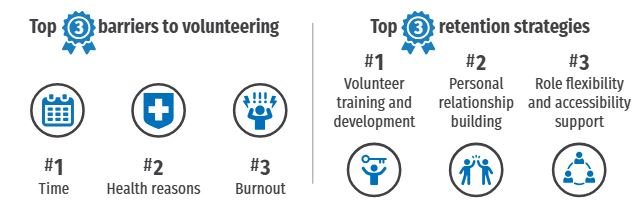
© Snapshot 2024
Checking in with volunteers through regular surveys
Holtrop et al. (2024) study of why volunteers leave their voluntary organisation has identified and described a series of the most common factors. They suggest that volunteer organisations can keep track of these factors through regular surveys or discussions with their volunteers. In this way they can better act upon these factors before turnover occurs.
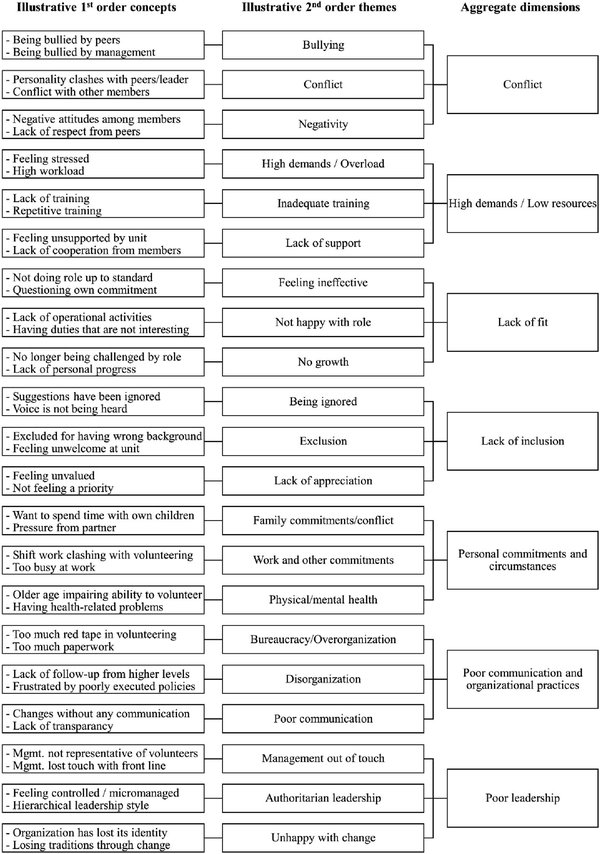
Reasons for turnover
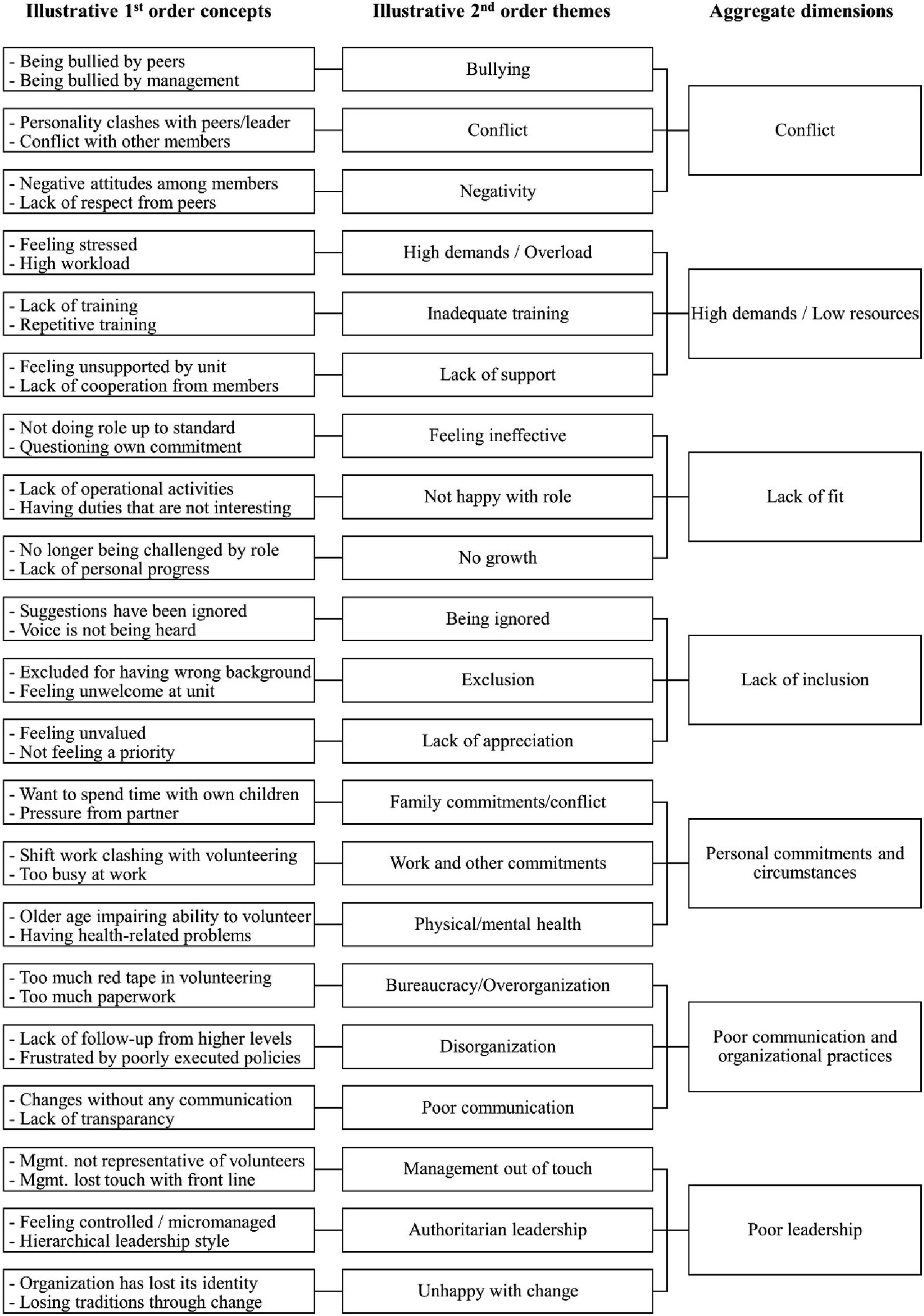
© Holtrop et al., 2024.